On January 15, 1919, winter in Boston brought not only cold, but a catastrophe as strange as it was deadly: the Great Molasses Flood. In the city's bustling North End, a gigantic storage tank belonging to the Purity Distilling Company (part of United States Industrial Alcohol Company) burst catastrophically. This tank, more than 15 meters high and 27 meters in diameter, contained an astounding 8.7 million liters (2.3 million gallons) of molasses.
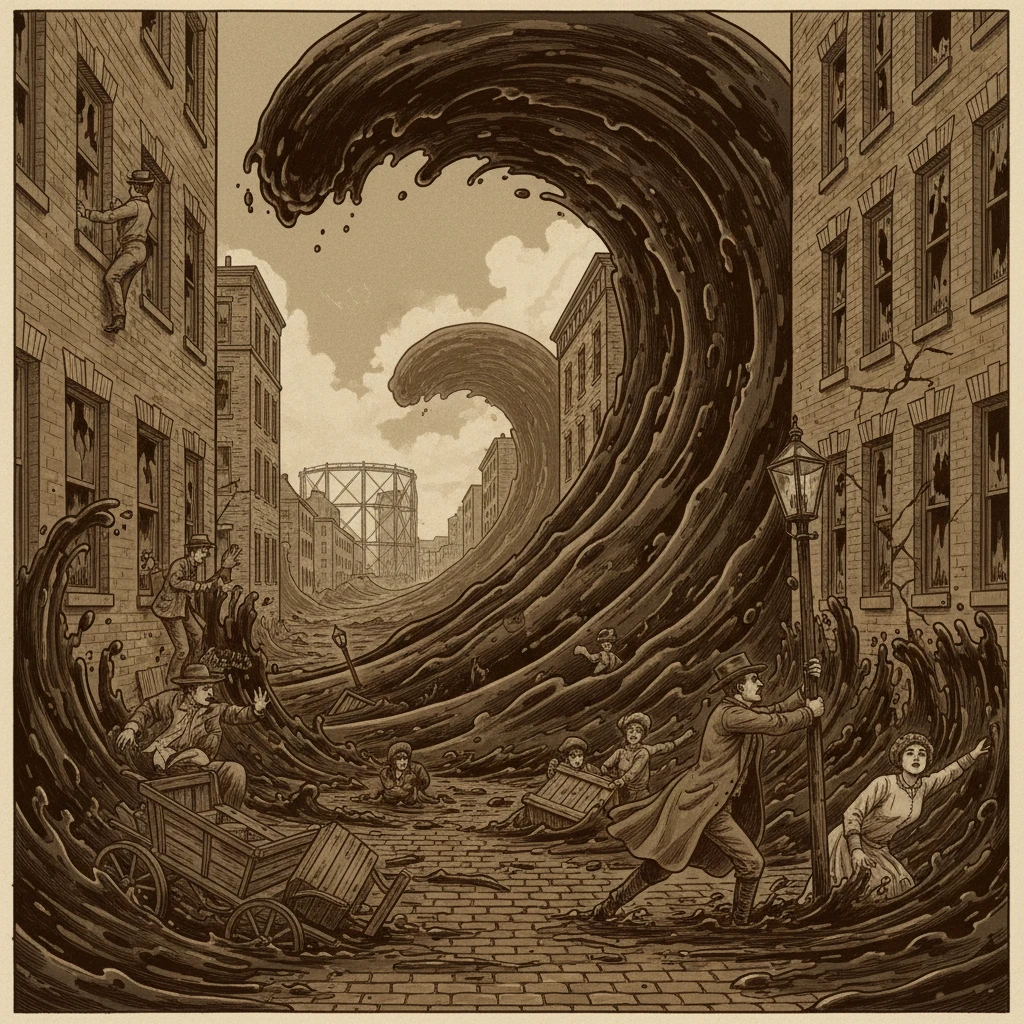
What followed was a scene out of a nightmare. A wave of molasses, up to 7.6 meters (25 feet) high, rushed through the streets at an estimated speed of 56 kilometers per hour (35 mph). The force of this "sweet tsunami" was such that it leveled entire buildings, overturned streetcars and trains, and submerged people and animals in its dense, sticky current. The molasses, heated and expanded inside the tank and then cooled rapidly by the winter air, became an even denser and more lethal mass.
The disaster claimed the lives of 21 people, some of whom drowned or were crushed, and injured more than 150. Rescue crews struggled for days in the thick, sticky sludge, and cleanup was a monumental task that took weeks using seawater and sand. For decades, North End residents claimed they could smell the sweetness of molasses on hot summer days. The tragedy led to years of litigation and resulted in new construction and engineering regulations in Massachusetts, an unexpected legacy of a flood unique in history.
Source: Stephen Puleo, "Dark Tide: The Great Boston Molasses Flood of 1919" (2004); Massachusetts Historical Society.