For millennia, the oral traditions of Indigenous peoples in northern Australia told of firebirds, winged hunters capable of manipulating flames. In 2017, a study published in the Journal of Ethnobiology formally documented this phenomenon: species such as the black kite (Milvus migrans), the whistling kite (Haliastur sphenurus), and the brown falcon (Falco berigora) intentionally spread wildfires.
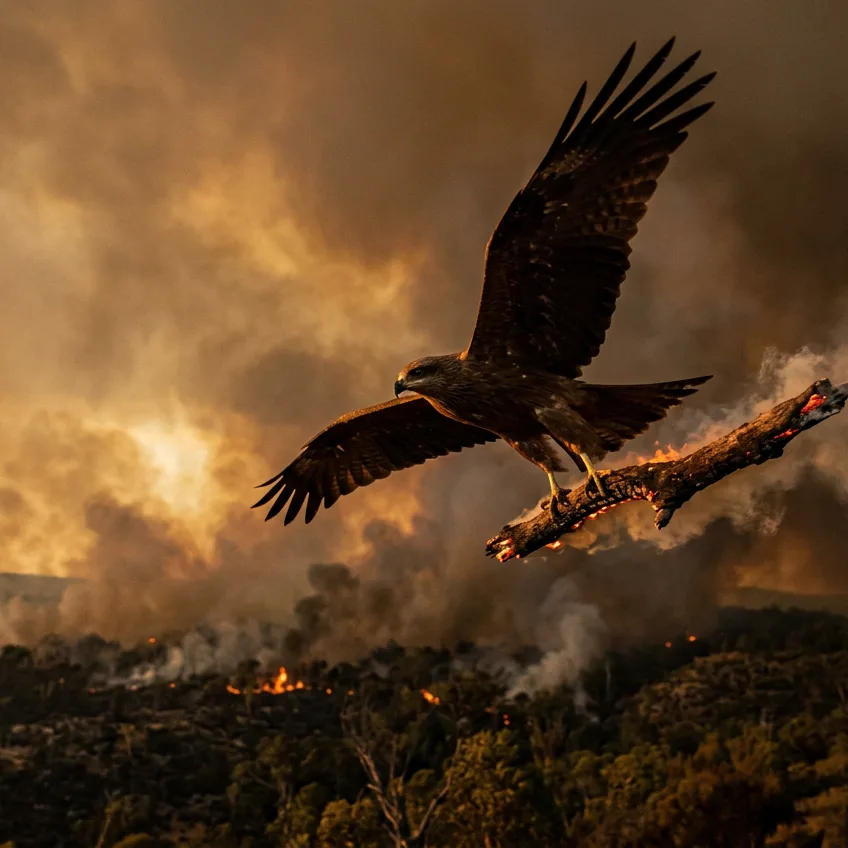
When a fire breaks out in the savanna, these raptors gather by the hundreds along the active front. Far from fleeing, they use combustion as a sophisticated foraging tool. Rangers and scientists have recorded how these birds grab smoking sticks and glowing embers with their beaks or talons, flying with them up to 1 kilometer past the fire line into untouched dry grasslands.
By dropping the ember, they spark a deliberate new blaze. This sudden wall of fire triggers a stampede of rodents, lizards, and grasshoppers trying to flee blindly, leaving them completely exposed in open terrain where the birds stage an aerial feast. This behavior places Australian raptors in the select and almost exclusive group of living beings capable of manipulating fire to actively reshape their surroundings and secure food, a skill science considered exclusive to humankind for centuries.
Source: Journal of Ethnobiology (Bonta et al., 'Intentional Fire-Spreading by “Firehawk” Raptors in Northern Australia', 2017)