In the year 525 BC, the sands of the eastern Nile Delta witnessed one of the most singular military clashes of antiquity. The Persian king Cambyses II marched toward the frontier fortress of Pelusium, the strategic key to subduing the Egyptian Empire ruled by the young pharaoh Psamtik III. Aware that a conventional siege against the solid Egyptian defenses would cause heavy casualties among his ranks, the Achaemenid monarch devised a bold psychological warfare tactic based on his enemy's religious beliefs.
As documented by the Macedonian historian Polyaenus in his work Stratagems, the Persians knew that Egyptian society held an absolute reverential respect for the goddess Bastet and other deities depicted by animals. Cambyses ordered the offensive prepared with unprecedented measures:
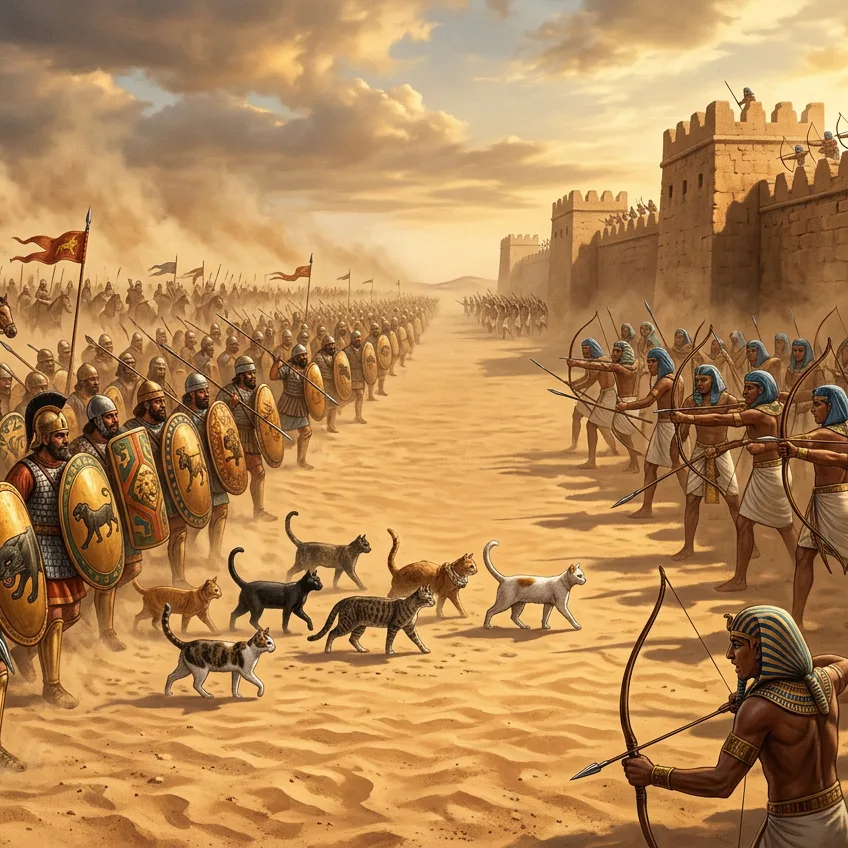
- His soldiers painted figures of cats, dogs, and ibises directly onto the surface of their combat shields.
- In the vanguard of the formation, they placed live animals considered sacred by the Egyptians, primarily cats.
When the Egyptian infantry and renowned archers prepared to repel the assault, they faced an insurmountable dilemma. In Ancient Egypt, killing a cat—even accidentally—carried the immediate death penalty and religious dishonor. Unable to loose their arrows against the living deities leading the enemy lines, Psamtik III's troops broke ranks, seized by moral panic. The surrender of Pelusium opened the gates of Memphis and marked the beginning of Persian rule over the land of the Nile.
Source: Polyaenus, Stratagemata (Book VII, 9); Herodotus, Histories (Book III)