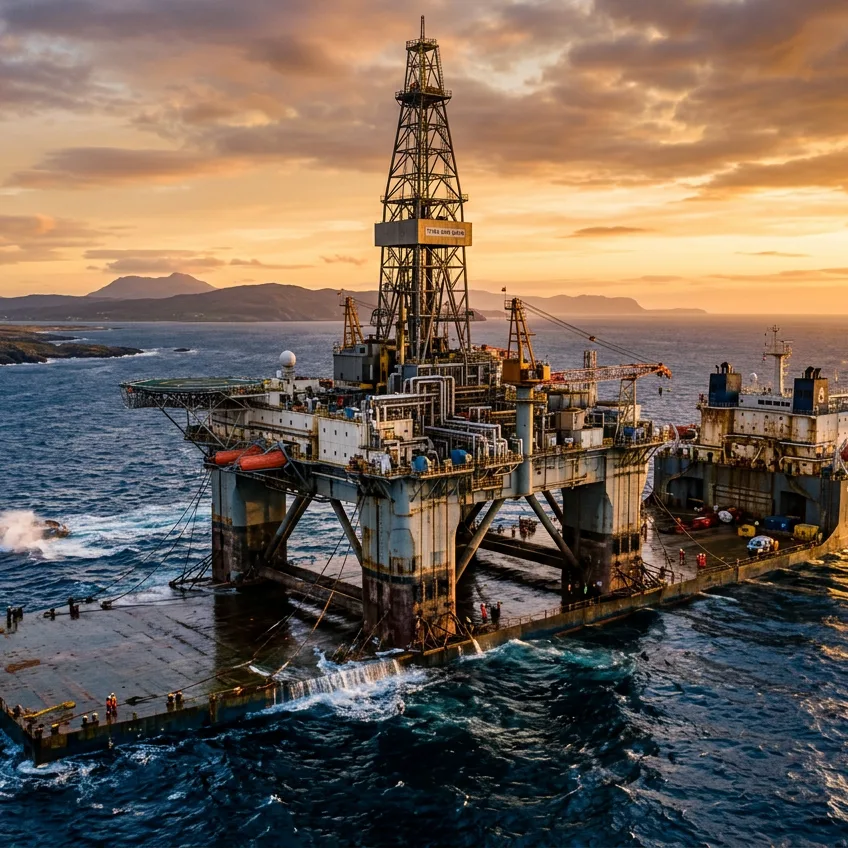
In modern naval engineering, moving megastructures like oil platforms or damaged large-tonnage ships was a titanic challenge until the arrival of the Boka Vanguard (originally named Dockwise Vanguard). Launched in 2012 by Hyundai Heavy Industries, this heavy-transport giant features a revolutionary silhouette: it lacks a conventional bow and its command superstructure is offset to one side, freeing up a flat, uninterrupted deck 275 meters long and 70 meters wide.
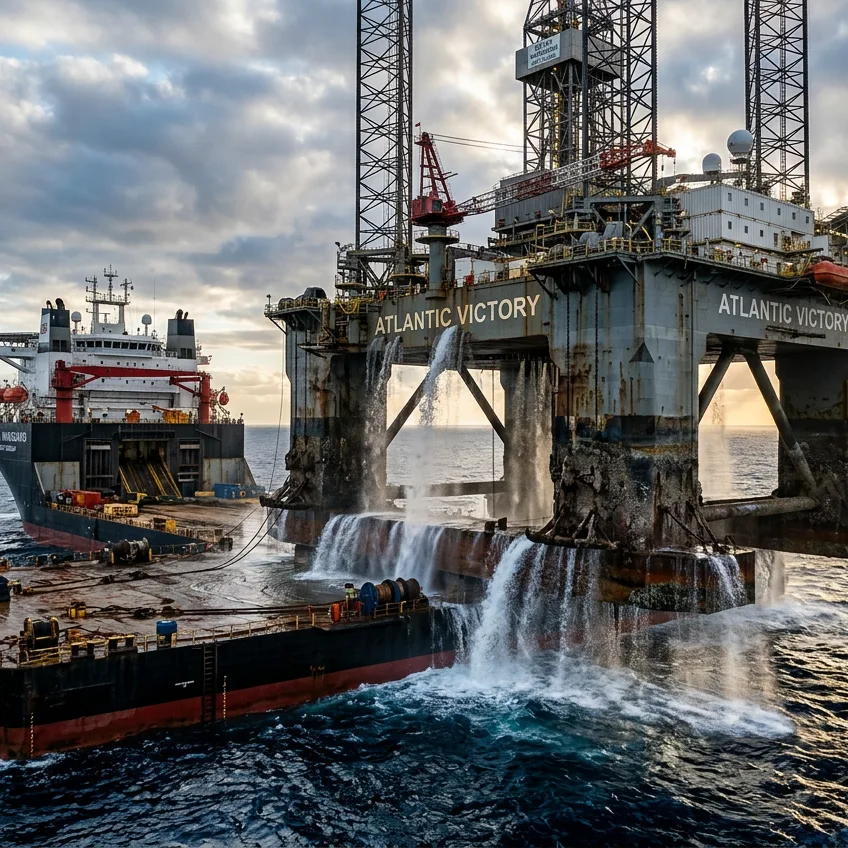
The real marvel lies in its ability to sink voluntarily. Thanks to an intricate computerized system of watertight compartments, the ship takes tens of thousands of tons of seawater into its ballast tanks, submerging its main deck up to 16 meters beneath the ocean's surface. In that phase, a fleet of tugboats maneuvers the gigantic floating cargo—which can reach 117,000 tons—to position it with millimeter precision using laser telemetry over predesigned support blocks.
Once the cargo is secured, powerful bilge pumps discharge the water at a rapid pace. As it regains buoyancy, the Boka Vanguard slowly emerges from the sea, lifting the structure onto its back and transforming into a self-propelled dry dock. This pioneering technique makes it possible to cruise at 14 knots across entire oceans carrying infrastructure that would otherwise take months to tow with a serious risk of shipwreck.
Source: Royal Institution of Naval Architects (RINA) / Boskalis Heavy Marine Transport