In heavy marine transport, there is a class of vessels capable of performing a counterintuitive maneuver: deliberately sinking to load gigantic infrastructure. These are semi-submersible heavy-lift ships, colossi of naval engineering designed with an advanced ballast tank system that drastically alters their displacement.
Unlike conventional submarines, these giants do not submerge completely. Through a coordinated process called float-on/float-off, they open massive valves to flood their lower holds with tens of thousands of tons of seawater. This submerges their main deck between 9 and 16 meters below the ocean surface, leaving only the bridge tower and stabilizing casings at the bow and stern visible.
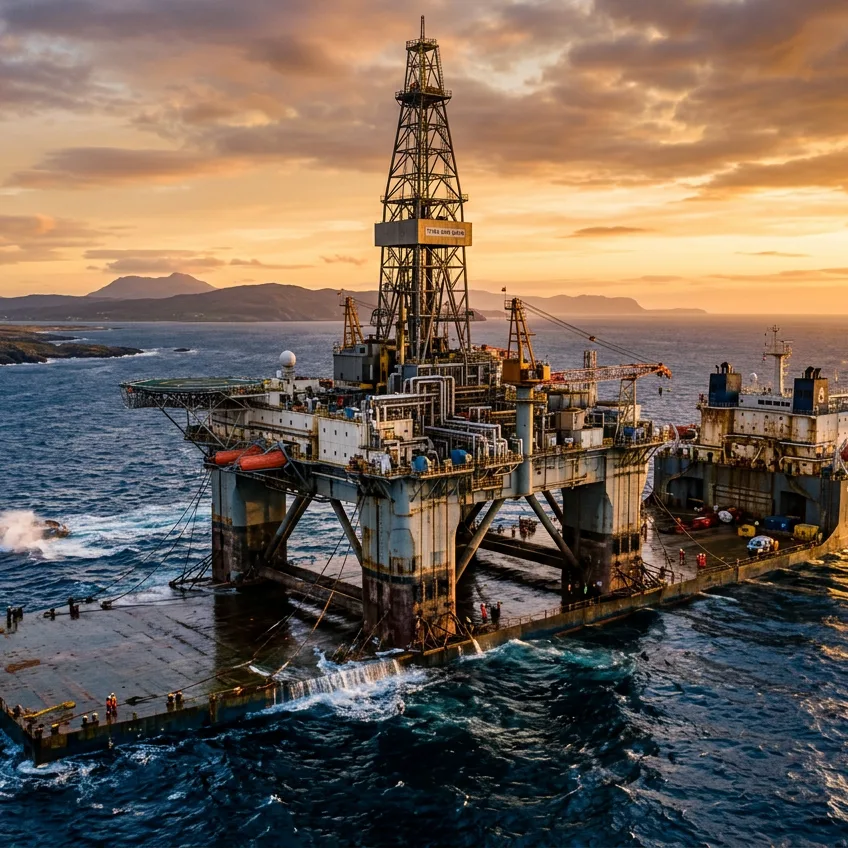
Once the deck is underwater, a tugboat positions the floating cargo with millimeter precision—such as a 50,000-ton oil platform, a damaged destroyer like the USS Cole, or even other ships. Subsequently, powerful compressors pump compressed air into the tanks to expel the ballast water at a controlled rate. As the vessel regains positive buoyancy, its deck emerges from the ocean, hoisting the colossal structure aloft, ready to sail thousands of nautical miles across open seas.
Source: Royal Boskalis Westminster / Dockwise Heavy Marine Transport Technical Archives