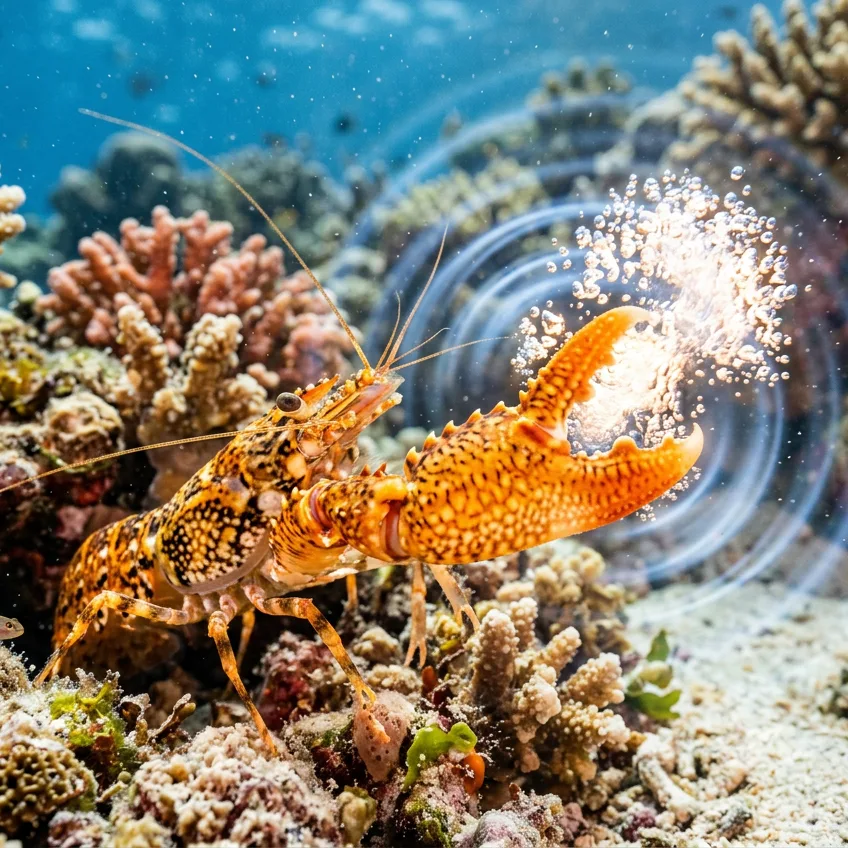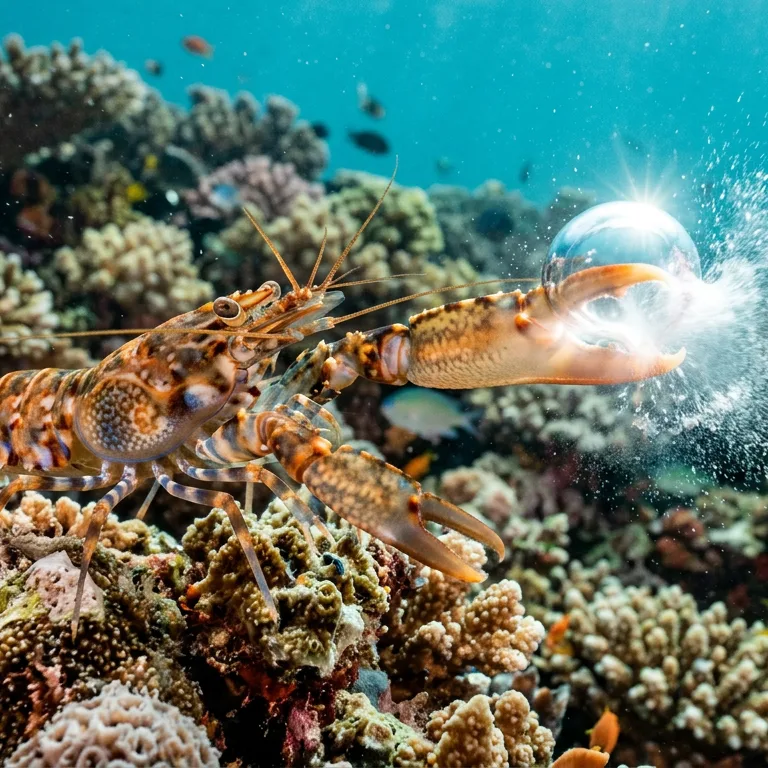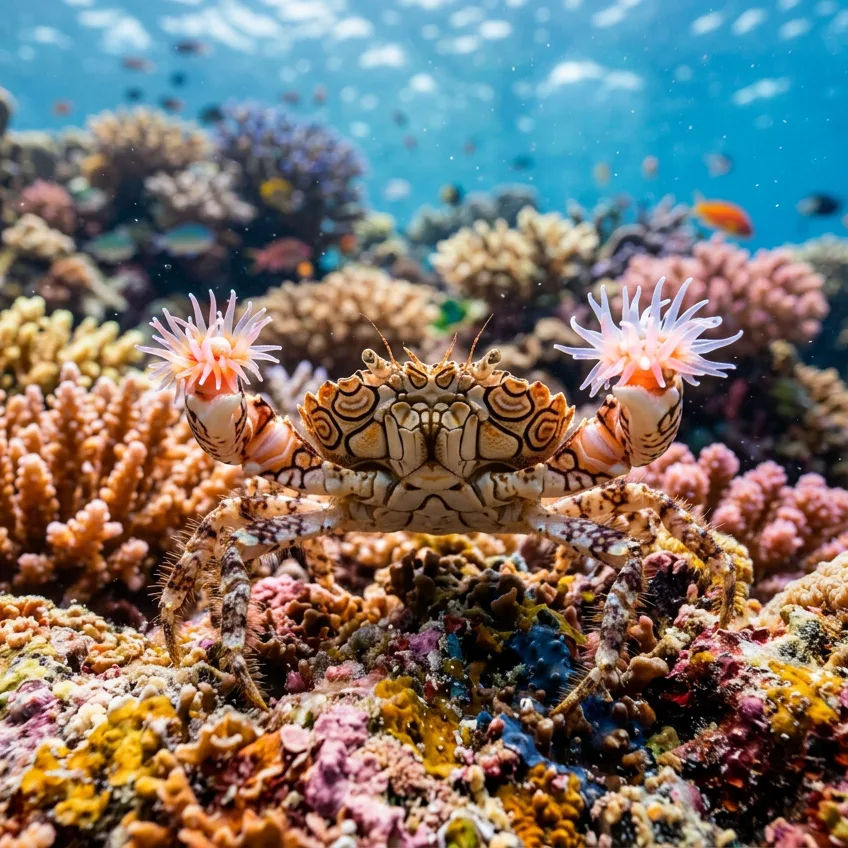
In the coral reefs of the Indo-Pacific Ocean lives a tiny crustacean measuring barely two centimeters that has developed one of the most unusual symbiotic partnerships in the animal kingdom: the boxer crab (Lybia tessellata). This animal carries a small living sea anemone in each of its front claws, almost always of the species Triactis producta, transforming them into gloves loaded with venomous nematocysts.
Unlike other crustaceans, this crab's claws are not designed for crushing or cutting prey, but instead possess microscopic hooked teeth specifically adapted to gently hold the soft bodies of the anemones without killing them. When a fish or predator approaches, the crab waves its stinging weapons, making threatening gestures reminiscent of a fighter in the boxing ring, deterring attacks with discharges of paralyzing toxins.
However, the animal's most astonishing behavior was documented in 2017 by a team of marine biologists led by Yisrael Schnytzer: forced cloning. The researchers discovered that if a boxer crab loses one of its two anemones during a skirmish:
- It immobilizes the remaining anemone and, with meticulous precision, tears it longitudinally into two identical pieces using sustained pulling.
- Both fragments survive thanks to the remarkable regenerative capacity of these cnidarians, and within a few days, they develop into two complete, functional cloned anemones.
This discovery established Lybia tessellata as the first known case of a wild animal capable of forcing the asexual reproduction of another species to craft and symmetrically maintain its own survival tools.
Source: Schnytzer, Y. et al. (2017). Boxer crabs induce asexual reproduction of their associated sea anemones by splitting and stretching. PeerJ, 5, e2954.