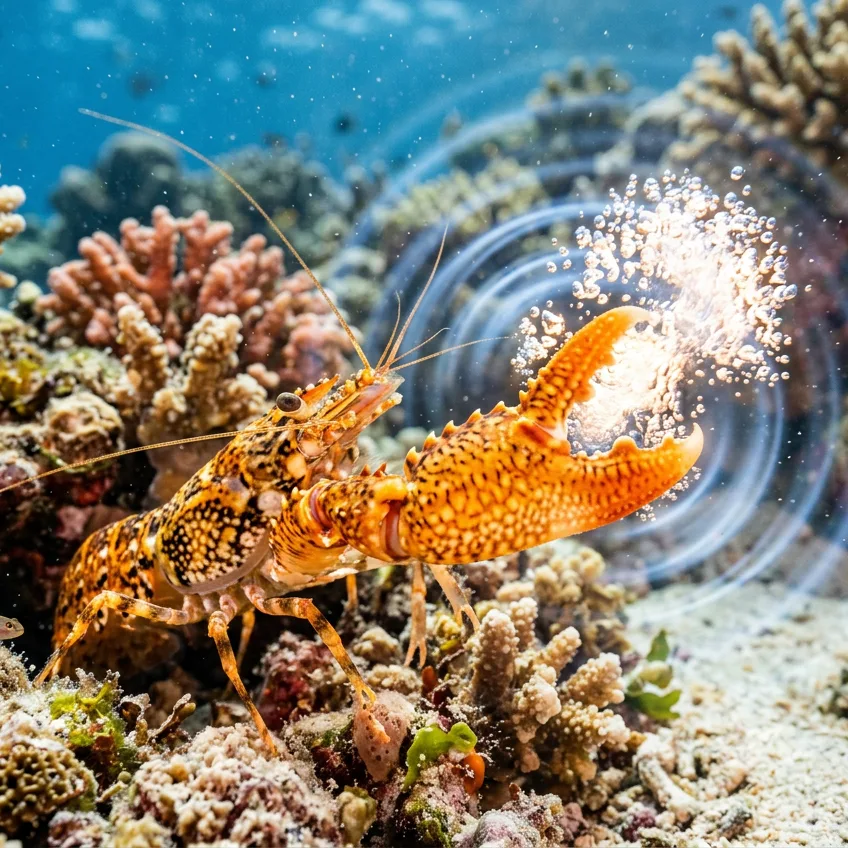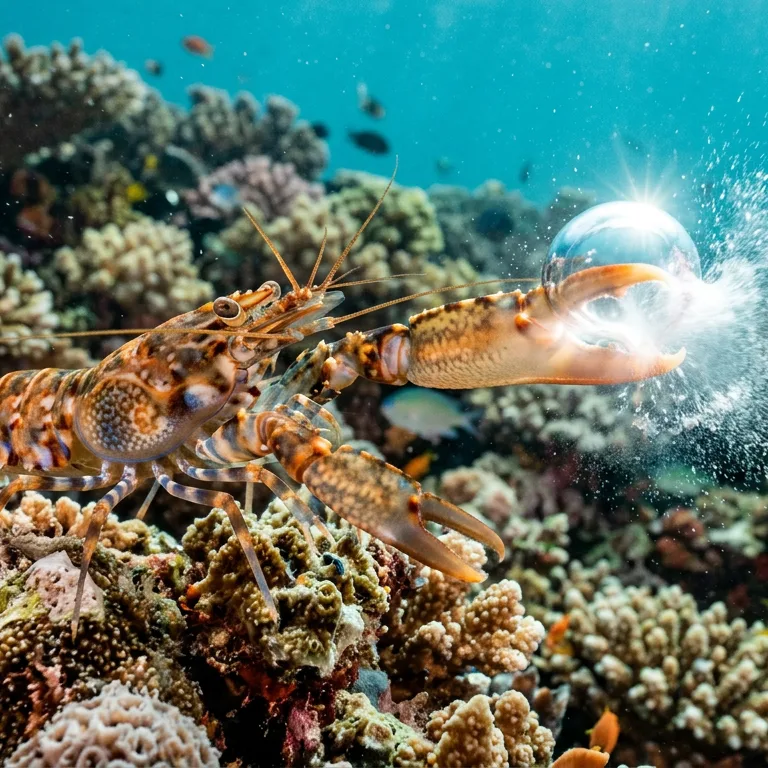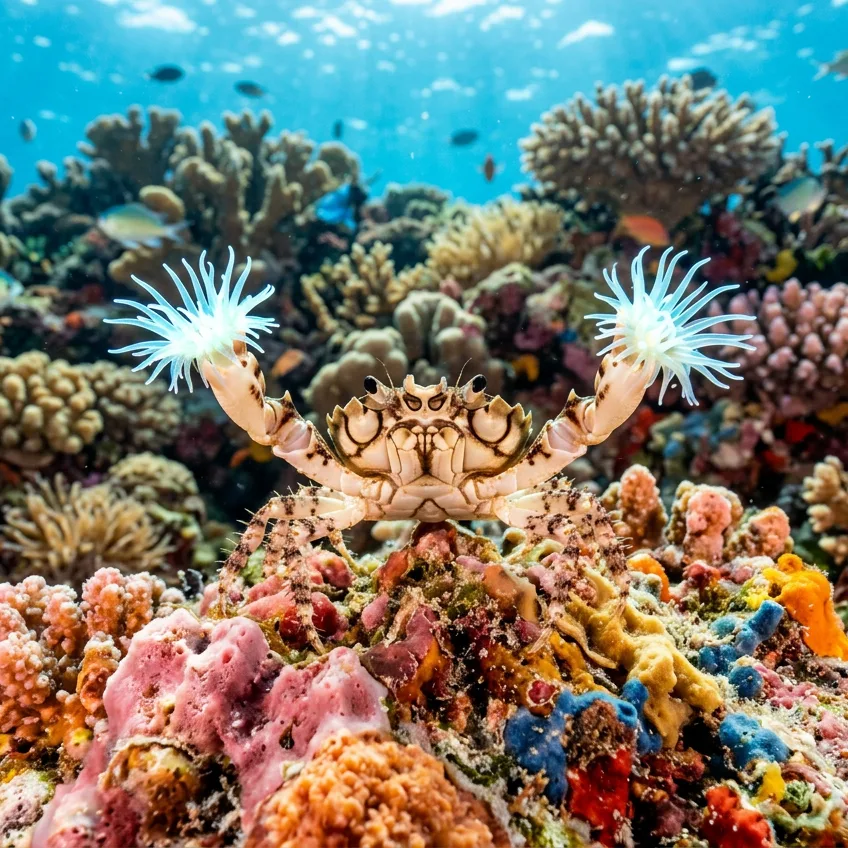
In the coral reefs of the Indo-Pacific lives the boxer crab (Lybia tessellata), a creature barely two and a half centimeters long that has developed one of the most unusual symbiotic and defensive associations in the animal kingdom. Its front claws have evolved into tiny gripping pincers designed not to wound soft tissues, which it uses to firmly grasp two living sea anemones (usually of the genus Triactis or Bundeopsis).
When a predator approaches, the crustacean raises its arms and waves them like a fighter on guard. The anemones, equipped with thousands of stinging nematocysts capable of injecting paralyzing toxins, function as lethal chemical boxing gloves that ward off much larger fish. In return, the polyps gain access to suspended food particles when the crab moves.
However, the most extraordinary finding about its behavior was documented by marine biologists in 2017: if a boxer crab loses one of its anemones in a scuffle, it does not immediately seek a wild replacement. Instead, it deliberately tears the surviving anemone into two symmetrical halves using its claws. Due to the regenerative power of these coelenterates, each half heals and gives rise to a complete, identical clone in a few days, restoring the pair.
This phenomenon constitutes one of the very few cases in nature where a non-human animal actively induces asexual reproduction and cloning in another species to manufacture its own biological defense tools.
Source: PeerJ (Schnytzer et al., 2017 - 'Boxer crabs induce asexual reproduction of their associated sea anemones by splitting')