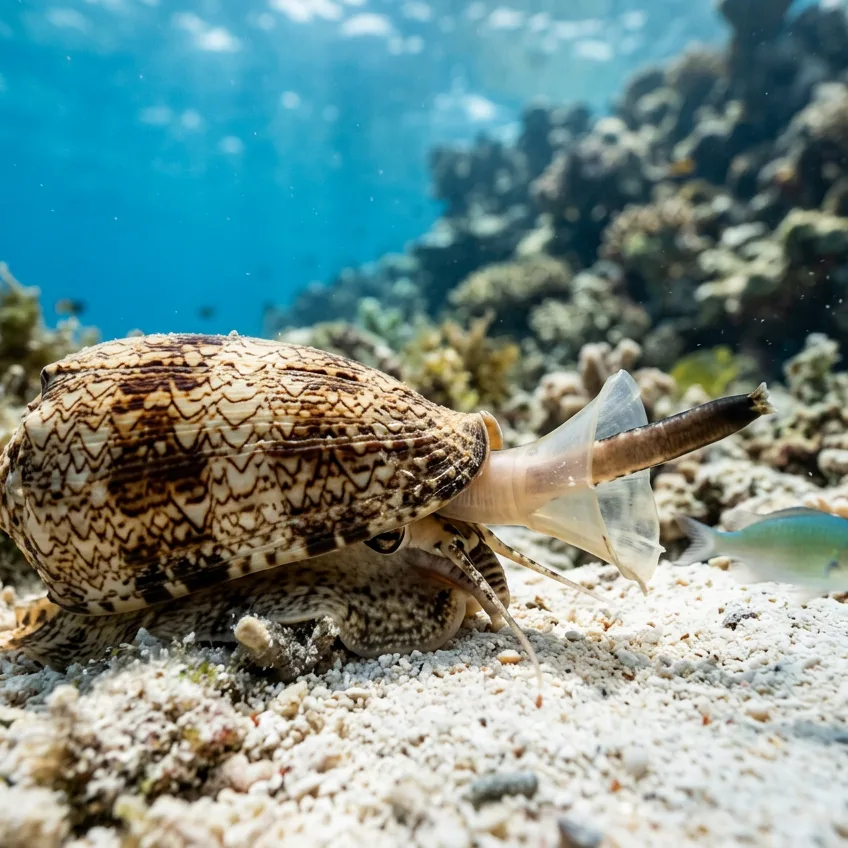
In the coral reefs of the Indo-Pacific Ocean lives Conus geographus, a gastropod mollusk whose geometric shell conceals one of the most unusual biochemical arsenals in the animal kingdom. Unlike other marine predators that rely on physical strength or conventional paralyzing neurotoxins, this snail hunts using an unprecedented pharmacological tactic: it uses molecular insulin as an offensive weapon to plunge its prey into an irreversible lethargy.
Documented by scientists at the University of Utah, the mechanism works as a chemical ambush of astounding precision:
- The "nirvana" cocktail: The mollusk releases an invisible mixture into the water column loaded with Con-Ins G1, a miniaturized and truncated version of fish insulin evolutionarily designed to prevent clumping into heavy molecular complexes.
- Near-instantaneous hypoglycemic shock: When a fish swims into the area and breathes this underwater aerosol through its gills, the hormone enters directly into its bloodstream. Its blood sugar levels collapse suddenly, triggering a massive hypoglycemic coma that leaves the victim completely stunned and without muscle tone.
- Passive engulfment: With the fish paralyzed without having suffered a single prior wound, the snail expands its massive membranous mouth funnel and engulfs it alive in one piece.
This molecule represents the fastest-acting insulin recorded in nature. Lacking the bonds that slow down assimilation in higher vertebrates, its discovery has spurred cutting-edge research to synthesize ultra-fast-acting insulins intended for the biomedical treatment of human diabetes.
Source: Proceedings of the National Academy of Sciences (PNAS) / University of Utah Health