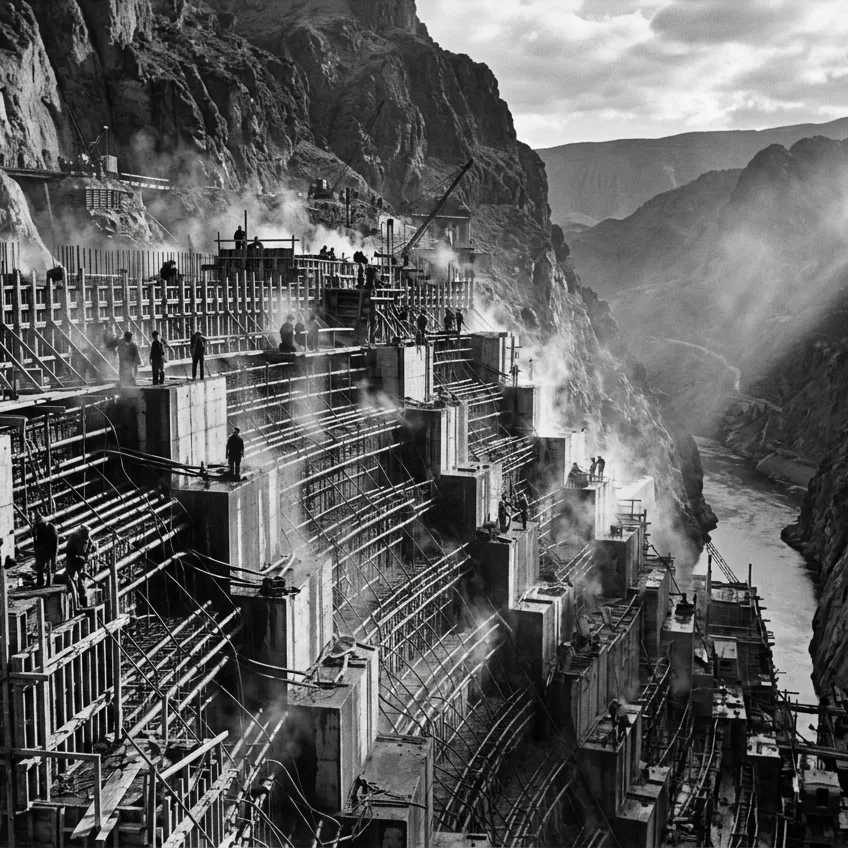
When construction of the Hoover Dam began in the Black Canyon in 1931, engineers faced a massive physical dilemma: pouring more than 2.5 million cubic meters of concrete into a continuous structure was a structural death sentence. The chemical curing reaction of cement is strongly exothermic. If the dam had been poured as a single monolithic block, the heat trapped in its core would have taken more than 125 years to dissipate naturally to the outside, contracting and fracturing the dam into catastrophic pieces.
To bypass this thermal collapse, chief engineer Frank Crowe and the US Bureau of Reclamation devised an unprecedented solution:
- Modular structure: They divided the mass into a grid of independent blocks and columns about 15 meters on each side, allowing each section to cure in a controlled manner.
- Internal pipes: They embedded more than 940 kilometers of steel pipes measuring one inch in diameter inside the concrete.
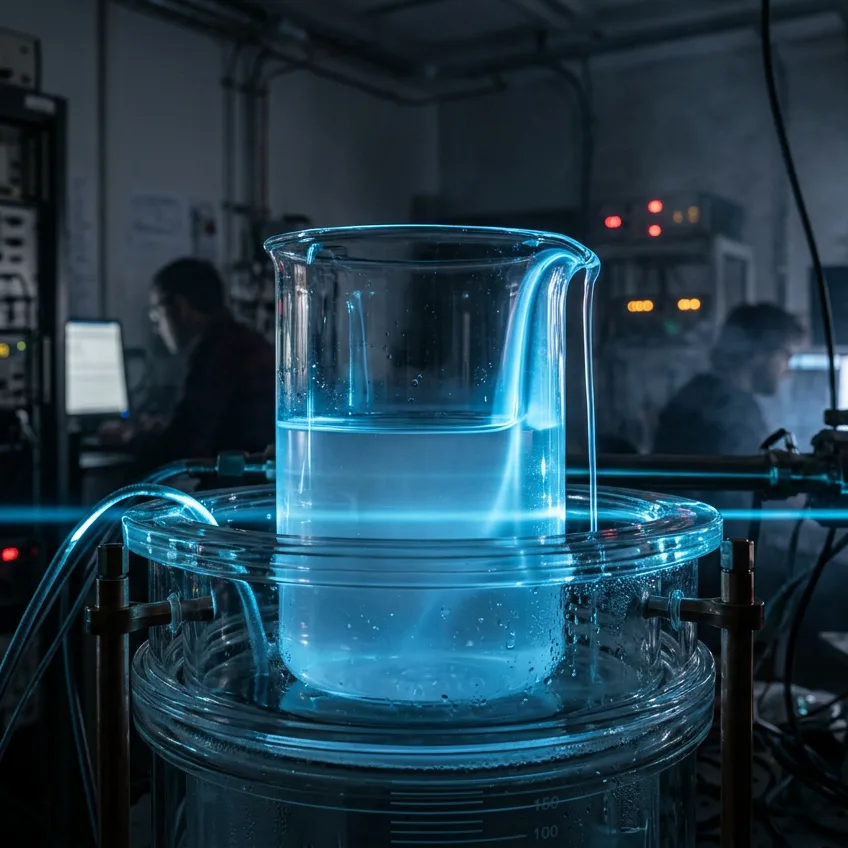
- Colossal ice plant: They built a refrigeration plant in the desert capable of producing one thousand tons of ice per day. First, they pumped water from the Colorado River to reduce the initial heat, and then they circulated icy brine at 4 °C.
Thanks to this artificial circulatory system, the concrete cooled and contracted in just a few months. Once the optimal design temperature was reached, the pipes were filled with cement grout under pressure, consolidating an indestructible monolith that still holds back the waters of Lake Mead today.
Source: United States Bureau of Reclamation (USBR) - The Story of Hoover Dam