In July 1184, the city of Erfurt (modern-day Germany) was the scene of a tragedy as dramatic as it was scatological. The future Holy Roman Emperor, King Henry VI, convened an assembly of nobles at the Church of St. Peter in order to mediate a bitter territorial dispute between Landgrave Louis III of Thuringia and Archbishop Conrad of Mainz.
Dozens of aristocrats, knights, and prelates from across the region answered the call, gathering on the second floor of the building. What no one anticipated was the lethal combination of human overload and structural deterioration:
- The chain-reaction collapse: The hall's old wooden beams gave way under the weight of the crowd, causing the floor to crash down onto the first floor, which also could not withstand the brutal impact.
- The cesspit: The mass of nobles plunged directly into the basement, where a massive cesspool had been collecting the feces and urine of the monks and visitors to the religious complex for years.
- The fatal toll: Around sixty nobles died from suffocation, being crushed, or literally drowning in liquid excrement, unable to stay afloat in their heavy garments.
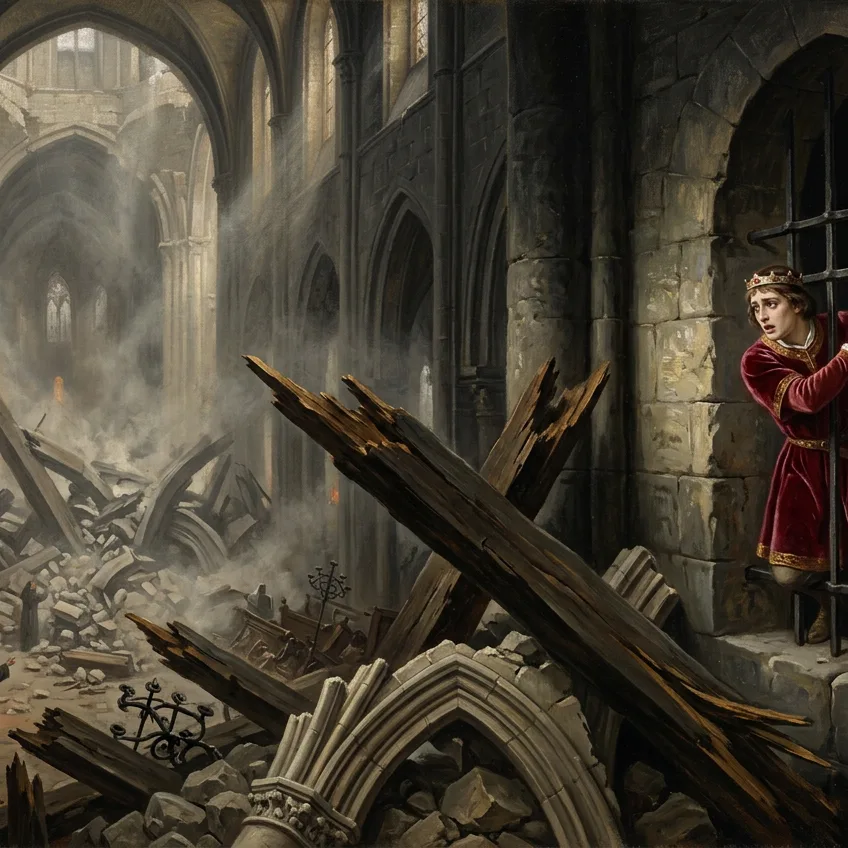
King Henry VI himself miraculously survived because he was sitting in an alcove with a stone floor near an exterior window, clinging desperately to the iron bars until he could be rescued with ladders. Following the debacle, the king left the city immediately, deeply traumatized.
Source: Chronica Reinhardsbrunnensis; Deutsche Biographie (Erfurter Latrinensturz of 1184)