Toward the end of World War I, German military aviation began targeting Paris with night raids using Gotha G.V bombers and colossal Riesenflugzeuge. With no radar available in 1917, pilots relied exclusively on the reflective path of the Seine River and faint urban glimmers to locate targets in the dark. Faced with this devastating threat, the French Ministry of War devised a plan as unusual as it was monumental: build a full-scale replica of Paris on the outskirts to serve as a decoy target.
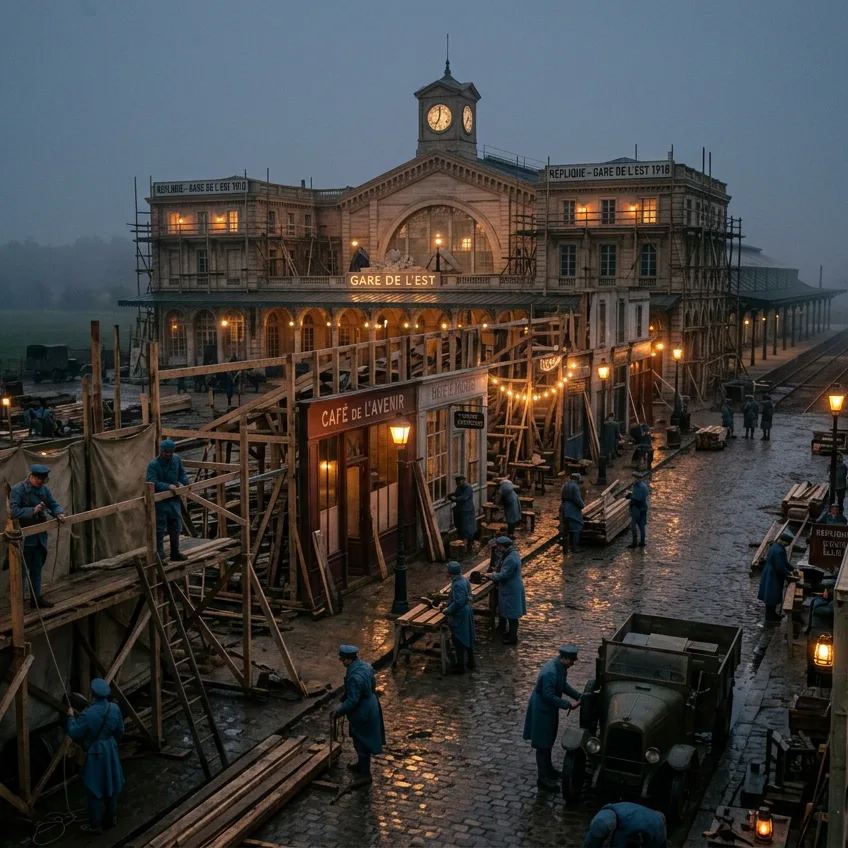
The ambitious project was entrusted to Italian electrical engineer Fernand Jacopozzi. The design called for three strategic zones tens of kilometers from the city, reproducing key hubs such as the Gare du Nord railway station, the grand boulevards, and various manufacturing complexes. To create the nighttime illusion, engineers relied on:
- Lightweight wooden structures and painted canvas imitating roofs, facades, and platforms.
- A sophisticated electrical circuit with white, yellow, and red lamps simulating poorly dimmed streets, skylights, and careless windows.
- Dynamic lighting systems mounted on rails to recreate the movement of steam trains and the rhythmic glow of blast furnaces.
One of the sections, built in the Villepinte area, was nearly completed. However, the signing of the armistice in November 1918 halted construction before the decoy capital could face its first trial by fire. The fake Paris was immediately dismantled under strict military secrecy, standing as one of the most astonishing urban camouflage feats of the 20th century.
Source: Archives du Ministère des Armées de France / Le Figaro