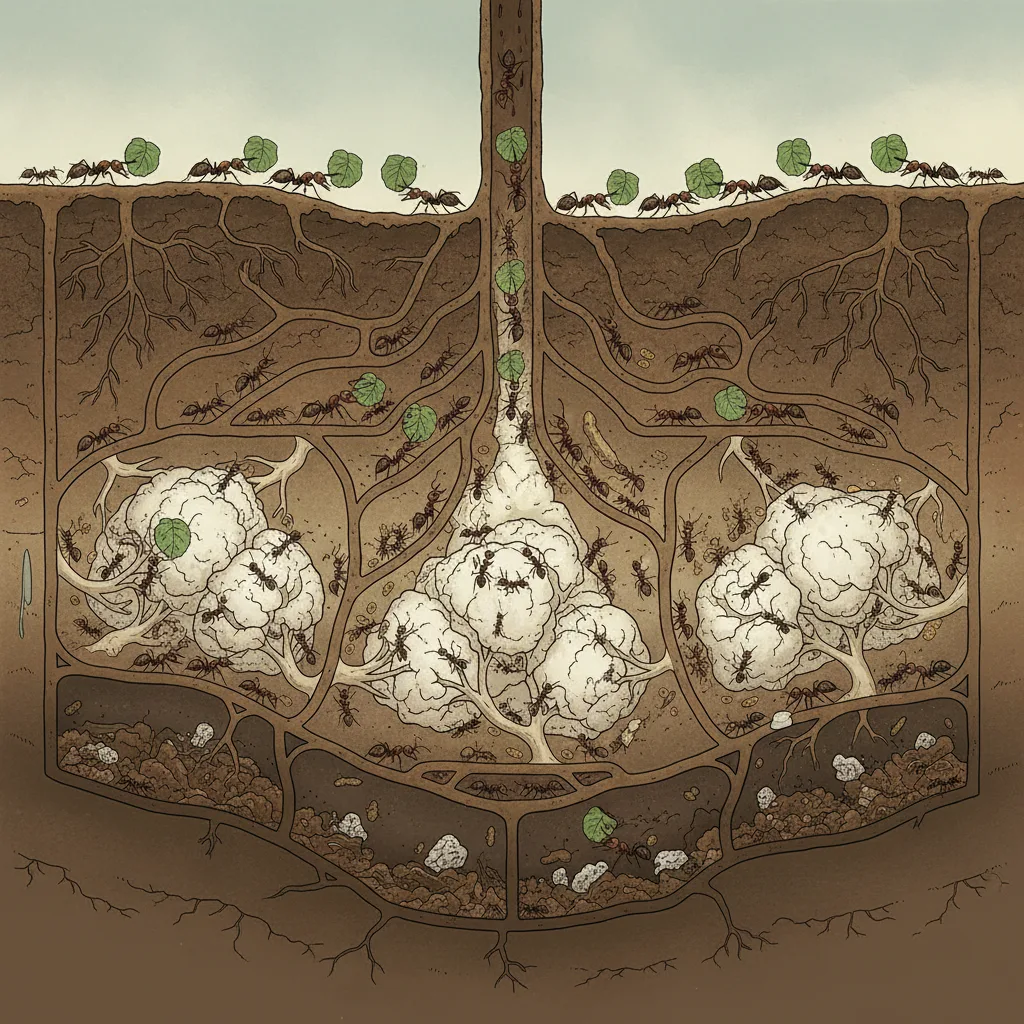
In the depths of the tropical and subtropical forests of the Americas, an underground civilization thrives thanks to one of the oldest and most efficient forms of agriculture on the planet. We are not talking about prehistoric humans, but about fascinating leafcutter ants (genera Atta and Acromyrmex). These insects do not directly consume the leaves they diligently cut and carry in long lines; instead, they use them as a substrate to cultivate a specific fungus, Leucoagaricus gongylophorus.
The symbiosis between these ants and their fungus dates back around 50 to 60 million years, making them the first known "farmers" on Earth. Their method is remarkably sophisticated: workers chew the leaves into a pulp, which they then "plant" in their underground gardens. There, the fungus grows and produces structures rich in proteins and carbohydrates, serving as the exclusive food source for the entire colony.
Yet their farming prowess does not stop there. The ants act as true gardeners: they weed constantly, removing "bad" fungi that could compete with their crop, and use symbiotic bacteria that produce antibiotics to fight pests. They even manage the temperature and humidity of their complex nests, some of which can span meters underground and house millions of individuals. This prehistoric agricultural system stands as living proof of incredible collective intelligence and adaptation in the animal kingdom.
Source: Hölldobler, B., & Wilson, E. O. (1990). The Ants. Harvard University Press. / Scientific American / National Geographic



