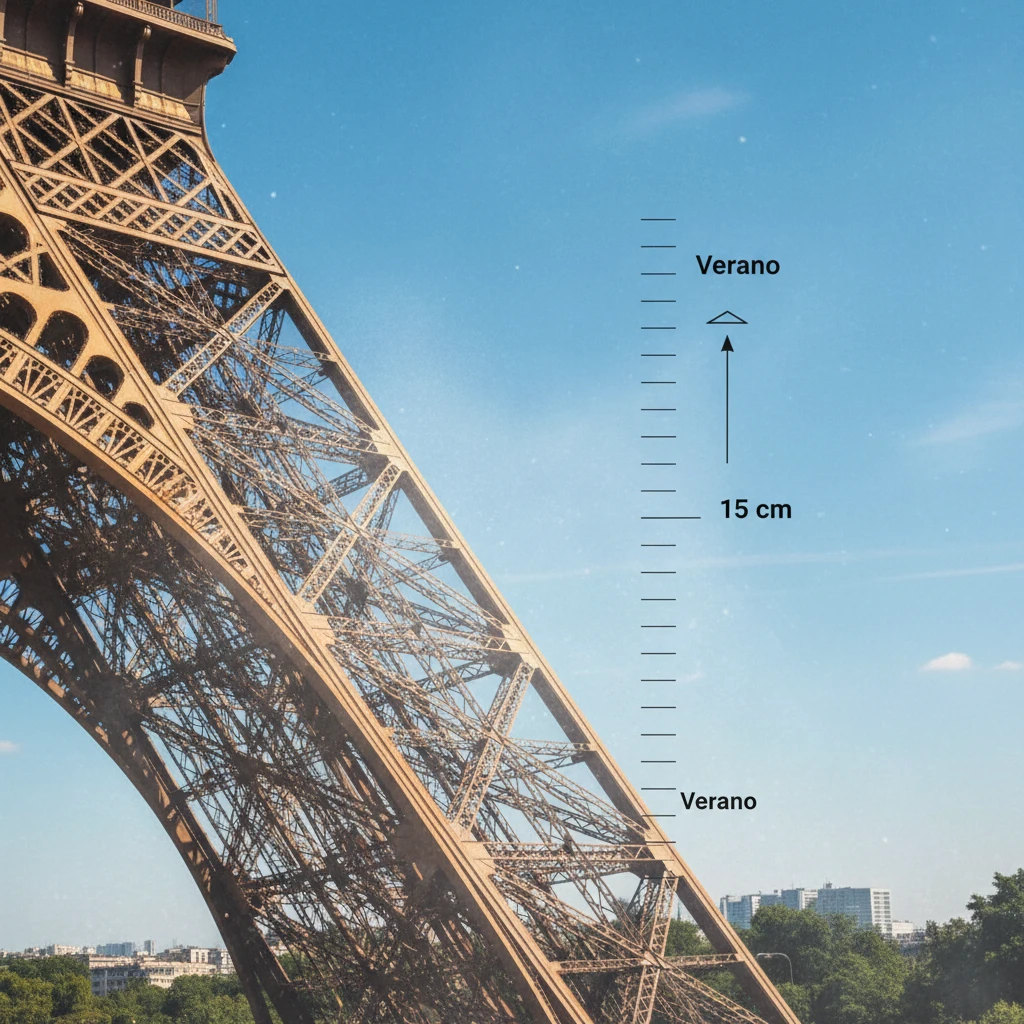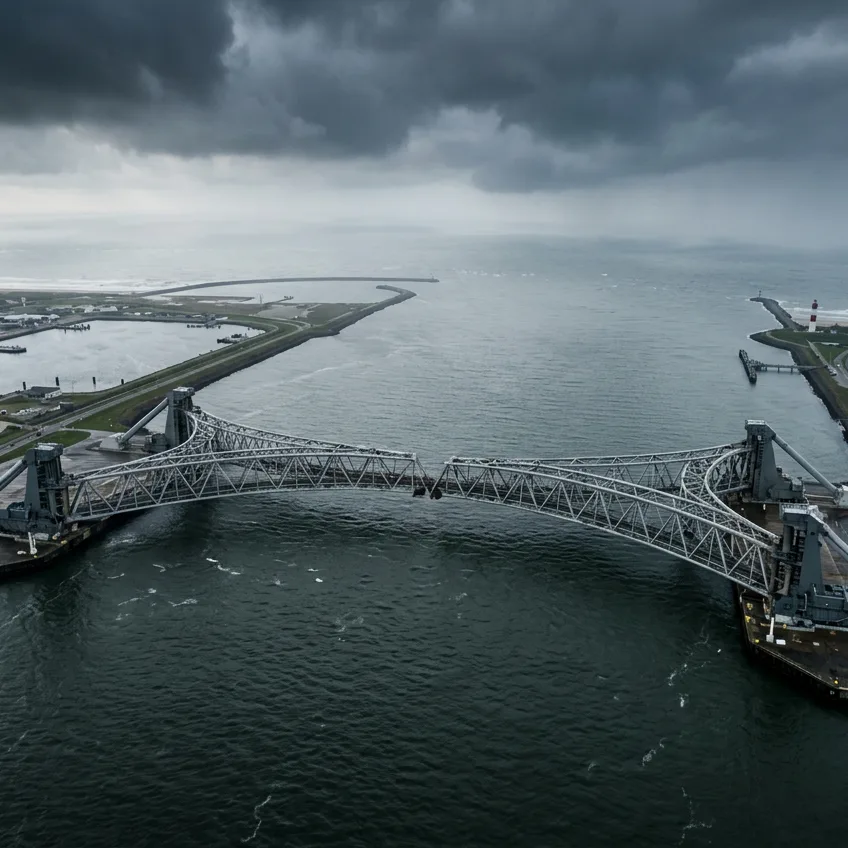
At the mouth of the Nieuwe Waterweg canal, the main river artery connecting the colossal Port of Rotterdam to the North Sea, rests one of the crowning achievements of modern civil engineering: the Maeslantkering barrier. Inaugurated in 1997 as the final piece of the Dutch Delta Works, this titanic coastal defense consists of two semicircular gates whose steel truss arms are each 237 meters long, a scale comparable to laying the Eiffel Tower down on the water.
What is truly revolutionary about the design lies in its dynamic and autonomous operation:
- Monumental ball joints: Each gate pivots on a solid steel spherical joint 10 meters in diameter and weighing 680 metric tons, manufactured by the aerospace industry to withstand massive forces without deforming.
- Flotation principle: At rest, they sit in dry docks on both sides of the canal. During a storm surge alert exceeding three meters, the gates fill with air, float toward the center of the 360-meter waterway, and once aligned, flood their internal compartments with water to settle firmly on the concrete seabed.
- Automated decision: To prevent political or economic factors from delaying their closure—which would paralyze international maritime traffic—the activation order relies entirely on a redundant computer system monitoring sea levels and winds.
When the storm subsides, powerful pumps expel the water from the pontoons, the gates float again, and they quietly return to their docking berths.
Source: Rijkswaterstaat (Ministry of Infrastructure and Water Management of the Netherlands)