Beneath the sediments of the Mediterranean seabed lies one of the greatest monuments to Earth's geological drama: a massive layer of salt and gypsum up to three kilometers thick. This gigantic deposit, containing more than one million cubic kilometers of evaporite minerals, bears witness to the Messinian Salinity Crisis, a cataclysm that began around 5.6 million years ago.
The phenomenon was triggered when tectonic movements between the Eurasian and African plates narrowed and ultimately blocked the marine gateways connecting the Atlantic to the Mediterranean in the modern-day Strait of Gibraltar region. Deprived of its main water source, the sea succumbed to a negative hydrological balance: evaporation far exceeded the inflow from rivers such as the Nile, the Rhône, and the Danube.
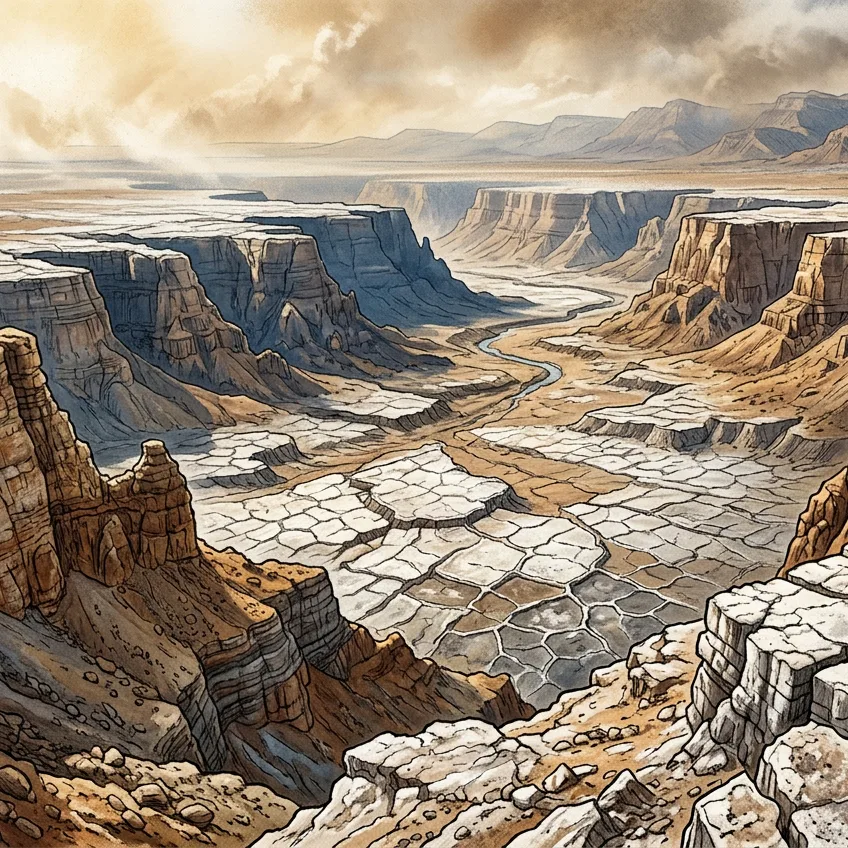
In just a few millennia, the Mediterranean transformed into a scorching desert depression whose deepest points dropped between 2,000 and 3,000 meters below sea level, with atmospheric pressures and extreme temperatures comparable to the Afar Depression. This drawdown extracted nearly 6% of all salt from the planet's oceans, altering marine currents and cooling the global climate.
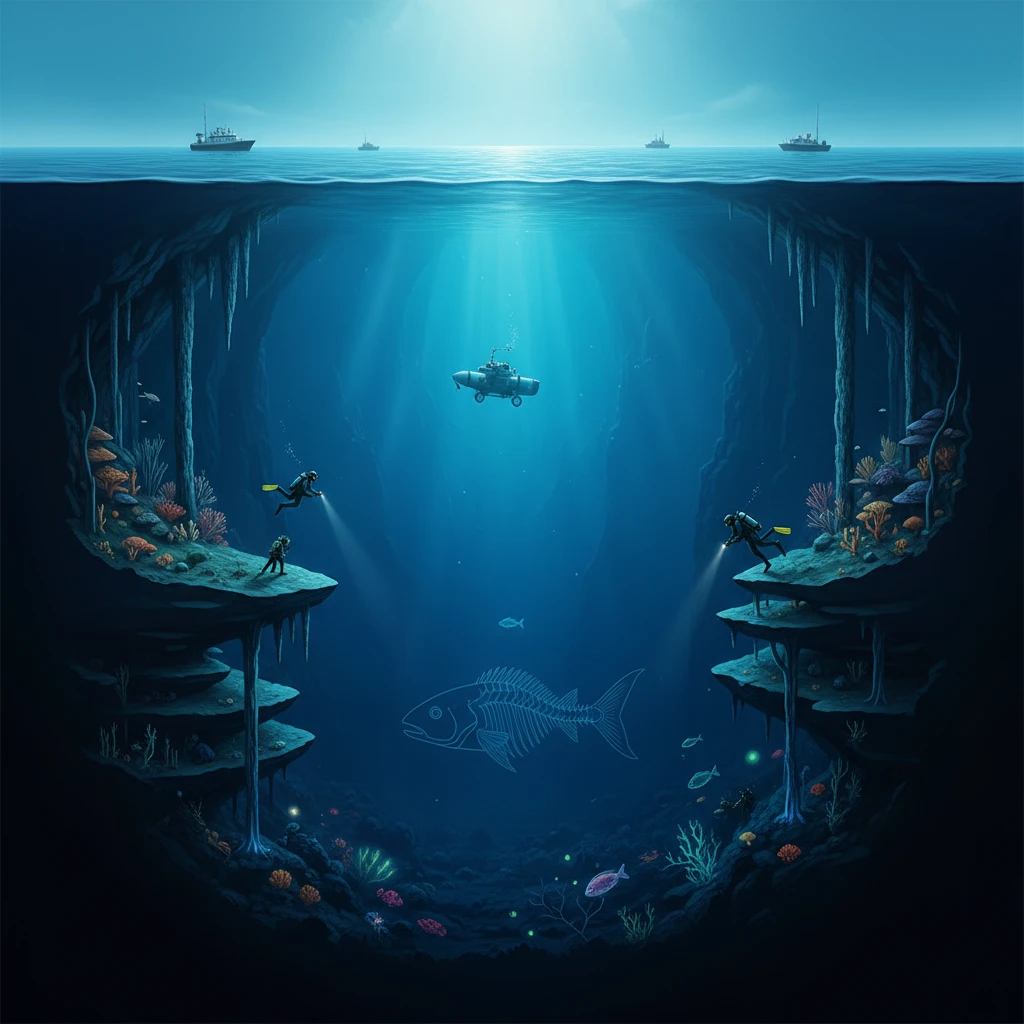
The isolation ended 5.33 million years ago with the colossal Zanclean Flood: the Atlantic breached the Gibraltar barrier in a titanic cataract with discharges a thousand times greater than the Amazon River, refilling 90% of the Mediterranean basin within a span ranging from a few months to two years.
Source: Nature Geoscience / Geological Society of London (Research on the Messinian Salinity Crisis and the Zanclean Flood)