In the heart of the East African Rift in Tanzania stands Ol Doinyo Lengai (“The Mountain of God” in the Maasai language), the only active volcano on Earth that does not erupt silicate-based magma, but carbonate-based magma instead. This unique mineralogical anomaly on Earth produces what geologists call natrocarbonatite, a lava with chemical and physical properties unmatched anywhere else on the globe.
Unlike conventional volcanoes, where silica-rich lavas erupt viscous and red-hot between 800 °C and 1,200 °C, the magma of Ol Doinyo Lengai emerges at an unusually low temperature: barely between 500 °C and 590 °C. At that temperature, during the day the lava does not display the typical igneous glow; it flows like a stream of dark mud or black oil, with such low viscosity that it runs with the fluidity of water.
Its features are truly unique:
- Subtle nocturnal incandescence: Due to its low temperature, it does not emit visible light during the day, but in absolute darkness it reveals a faint, ghostly orange glow.
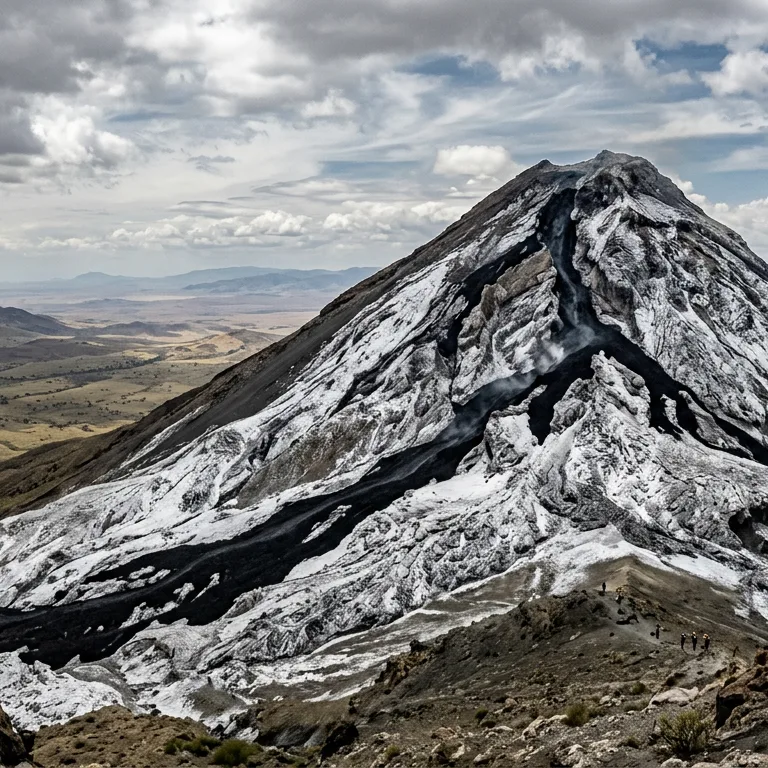
- Express chemical metamorphosis: Containing huge amounts of sodium, potassium, and calcium (primarily minerals such as nyerereite and gregoryite), the molten rock reacts with atmospheric moisture in a matter of hours. The jet-black lava quickly oxidizes and hydrates, transforming into a brittle, whitish powder that makes the crater look covered in a blanket of snow under the scorching African sun.
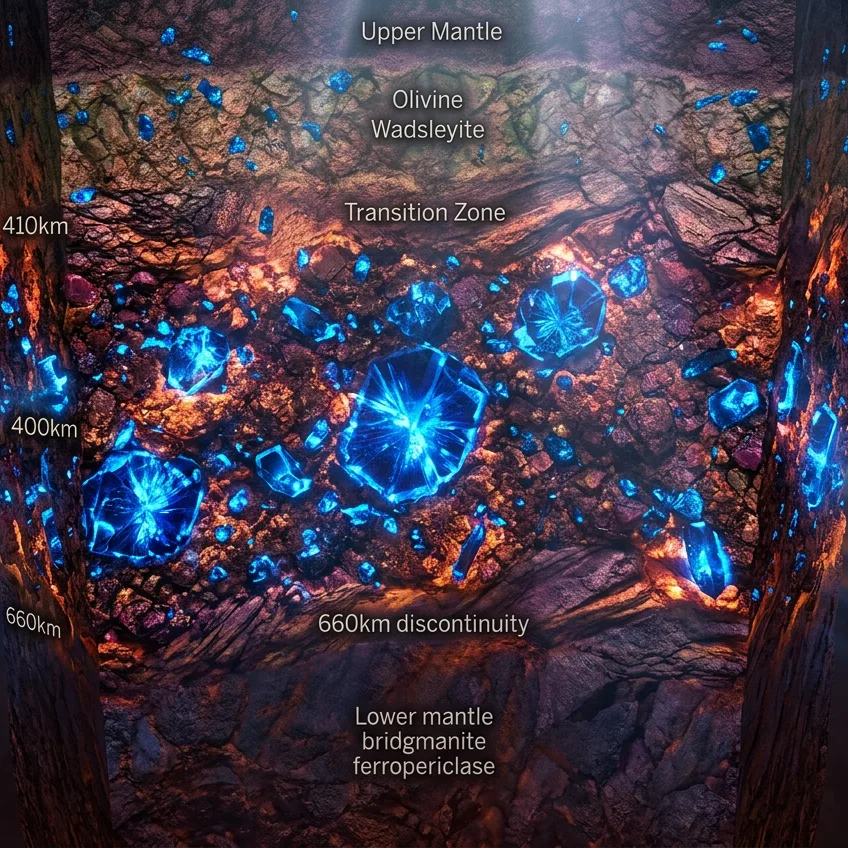
Ol Doinyo Lengai serves as an unrepeatable geochemical window to understand the evolution of the Earth's mantle and exotic magmas on other worlds in the solar system.
Source: Smithsonian Institution - Global Volcanism Program