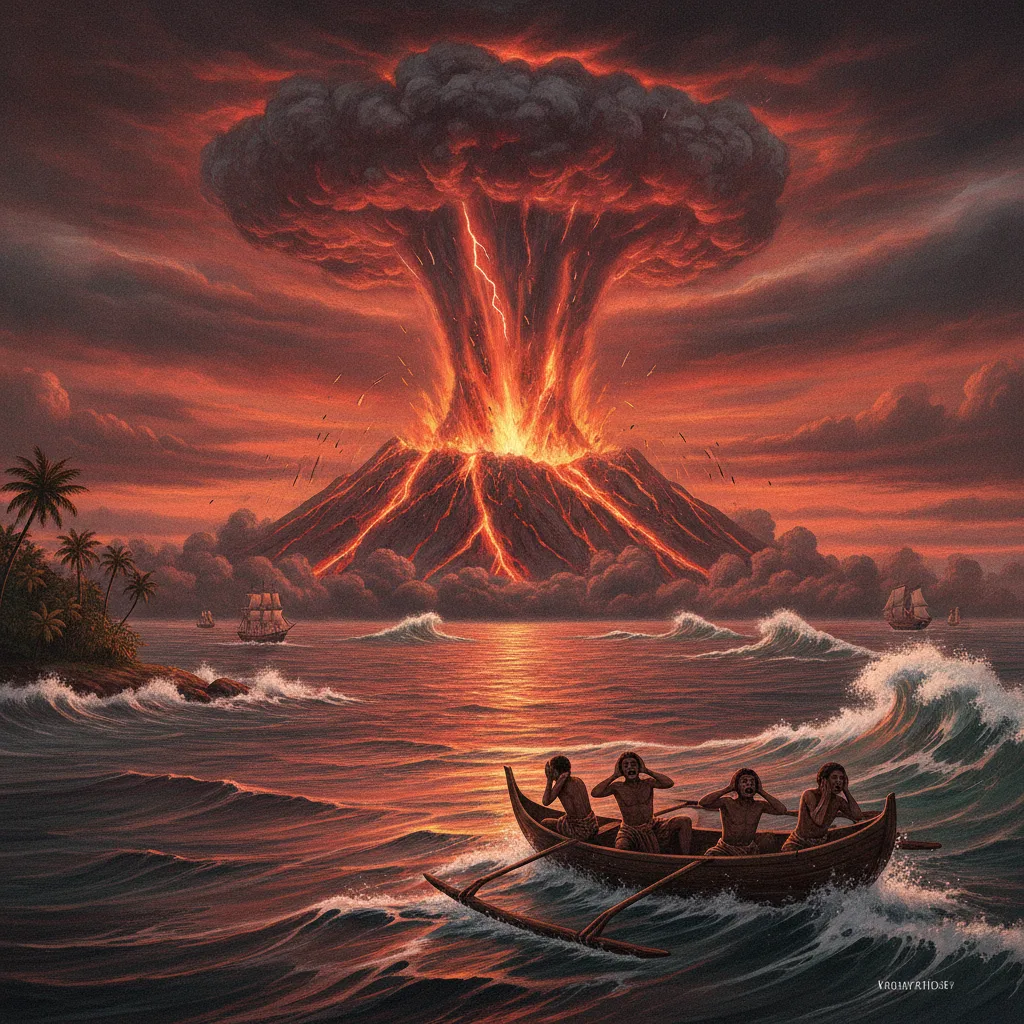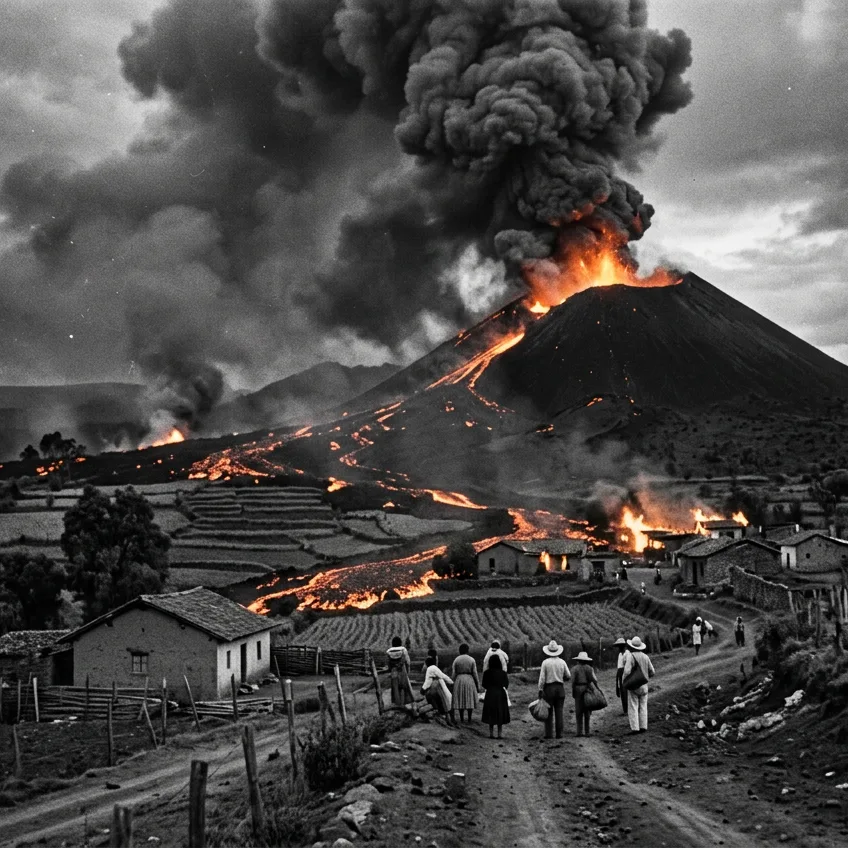
On February 20, 1943, farmer Dionisio Pulido was working in his cornfield in Michoacán, Mexico, when the ground beneath his feet began to shake. Suddenly, a small fissure opened in the soil, spewing dense smoke smelling of sulfur and glowing sparks. Without knowing it, Dionisio had just witnessed the birth of Parícutin, a geological event that transformed modern volcanology forever.
Unlike ancient volcanoes, Parícutin grew at an astonishing speed before the eyes of scientists and locals:
- In just 24 hours: the initial fissure threw ash and scoria, building a cone over 30 meters high.
- After one week: the mound exceeded 140 meters in elevation, hurling volcanic bombs hundreds of meters into the air.
- By the end of its first year: the colossus already measured 336 meters, and its basaltic lava flows were inexorably advancing over the valley.
The eruption completely buried the towns of Parícutin and San Juan Parangaricutiro, from which only the iconic stone bell tower of the local church survived, half-submerged in solidified basalt. After nine uninterrupted years of fury, Parícutin ceased its activity permanently in 1952, reaching a final height of 424 meters above ground level.
Being a monogenetic volcano—erupting only once in its existence—it provided the scientific community with the first opportunity in history to record the birth, development, and total extinction of a volcanic edifice step by step.
Source: Smithsonian Institution - Global Volcanism Program