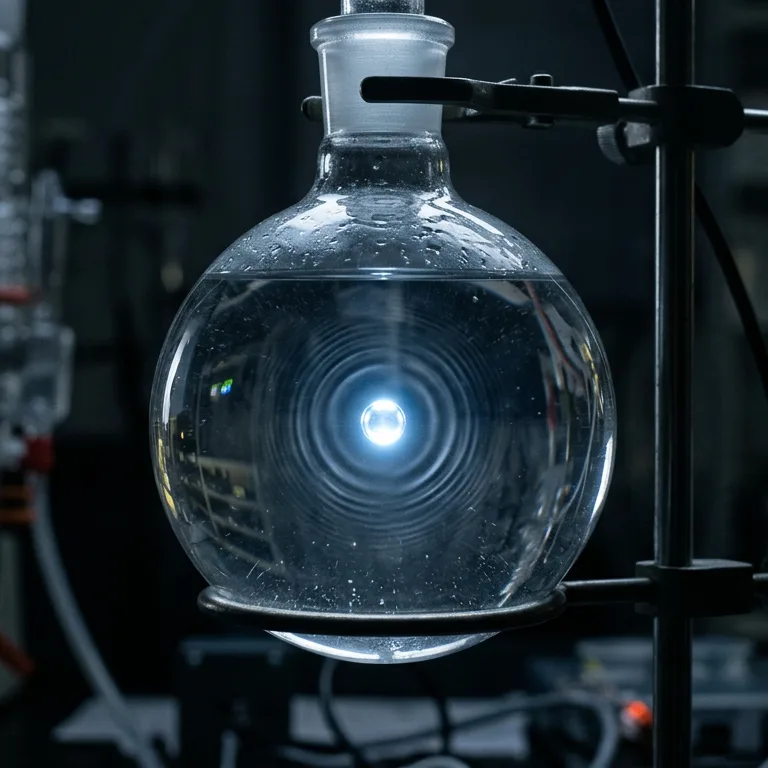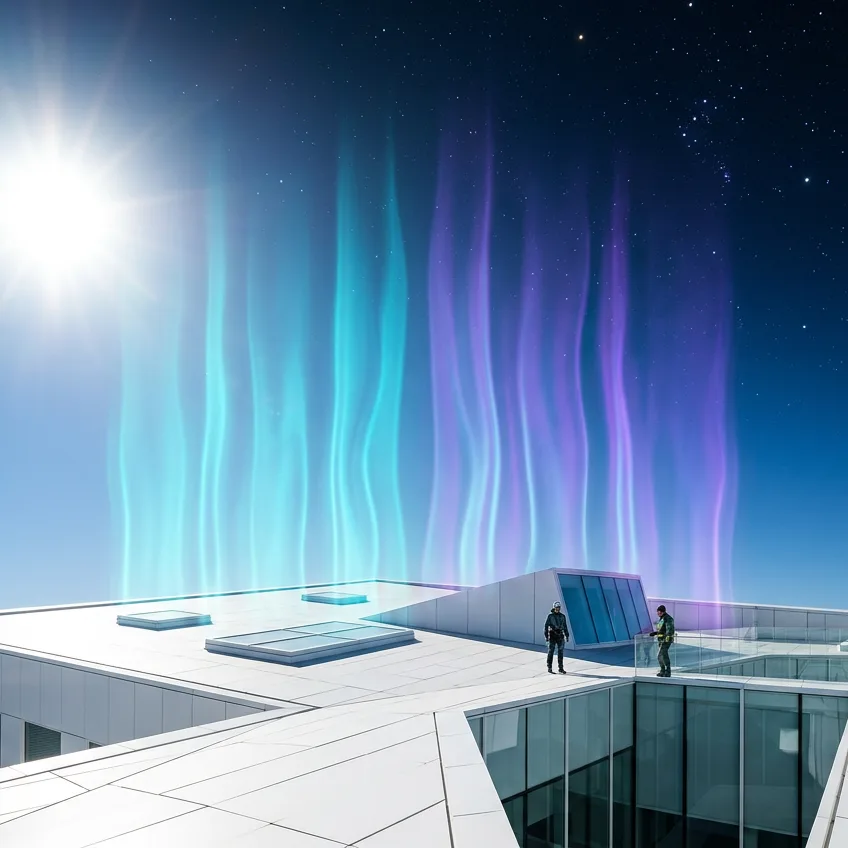
For centuries, cooling any object under direct solar radiation required a continuous supply of mechanical or electrical energy, as seen in traditional refrigeration. However, modern physics has perfected an unusual phenomenon: passive daytime radiative cooling, a materials technology capable of dropping a surface's temperature between 5 and 10 degrees Celsius below the surrounding air in broad daylight and without spending electricity.
The secret behind this feat lies in the so-called atmospheric transmission window, a band of the electromagnetic spectrum between 8 and 13 micrometers where airborne gases absorb virtually no thermal infrared radiation. Researchers at Stanford University and other leading centers managed to design polymer films and nanostructured paints endowed with two simultaneous optical properties:
- Extreme solar reflectance: They reject more than 96% of visible and ultraviolet sunlight to prevent heat absorption.
- Selective infrared emissivity: They channel and expel internal thermal energy precisely in the atmospheric window's wavelength.
Encountering no resistance and avoiding atmospheric absorption, this thermal radiation escapes directly into outer space, a cosmic heat sink sitting at a frigid temperature near 3 Kelvin (-270 °C). In this way, structures treated with these metamaterials shed their heat into the vacuum of the universe on a one-way trip, revolutionizing building insulation and climate change mitigation.
Source: Nature (Raman et al., Stanford University, 2014)