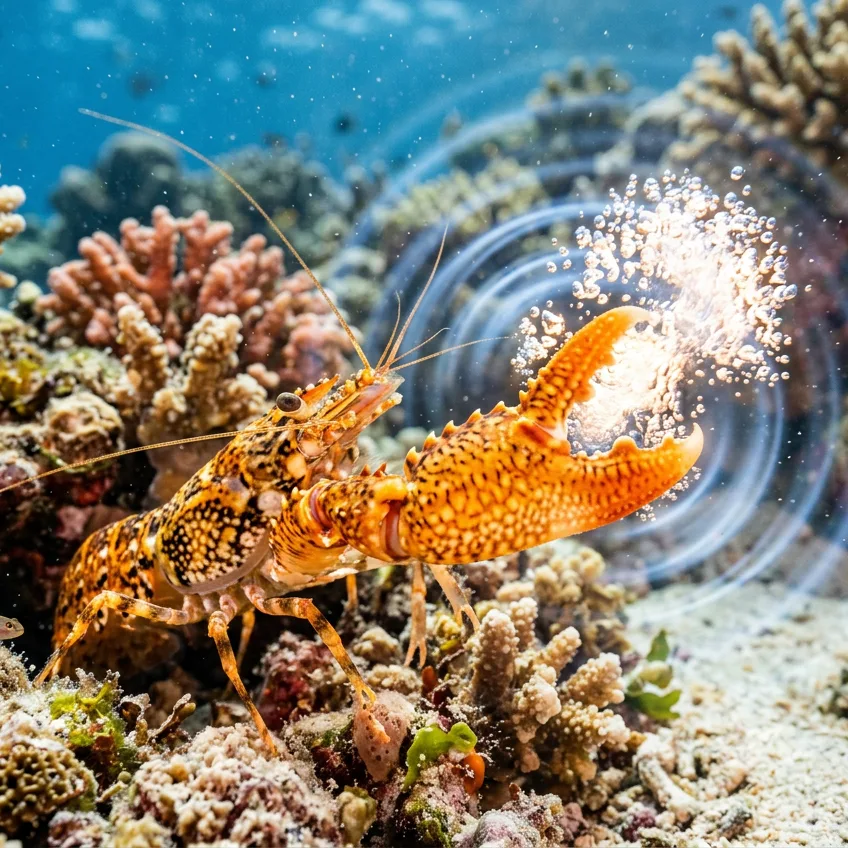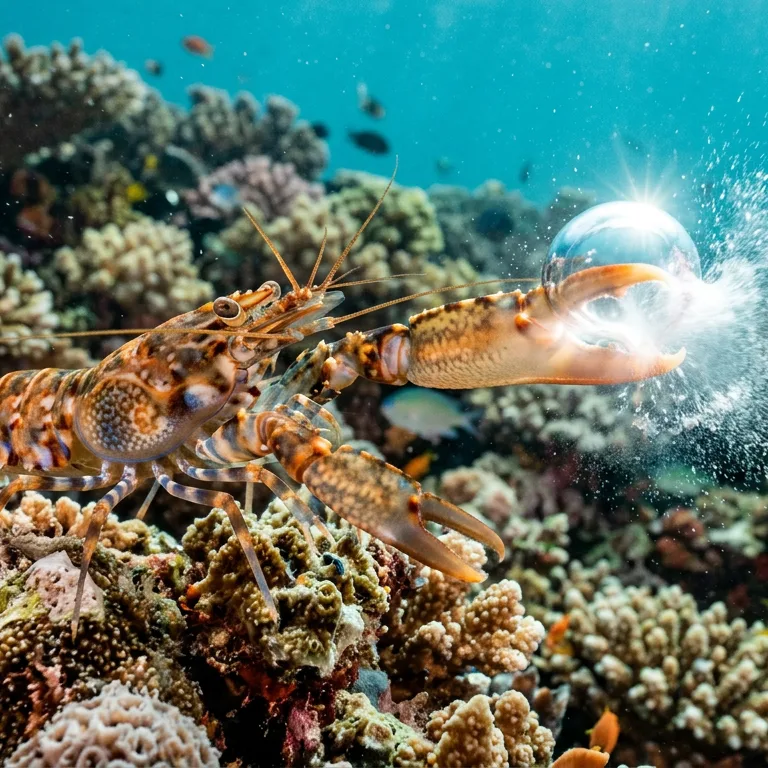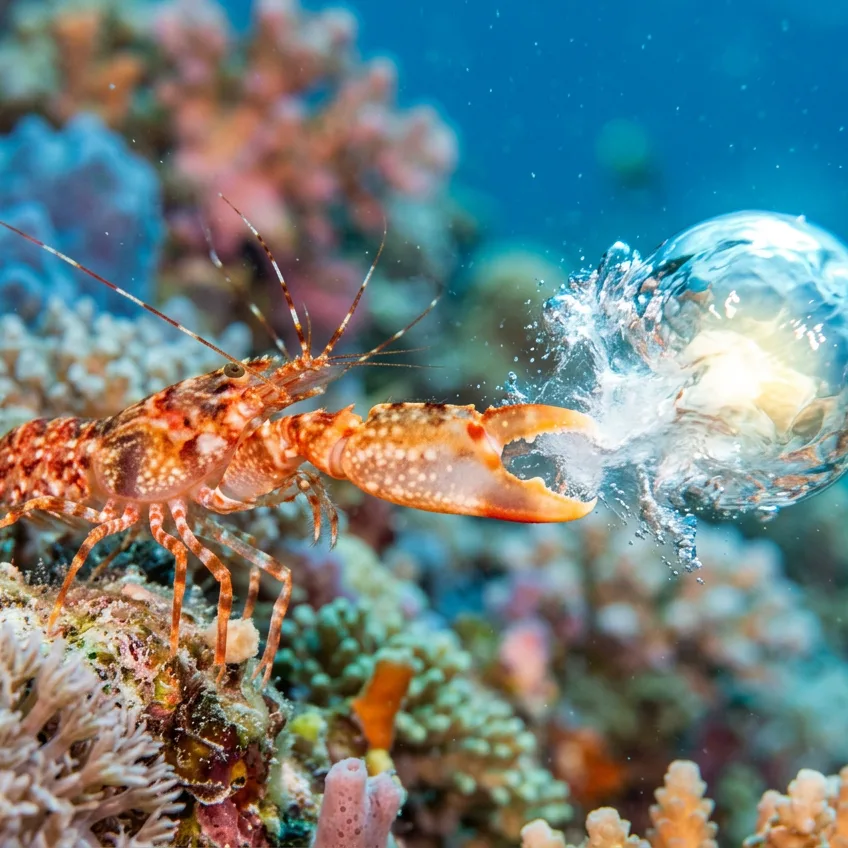
In tropical reefs lives a ballistic marvel barely five centimeters long: the pistol shrimp (family Alpheidae). Unlike other marine predators that rely on venom or brute force, this crustacean wields a biomechanical weapon based on extreme fluid physics.
One of its claws is oversized and features a biological spring capable of snapping shut at over 100 km/h. The movement is so violent that it does not physically strike its prey; instead, it shoots a high-speed jet of water that generates a low-pressure cavitation bubble. When this bubble collapses on itself in a fraction of a microsecond, it unleashes astonishing phenomena:
- Solar heat: Adiabatic compression raises the bubble's internal temperature above 4,700 °C, nearing the temperature of the solar photosphere.
- Sonoluminescence: The collapse is so energetic that it emits a flash of light imperceptible to the naked eye but scientifically detectable.
- Shattering noise: It produces an acoustic snap of up to 218 decibels, louder than a gunshot underwater.
The shockwave instantly stuns or kills small fish and crabs several centimeters away. The collective noise of entire colonies of these crustaceans is so immense that, during World War II, the United States Navy began using their coral banks to hide submarines from enemy sonar.
Source: Nature (Lohse et al., 'Snapping shrimp make flash of light', 2001)