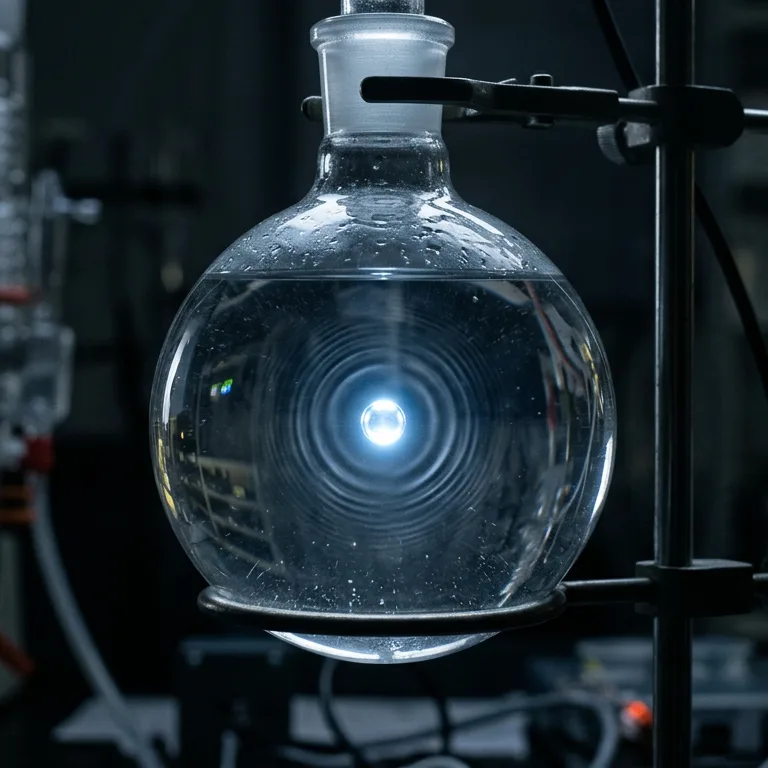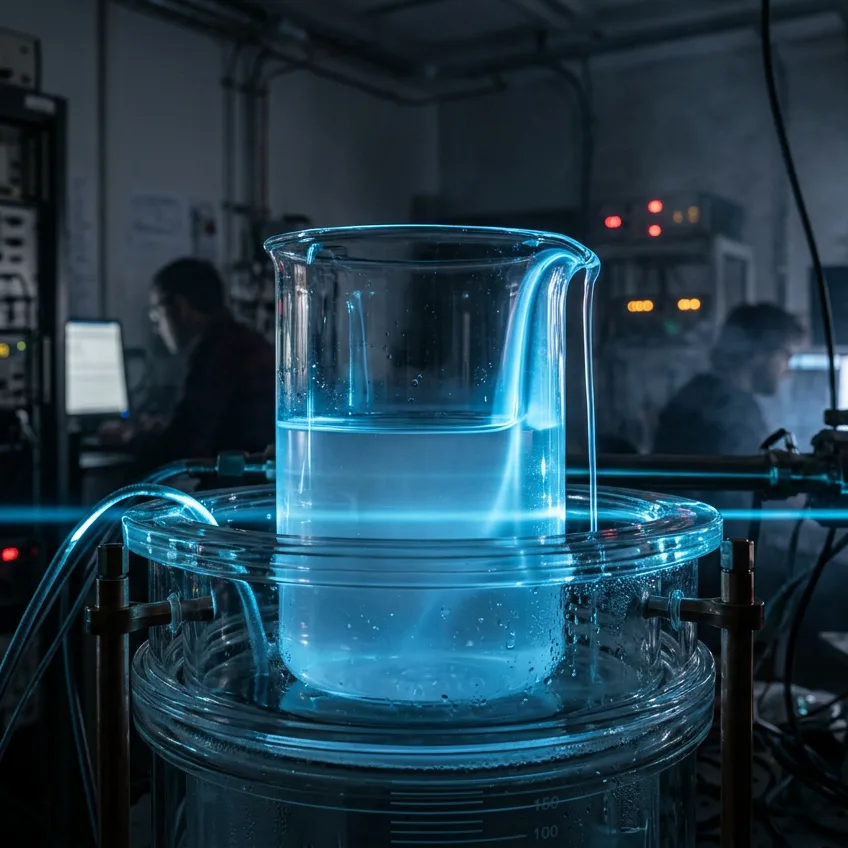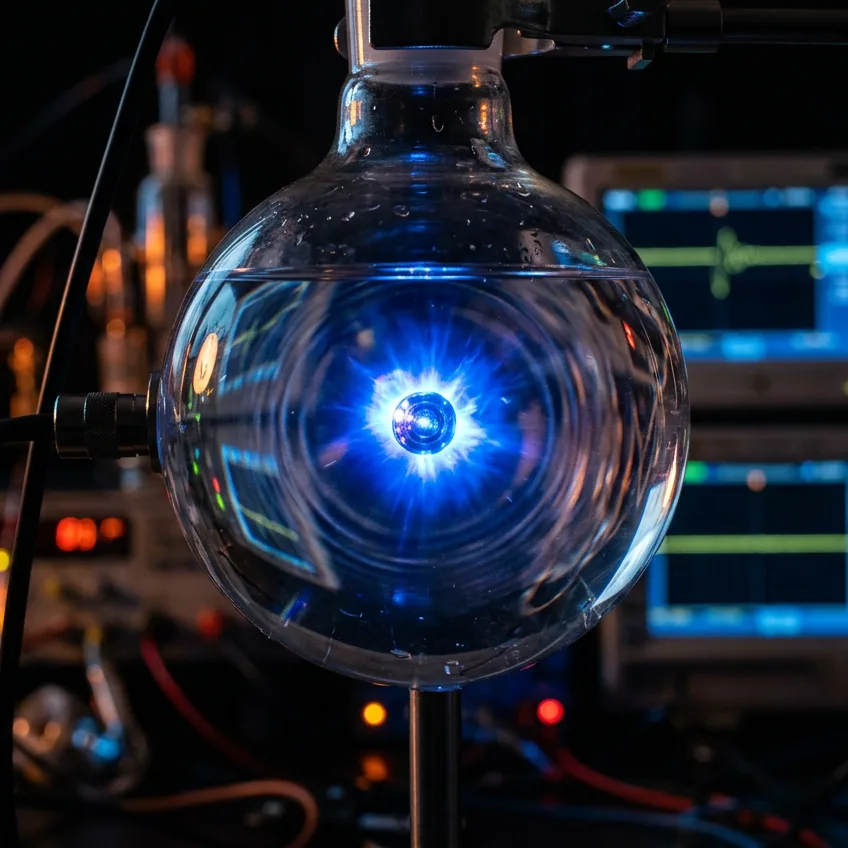
At first glance, the idea of turning sound into light seems like science fiction. However, sonoluminescence is a real physical phenomenon documented since the 1930s, when German researchers H. Frenzel and H. Schultes accidentally detected that photographic plates were fogged when submerged in water subjected to ultrasound.
The mechanism behind this feat is as violent as it is fascinating:
- Standing acoustic waves: Using piezoelectric transducers, a high-frequency sound wave is applied to a liquid-filled flask, creating high- and low-pressure zones that trap a microbubble of gas at its geometric center.
- Expansion and catastrophic collapse: During the low-pressure phase, the bubble expands enormously. When the high-pressure wave arrives, the cavity collapses inward at supersonic speeds, concentrating acoustic energy into an infinitesimal volume.
- Light emission and plasma: At the final moment of collapse, the gas inside is compressed so intensely that its temperature spikes above 15,000 Kelvin—nearly three times that of the surface of the Sun—stripping electrons from atoms and releasing a flash of ultraviolet and visible light that lasts just a few hundred picoseconds.
This process, known as single-bubble sonoluminescence (SBSL), can repeat its light pulses in a perfectly rhythmic fashion with each acoustic cycle, turning a simple sound vibration into a tiny miniature optical reactor.
Source: Nature / Physical Review Letters (studies by D. F. Gaitan and Seth Putterman on SBSL)