At the beginning of the 19th century, smallpox claimed millions of lives across the planet. Although Edward Jenner had already discovered that inoculating the attenuated cow virus conferred immunity, a colossal logistical obstacle remained: the biological fluid from the pustules degraded in barely twelve days, making it impossible to transport across long ocean voyages without refrigeration.
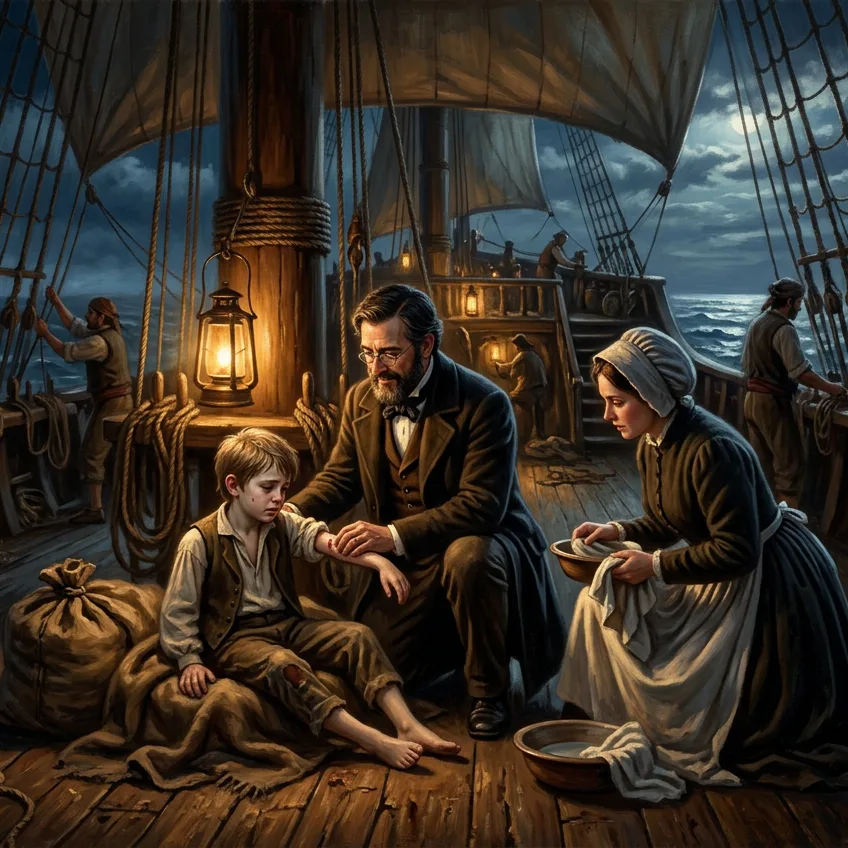
Faced with this dilemma, the Alicante-born physician Francisco Javier Balmis devised a solution as daring as it was unusual. In November 1803, the corvette María Pita set sail from the port of A Coruña with twenty-two orphan children between three and nine years old on board, under the care of rector Isabel Zendal. The young crew did not travel as conventional passengers, but as a sophisticated "living biological chain."
The medical protocol was organized through precise relays:
- Every week, two healthy children were inoculated through a small incision in the arm.
- After nine or ten days, when the mature pustules appeared, fresh lymph loaded with antibodies was extracted with a scalpel.
- That material was immediately transferred to the next pair of non-immunized little ones.
Thanks to this consecutive arm-to-arm transmission, the protective fluid arrived active in Puerto Rico, subsequently expanding across all of Hispanic America, the Philippines, and even China. The World Health Organization recognizes it today as the first international mass vaccination campaign in history, managing to protect more than 250,000 people for free and laying the foundations for the global eradication of the disease.
Source: Archivo General de Indias / Pan American Health Organization (PAHO)