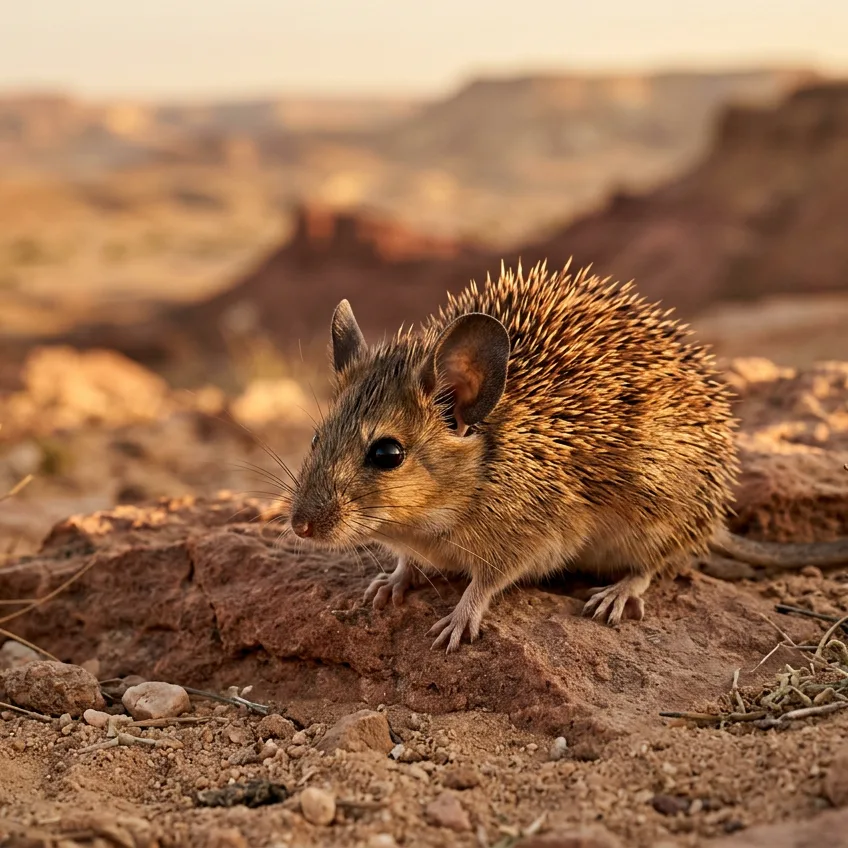
In the animal kingdom, the ability to regenerate complex organs and tissues after a severe injury seemed exclusive to amphibians such as salamanders or axolotls. Mammals, limited by an aggressive immune response, usually seal severe damage with fibrous scar tissue. However, in 2012, a team of biologists from the University of Florida documented an unprecedented phenomenon in the journal Nature: the African spiny mouse (genus Acomys).
When attacked by a predator, this small rodent resorts to an extreme defense known as dermal autotomy. Its skin is up to twenty times more fragile than that of a common mouse, allowing it to shed up to 60% of the surface of its back with a simple struggle. The attacker is left with a mouthful of skin while the mouse escapes raw.
The truly revolutionary part occurs during healing:
- Regeneration blastema: Instead of depositing rigid collagen, the mouse forms a mass of undifferentiated proliferative cells identical to the amphibian blastema.
- Complete reconstruction: In just thirty days, it completely regenerates the epidermis, dermis, sweat glands, hair follicles, and pigmented hair without leaving a trace of a scar.
- Cartilage repair: Experiments showed that four-millimeter holes punched in its ears are filled with new, functional cartilage.
The secret lies in its immune system, which is capable of mitigating the chronic inflammation that typically induces fibrosis in mammals. Currently, this evolutionary marvel is the primary model in regenerative medicine to achieve scar-free healing in human burns and organs.
Source: Nature (Seifert et al., 2012 - Skin shedding and tissue regeneration in African spiny mice)