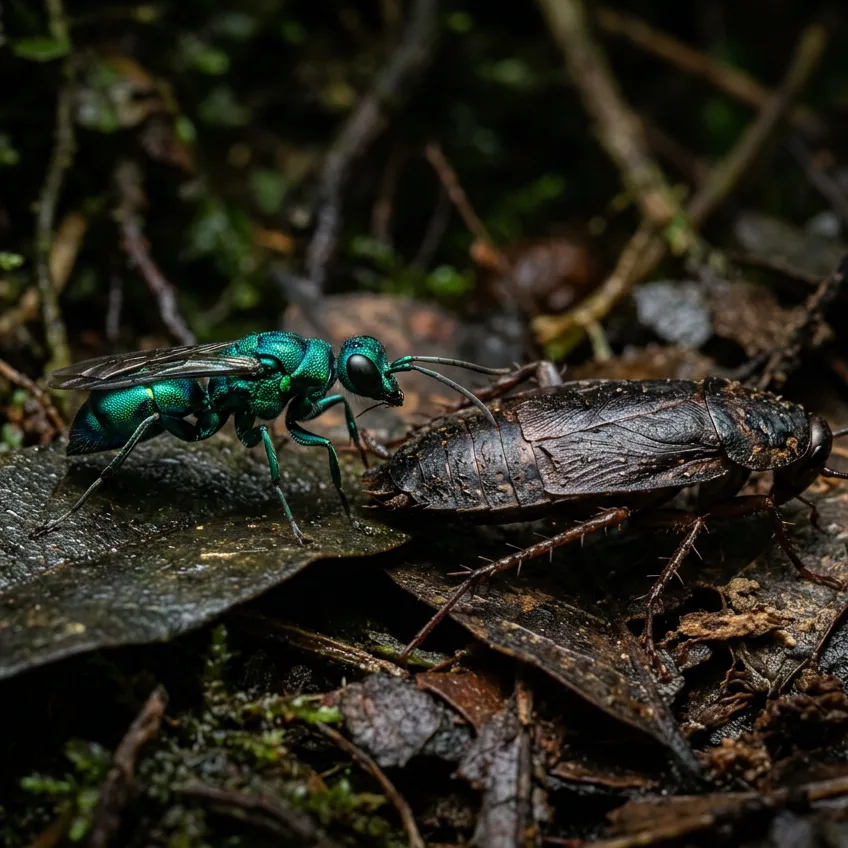
In the animal kingdom, few predatory mechanisms achieve the surgical precision of the emerald jewel wasp (Ampulex compressa). This solitary hunter with metallic reflections does not kill its prey, typically a common American cockroach three times its size and weight, but instead reprograms its nervous system through a sophisticated two-step intervention.
The attack consists of two lethally coordinated thrusts:
- The first sting: The wasp temporarily immobilizes the cockroach's front legs by injecting a neuromuscular cocktail into the prothoracic ganglion, thereby preventing any violent defense.
- Brain neurosurgery: With the victim defenseless, the wasp inserts its stinger with microscopic precision through the head into two key regions of the brain: the subesophageal ganglion and the supraesophageal ganglion.
This second venom contains a biochemical cocktail that blocks the action of octopamine, a neurotransmitter essential for triggering the alert and escape response. The cockroach is not physically paralyzed; it maintains its motor ability intact and its vital organs function perfectly, but it completely loses the instinct to flee.
Next, the wasp clips the cockroach's antennae to feed on its hemolymph and leads it walking toward a burrow by tugging on the stubs like a dog on a leash. Once inside, it lays an egg on its abdomen and seals the entrance. The larva emerges and slowly consumes the non-vital organs of the still-living prey, ensuring fresh meat until its metamorphosis is complete.
Source: Journal of Experimental Biology (Ram Gal & Frederic Libersat, Ben-Gurion University of the Negev)