In July 1184, the city of Erfurt (in modern-day Germany) hosted an important imperial assembly summoned by the future Holy Roman Emperor, King Henry VI. The goal was to mediate a fierce territorial dispute between Archbishop Conrad of Mainz and Landgrave Louis III of Thuringia. To witness the negotiations, dozens of aristocrats, knights, and prelates from across the realm crowded into the second-floor hall of the Church of St. Peter's monastery.
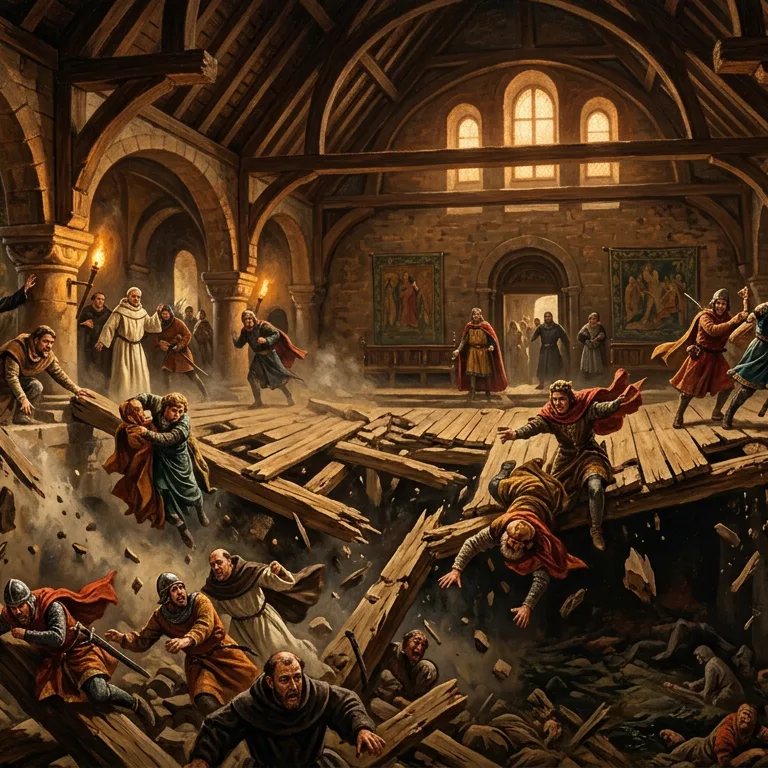
However, the building's wooden structure, weakened and rotted by moisture, was not designed to support such concentrated weight. In the middle of the debate, the main beams gave way with a deafening crack. The second floor collapsed onto the first, which, unable to withstand the impact, plunged directly into the basement, where the monastery's gigantic communal cesspool was located.
The tragic accident, known in German chronicles as the Erfurter Latrinensturz, left around sixty dead. The vast majority of the nobles did not die from the injuries of the fall, but drowned or suffocated from the gases and fecal sludge accumulated over years in the cesspit.
King Henry VI himself miraculously survived because he was sitting in a stone niche on the outer wall, hanging above the void until servants were able to rescue him with ladders. Following the shock, the monarch left Erfurt immediately, and the assembly was postponed for years.
Source: Chronica Reinhardsbrunnensis / Deutsche Chroniken (Monumenta Germaniae Historica)