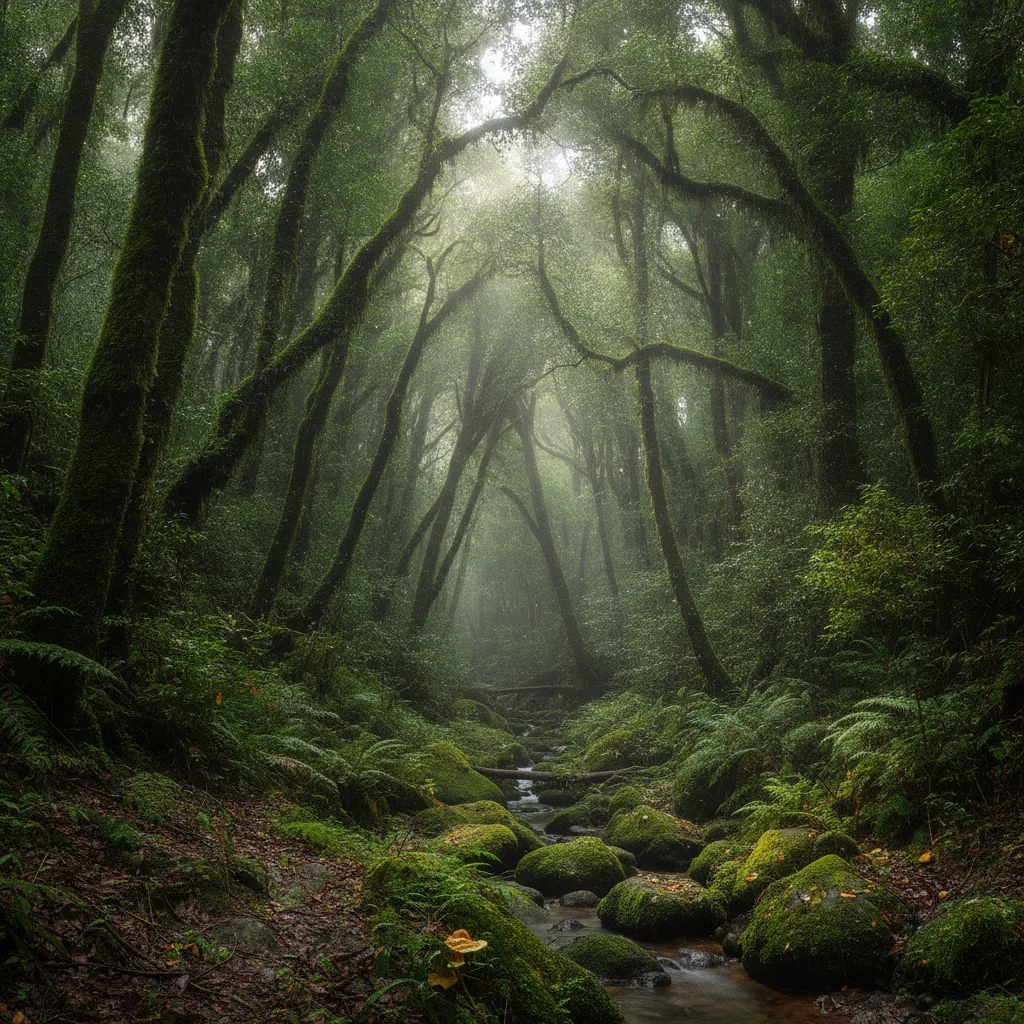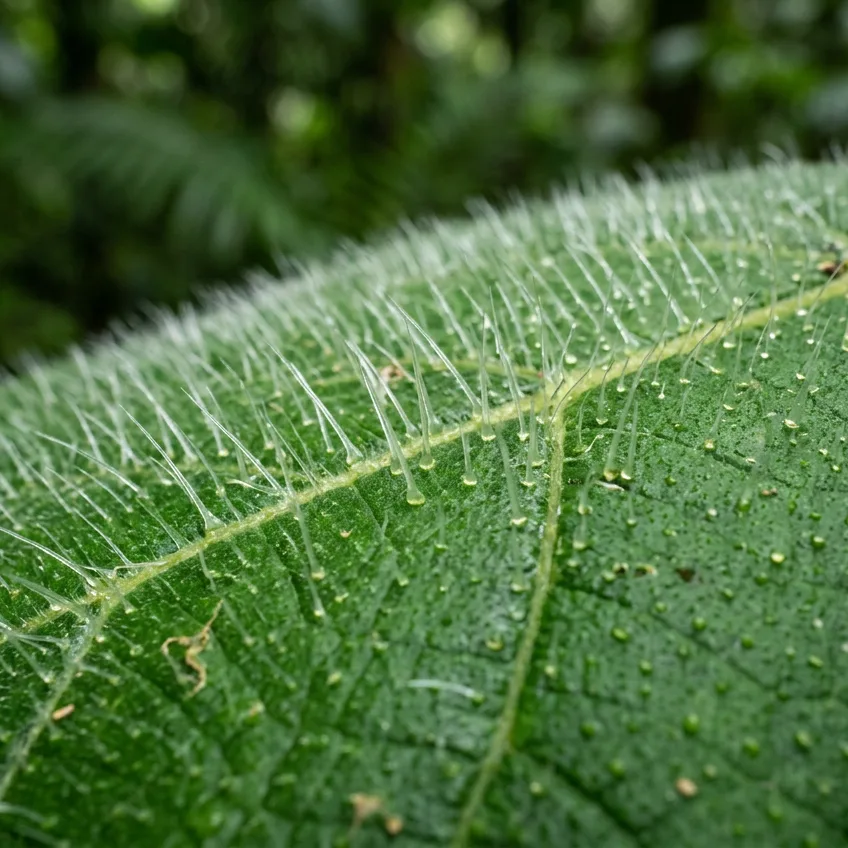
In the rainforests of northeastern Australia lives Dendrocnide moroides, popularly nicknamed the Gympie-Gympie bush or the "suicide plant." Although at first glance it looks like an harmless shrub with velvety, heart-shaped leaves, it is considered the most toxic and feared plant on the planet.
Its danger lies in its entire surface being covered by millions of trichomes: tiny hollow needles made of pure silica, practically identical to fiberglass micro-ampoules. At the slightest touch, even through light clothing, the tips break off, embed into the dermis, and discharge a devastating chemical payload.
The plant's arsenal contains moroidin and a family of peptides named gympietides. These molecules possess an extraordinarily stable three-dimensional architecture: they resist heat, acids, and the body's enzymatic defenses. Upon contacting nerve endings, they hijack the sodium channels of sensory neurons, forcing them to remain open and sending continuous signals of unbearable pain to the brain.
Those who have brushed against it describe the sensation of being burned with hot acid and electrocuted at the same time. Because the silica needles are so fine that the body cannot dissolve or expel them, the pain can flare up again from a simple cold shower or a change in atmospheric pressure months or even two years after contact. Botanists who collect specimens must wear hazmat suits and industrial respirators, as dried needles blown by the wind can trigger nosebleeds and severe respiratory spasms.
Source: Science Advances / Australian Geographic