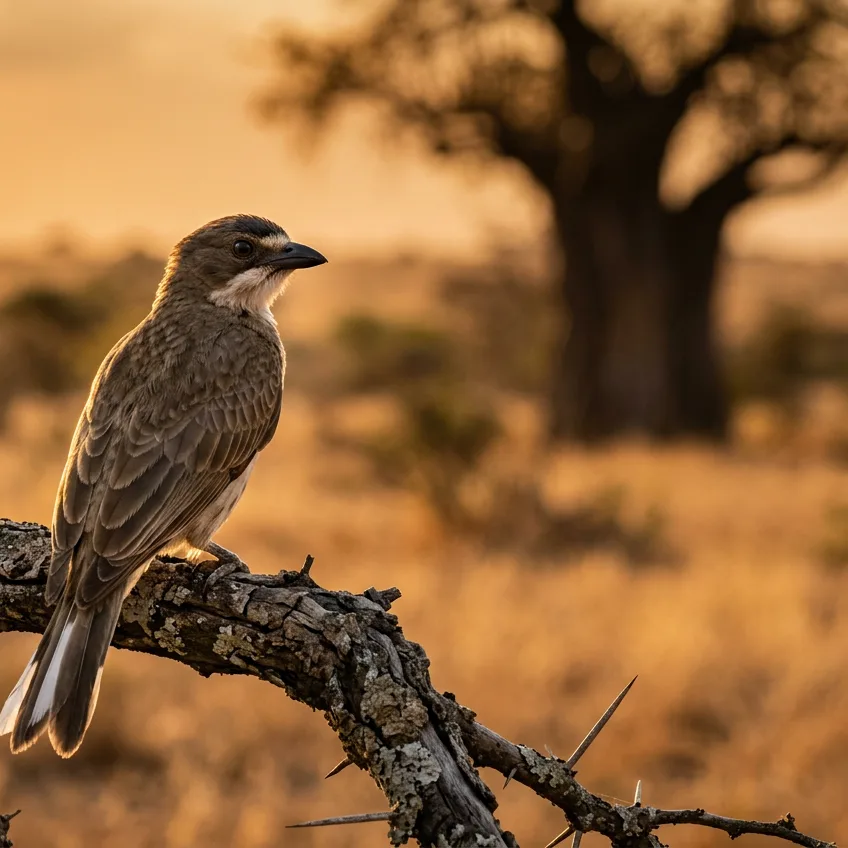
In the animal kingdom there are countless examples of symbiosis, but the greater honeyguide (Indicator indicator) stars in one of the most extraordinary relationships on the planet: a voluntary and bidirectional pact between a completely wild species and human beings.
This small African bird loves beeswax and larvae, being one of the very few vertebrates with enzymes capable of digesting pure wax. However, it lacks the physical strength or tools to penetrate the solid trunks where aggressive African honeybees nest. To overcome this obstacle, the honeyguide recruits two-legged allies such as hunters of the Yao ethnic group in Mozambique or the Hadza people in Tanzania.
The cooperation works like a genuine interspecies conversation:
- The recruitment call: Foragers make a guttural sound passed down through generations (a vibrating trill followed by a distinctive grunt).
- The bird's response: The bird replies with an agitated chatter, flies from branch to branch, and adjusts its flight path so humans can follow on foot.
- The destination signal: Upon reaching the honeycomb, the bird emits a soft call and perches quietly near the canopy, pinpointing the exact location of the hive.
The hunters use smoke to calm the bees, chop into the wood, and harvest the honey. As an implicit reward, they always leave pieces of honeycomb with exposed wax for the bird. Research published in the journal Science confirmed that this learned communication more than doubles the foraging success of both species.
Source: Science (Spottiswoode et al., 'Reciprocal signaling in honeyguide-human mutualism', 2016)