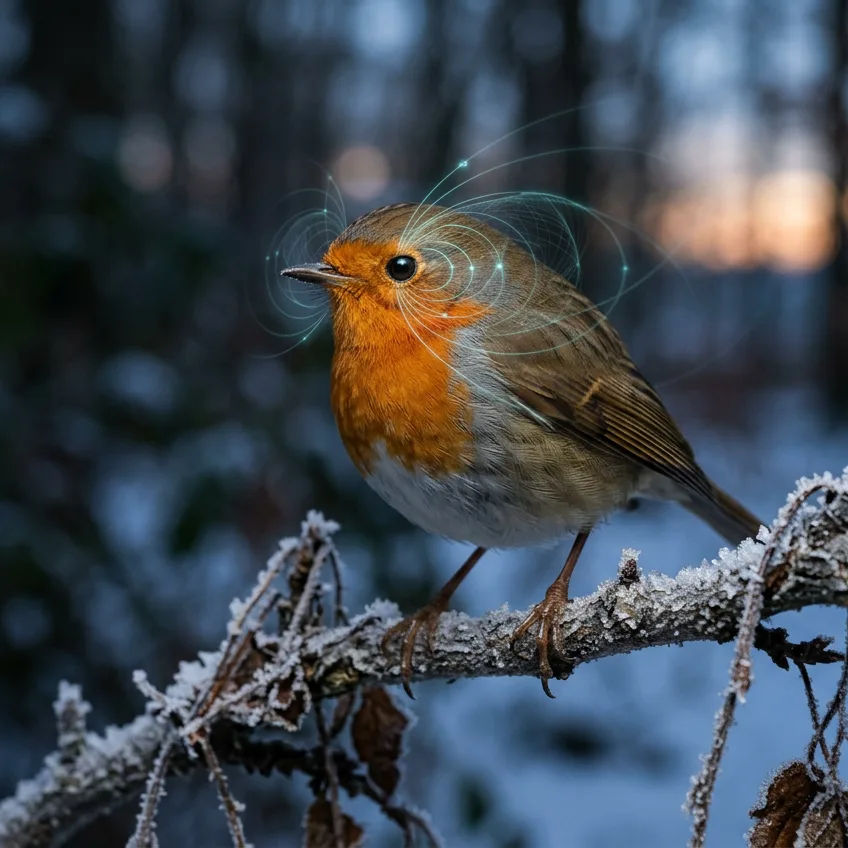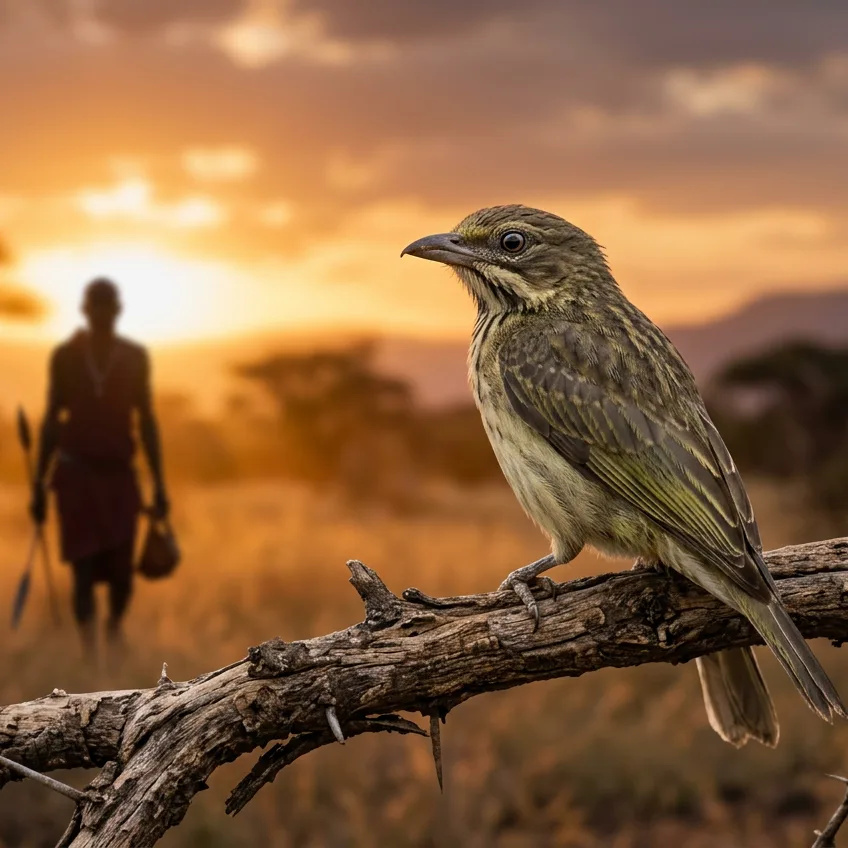
In the savannas of sub-Saharan Africa, an unusual ethological phenomenon takes place: the greater honeyguide (Indicator indicator) forms voluntary partnerships with human beings to raid wild beehives, using a mutual and two-way acoustic language.
This small bird possesses the almost unique ability to digest beeswax thanks to specialized bacteria in its gut, but lacks the strength to crack open the hollow tree trunks where swarms hide. To overcome this obstacle, it seeks out local hunter-gatherers—such as the Yao people of Mozambique or the Hadza of Tanzania—and emits a persistent, chattering call while hopping from branch to branch in the exact direction of the hive.
The astonishing part, demonstrated in research led by the University of Cambridge and published in the journal Science, is that the communication is not a mere animal reflex, but a perfected cooperative dialogue:
- Coded human call: Yao honey-hunters produce a guttural sound passed down through generations ("brrr-hm"), tripling the likelihood that a honeyguide will come to meet them.
- Active guidance: The bird awaits the human's vocal response and adjusts its flight distance to make sure they do not lose its trail.
- Mutual reward: Once the honey-hunters smoke the nest and harvest the honey, they leave the wax combs intact to reward the bird.
Unlike domesticated dogs or falcons, these birds have never been trained or raised in captivity. They hatch as brood parasites in other birds' nests, meaning their ability to interpret specific human dialects is not blind instinct, but a living cultural tradition shared between two species.
Source: Spottiswoode, C. N., Begg, K. S., & Begg, C. M. (2016). Reciprocal signaling in honeyguide-human mutualism. Science, 353(6297), 387-389.