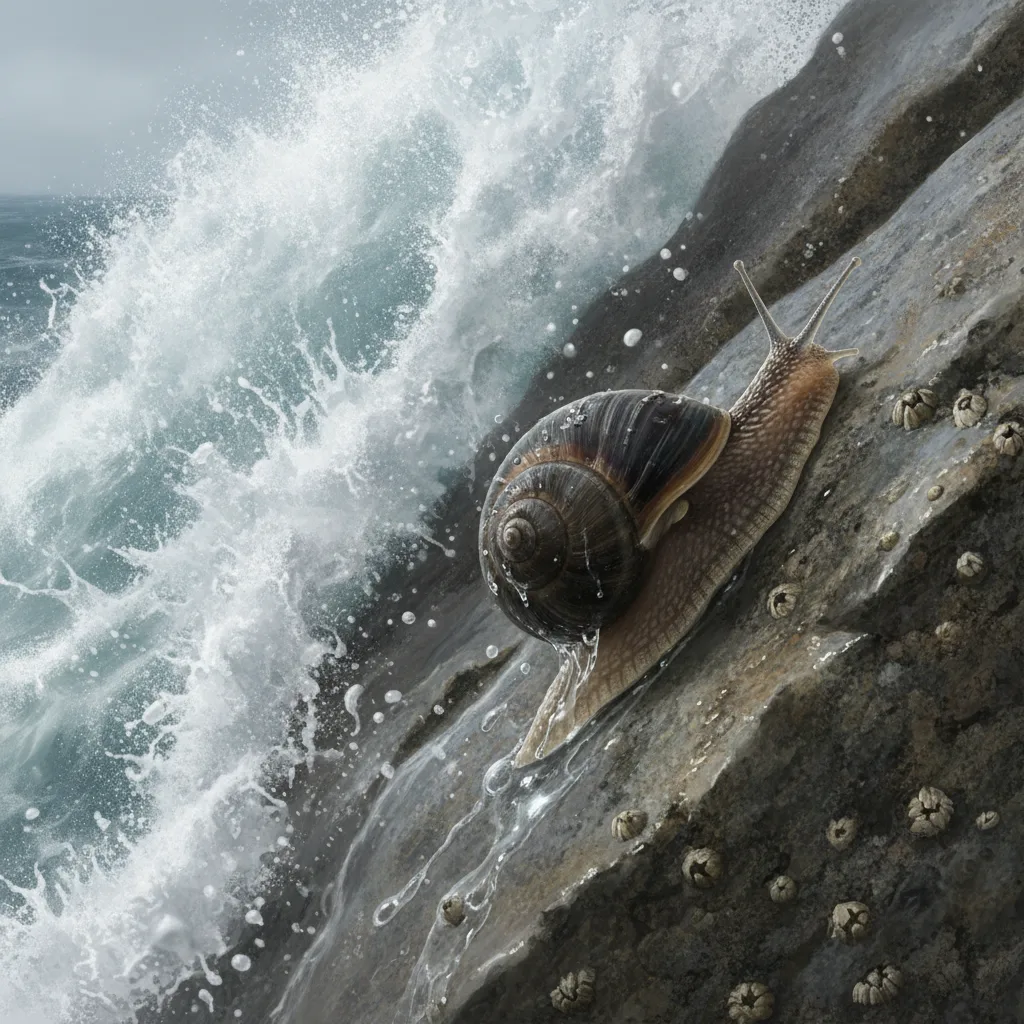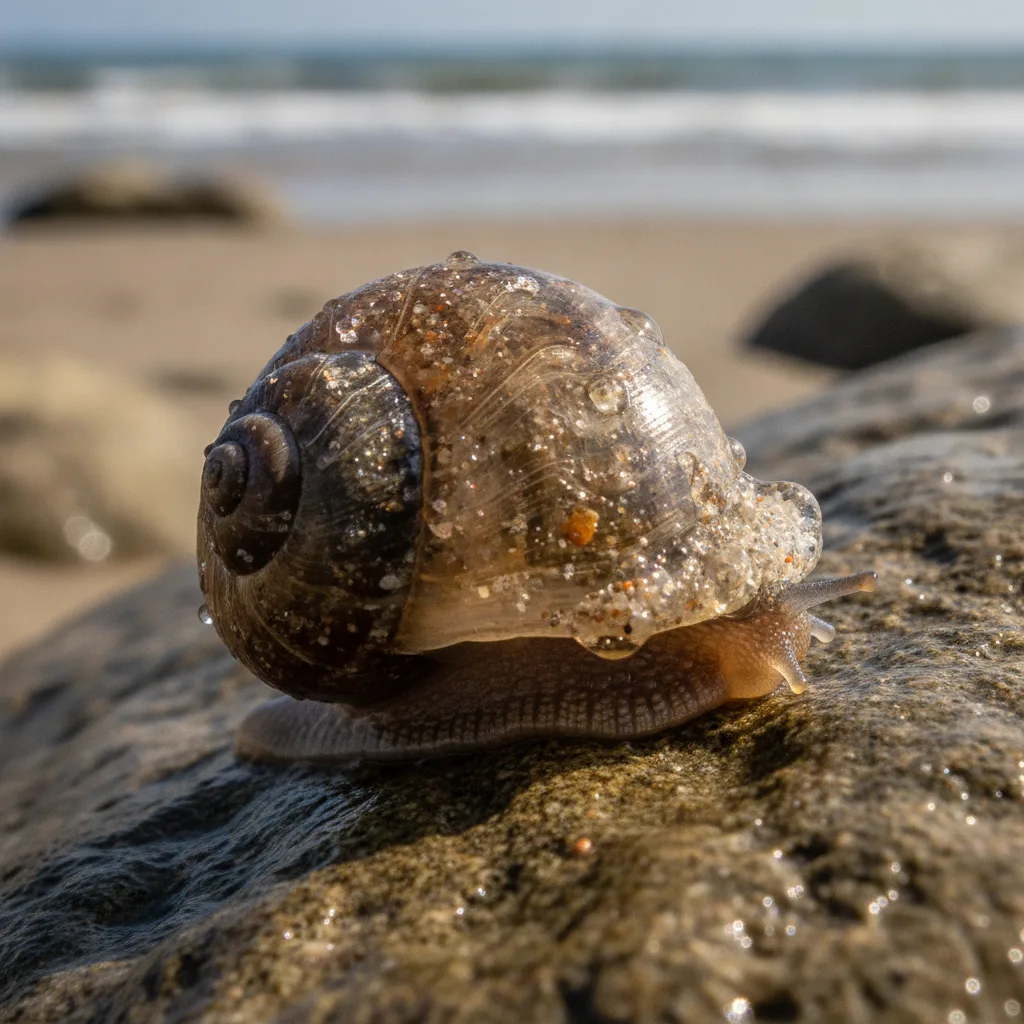
The Littoraria obtusata, a small rocky shore snail, possesses an astonishing ability: it can incorporate sand grains and silica particles directly into its shell structure during growth. This process, known as environmentally induced biomineralization, is uncommon in mollusks, which typically secrete pure calcium carbonate.
Research published in the Journal of Molluscan Studies (2018) revealed that the snail uses a special organic matrix as glue to trap and bind external minerals. The resulting shell is not only more resistant to predators like crabs, but it also takes on a unique translucent and crystalline effect.
- Process: The snail's mantle secretes a protein that binds to quartz particles.
- Function: The "crystal" shell can confuse predators by diffracting light.
- Habitat: It is only observed in populations exposed to strong currents that carry fine sediments.
This adaptation demonstrates how life can reuse abiotic materials to build complex structures, a principle that now inspires self-assembling biomaterial designs.
Source: Journal of Molluscan Studies (2018) - "Environmental particle incorporation in the shell of Littoraria obtusata"