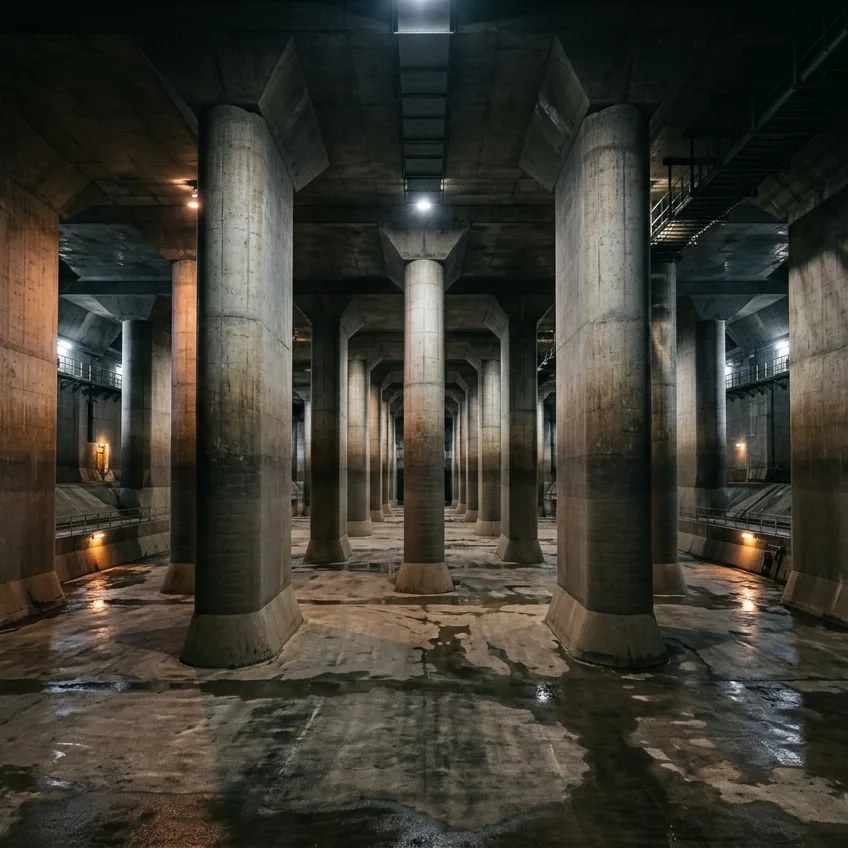
Fifty meters beneath the urban ground of Kasukabe, on the outskirts of Tokyo, lies one of the most imposing hydraulic engineering works of modern history: the Metropolitan Area Outer Underground Discharge Channel, commonly known as G-CANS. Designed to neutralize the devastating impact of typhoons and torrential rains that historically flooded the Japanese capital, this infrastructure resembles a sacred temple excavated in the depths.
The core of this system is a massive surge tank measuring 177 meters in length, 78 meters in width, and 25 meters in height. The ceiling is supported by 59 colossal reinforced concrete pillars, each weighing 500 tons. Their aerodynamic design, similar to the keel of a ship, serves a critical dual function: supporting the thrust of the overlying ground and smoothing the chaotic flow of water to prevent turbulence that could compromise the structure.
The complex operates like a gigantic clockwork mechanism:
- Five massive silos: Vertical shafts 65 meters deep and 32 meters in diameter collect the overflow from local rivers; each silo has enough capacity to hold the entire Statue of Liberty inside.
- Aviation propulsion: When waters reach critical levels, a set of pumps powered by gas turbines modified from commercial jet engines discharges the water into the Edo River at a rate of 200 cubic meters per second.
Since it began operating in the early 2000s, this titanic network has reduced flood property damage in Tokyo by more than 80%, becoming a benchmark for urban adaptation to extreme weather events.
Source: Ministry of Land, Infrastructure, Transport and Tourism of Japan (MLIT)