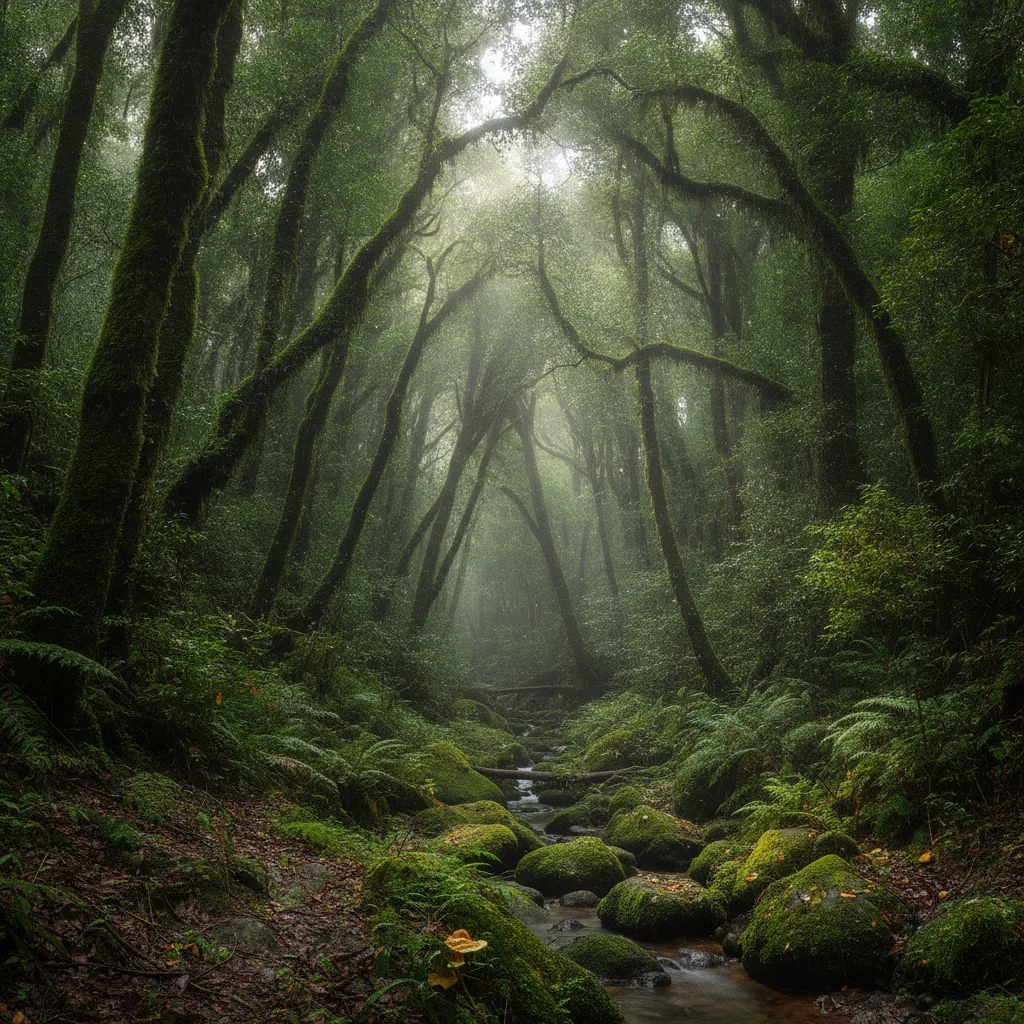
Forests possess their own version of the internet called the 'wood wide web', an underground communication network that connects trees through microscopic fungi.
This mycelial network allows trees to exchange information, nutrients, and warnings about threats like pests or droughts. The fungi act like natural fiber optic cables, carrying chemical signals between different plant species.
Surprising functions of this natural network:
- Resource exchange: Adult trees nourish young seedlings that do not receive enough sunlight
- Alarm system: When a tree is attacked by insects, it sends chemical signals warning others
- Family communication: Mother trees can recognize and favor their own offspring
- Survival network: Dying trees transfer their resources to healthy neighbors
Ecologist Suzanne Simard from the University of British Columbia has shown that a single tree can be connected to hundreds of others through this fungal network. In some forests, this network can extend for square kilometers.
This discovery has revolutionized our understanding of forests: they are not collections of individual trees, but collaborative superorganisms.
Source: University of British Columbia