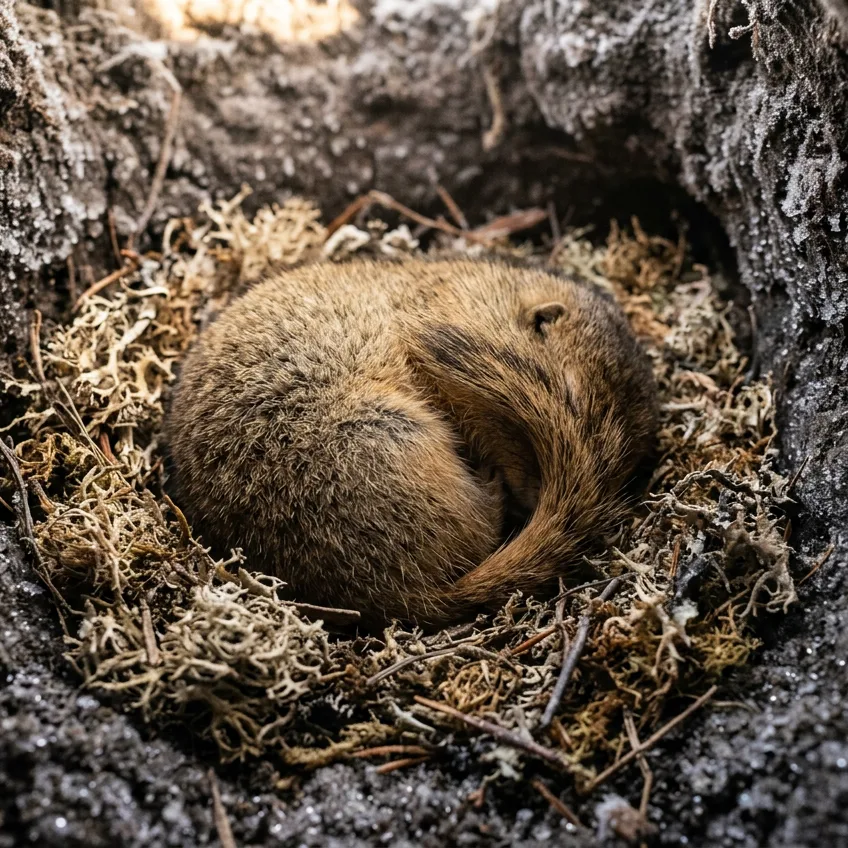
In the frozen tundras of Alaska and Siberia, the Arctic ground squirrel (Urocitellus parryii) defies the conventional laws of mammalian physiology. When the harsh northern winter arrives, this animal enters an extreme hibernation of up to eight months in which its heart rate plummets from 300 beats per minute to barely one or two, while its breathing nearly stops entirely.
However, its most astonishing feat lies in its core temperature: it is the only known mammal capable of cooling its body below the freezing point of water, reaching measured records of up to -2.9 °C in its abdomen and neck without its tissues suffering cellular damage or crystallizing into ice.
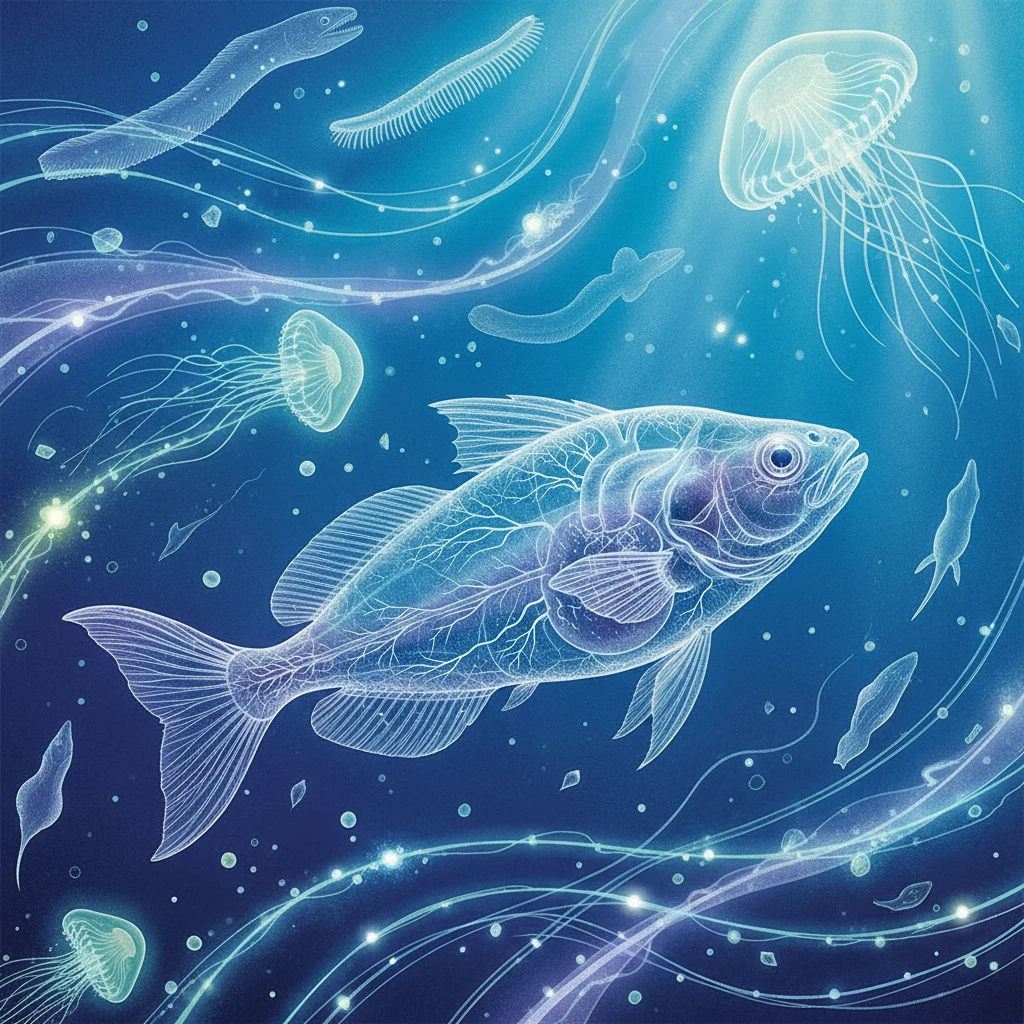
How does it avoid turning into a deadly solid block? The key lies in a physicochemical phenomenon known as supercooling. Unlike certain polar fish, the squirrel does not rely on massive concentrations of antifreeze proteins; instead, it actively purifies its bloodstream before entering torpor, expelling any microscopic speck or cellular impurity that could act as a nucleation site for the initiation of ice crystals.
Despite this icy state, every two to three weeks its brain triggers brief involuntary muscle shivers, raising its temperature to the usual 37 °C for a few hours to regenerate synaptic connections before returning to the extreme cold. This prodigious biological mechanism is currently being studied to revolutionize the cryopreservation of human organs intended for transplants.
Source: Science (Barnes, B. M., 'Freeze Avoidance in a Mammal: Body Temperatures Below 0 °C in an Arctic Hibernator')