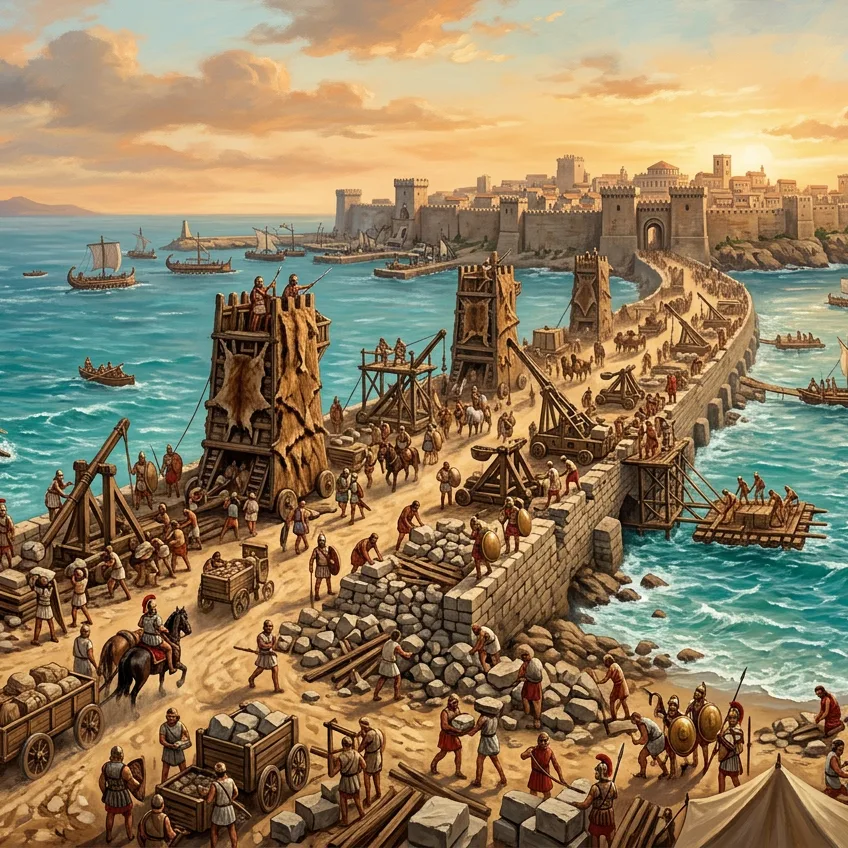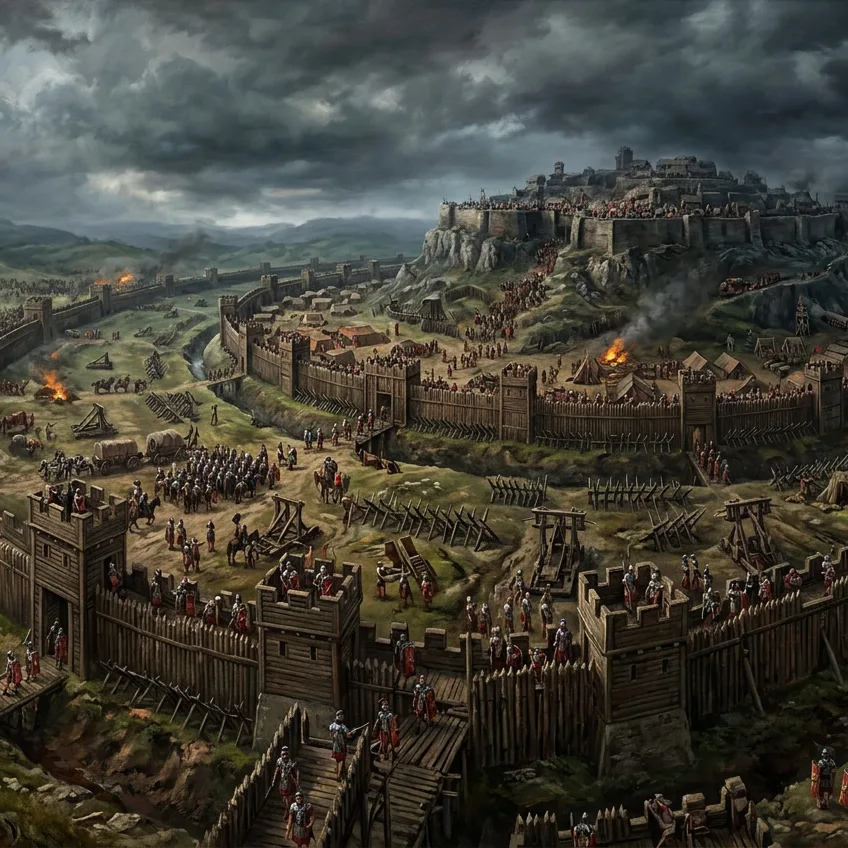
In the autumn of 52 BC, atop the hill of Alesia, the Gallic leader Vercingetorix entrenched himself along with some 80,000 warriors, awaiting relief from a massive force drawn from the other Gallic tribes. With barely 50,000 legionaries and knowing he would soon be surrounded from behind, Julius Caesar devised one of the most improbable and extreme feats of military engineering in ancient history.
Instead of merely laying siege or retreating, Caesar ordered the construction of a double concentric ring of fortifications:
- The circumvallation line: An inner palisade about 16 kilometers long to starve out the Gallic army inside the stronghold and cut off any breakout attempt.
- The contravallation line: A colossal outer wall of 21 kilometers, designed solely to defend the Roman rear from the imminent relief army, which numbered more than 250,000 soldiers.
Between both rings, the legions built a lethal labyrinth of traps: waterlogged ditches four meters deep, rows of sharpened stakes buried like primitive landmines, and earthworks topped with wooden watchtowers every twenty-five meters.
When the outer Gallic army arrived and attacked in unison with Vercingetorix's besieged troops, the legions fought on two simultaneous fronts back-to-back. Shielded by their labyrinth of wood and earth, the Romans held out through days of desperate assaults, securing a victory that definitively cemented Rome's dominion over western Europe.
Source: De Bello Gallico (Commentaries on the Gallic War) by Julius Caesar, and French archaeological excavations at Alise-Sainte-Reine.