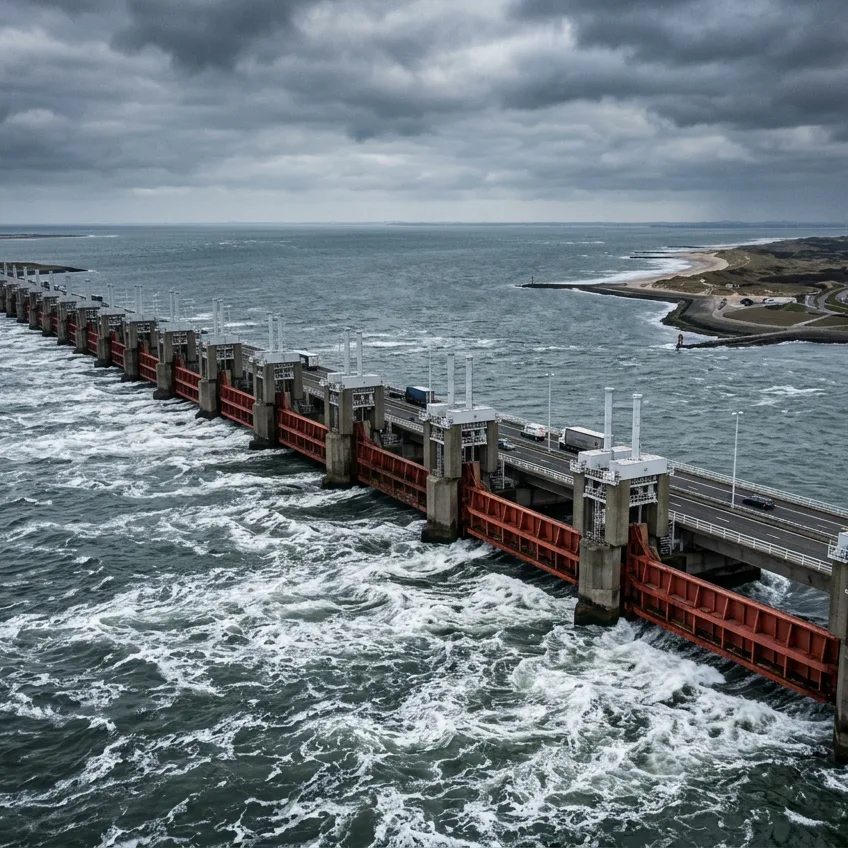
Following the catastrophic 1953 flood, the Netherlands launched the Delta Works, the most ambitious hydraulic engineering project on the planet. Its crowning achievement was the Eastern Scheldt storm surge barrier (Oosterscheldekering), completed in 1986. Instead of building a closed dam that would have turned the estuary into a freshwater lake and destroyed its valuable biodiversity, engineers designed a semi-open barrier nine kilometers long with sixty-two steel gates that only close during extreme storms.
The geotechnical challenge was immense: the North Sea bed consisted of quicksand and mud that currents constantly eroded. To place sixty-five reinforced concrete pillars up to fifty meters high and weighing 18,000 tonnes each without them sinking into the mud, a fleet of world-first ships was created:
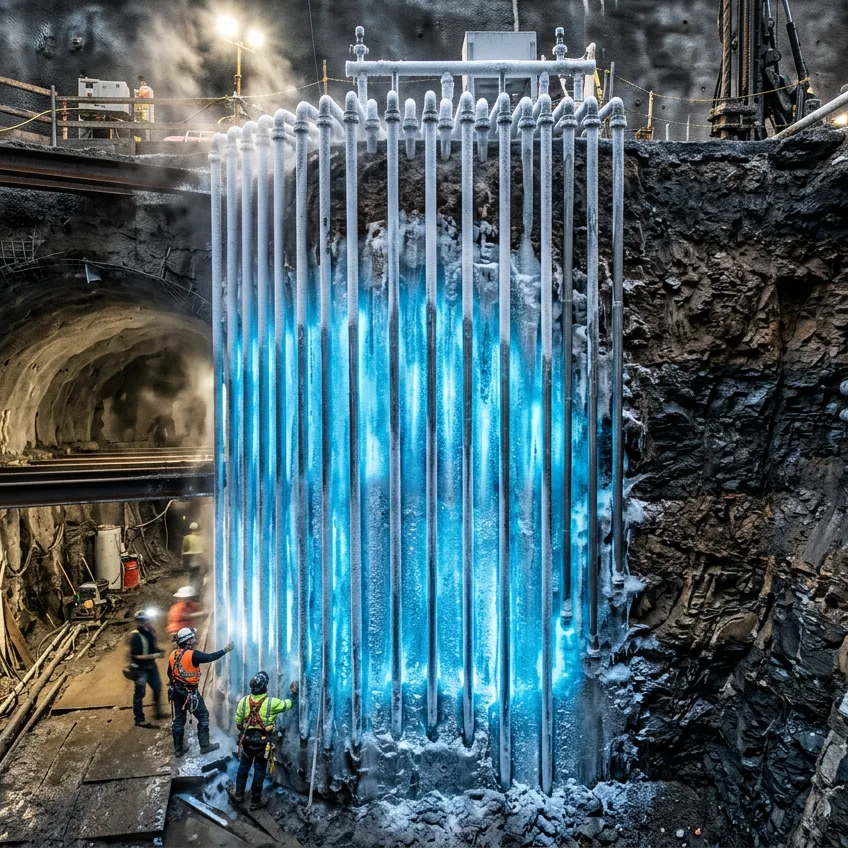
- The vessel Mytilus: Equipped with four giant twenty-five-meter vibrating needles, it liquefied and compacted the loose seabed sand to densify it.
- The ship Cardium: It rolled out colossal synthetic fiber 'mattresses' filled with sand and fine gravel across the seabed, preventing water from eroding the pillars' foundations.
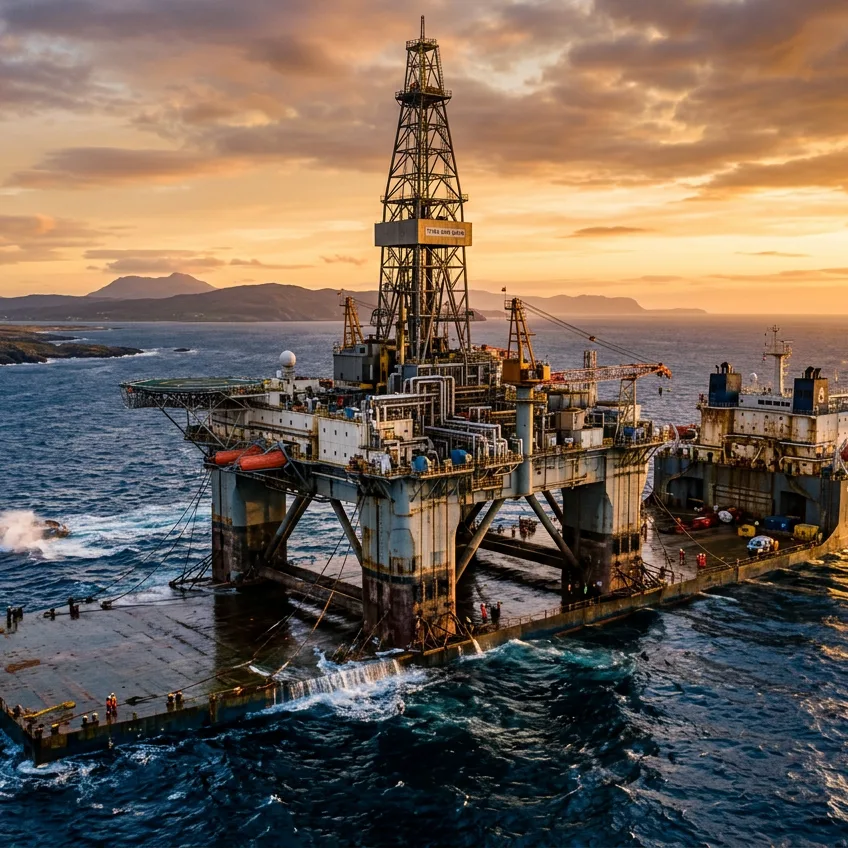
- The pontoon Ostrea: A gigantic U-shaped crane ship that transported each pillar across the water and lowered them onto the mattresses with a margin of error under three centimeters.
Capable of stopping storm surges that statistically occur once every 4,000 years, this wonder protects more than a third of the country below sea level without interrupting the rhythm of the tides.
Source: Rijkswaterstaat (Ministry of Infrastructure and Water Management of the Netherlands) / Deltares