Following the 2011 nuclear disaster at the Fukushima Daiichi plant, engineers faced an invisible and relentless enemy: groundwater. Around 400 metric tons of mountain water flowed down toward the sea every day, seeping into the destroyed reactor basements and becoming a highly radioactive torrent.
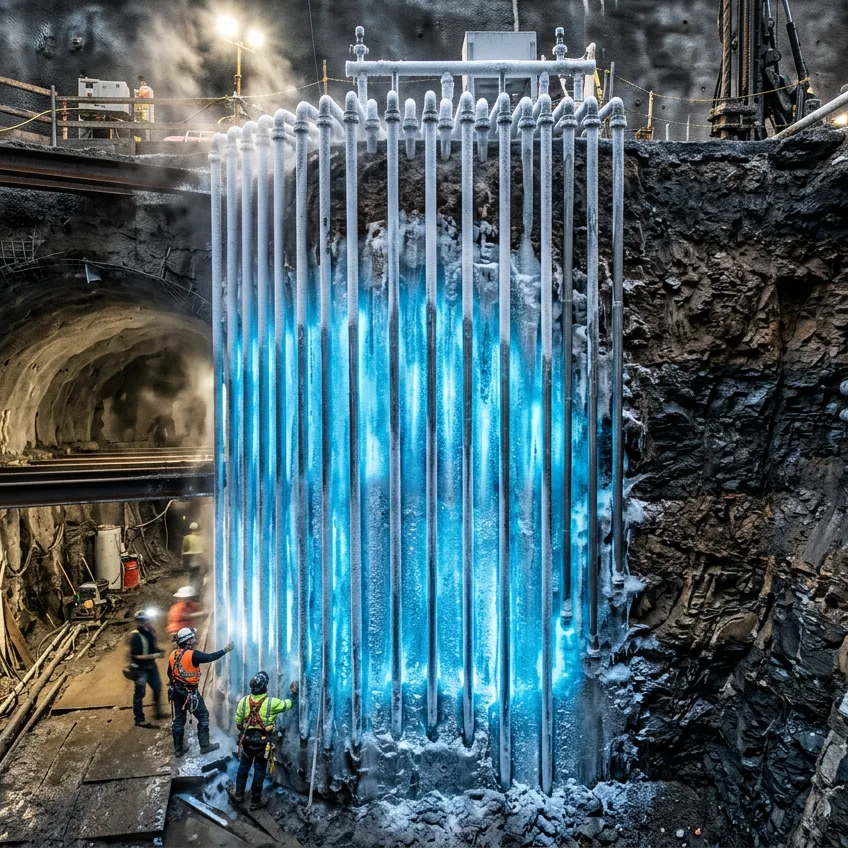
To stop this flow without collapsing the structures, TEPCO and Japanese engineers turned to an extreme ground-freezing technique on an unprecedented scale. Between 2014 and 2016, they built an underground ice wall nearly 1.5 kilometers long and up to 30 meters deep that completely surrounds reactors 1 through 4.
This colossal project required drilling and installing more than 1,500 vertical pipes spaced one meter apart. A closed loop continuously pumps brine cooled to -30 °C through them using powerful industrial refrigeration systems. By absorbing heat from the surrounding soil, the ground's natural moisture turns into a solid block of artificial permafrost.
- Hydraulic efficiency: The wall reduced the infiltration of contaminated groundwater by more than 75%.
- Thermal challenge: Keeping this subterranean mass frozen requires thousands of uninterrupted kilowatts and precise temperature monitoring.
This feat of geotechnical engineering showed that when concrete and steel are insufficient or dangerous to install, the physics of water phase changes can build impenetrable dams deep within the earth.
Source: Tokyo Electric Power Company (TEPCO) / International Atomic Energy Agency (IAEA)