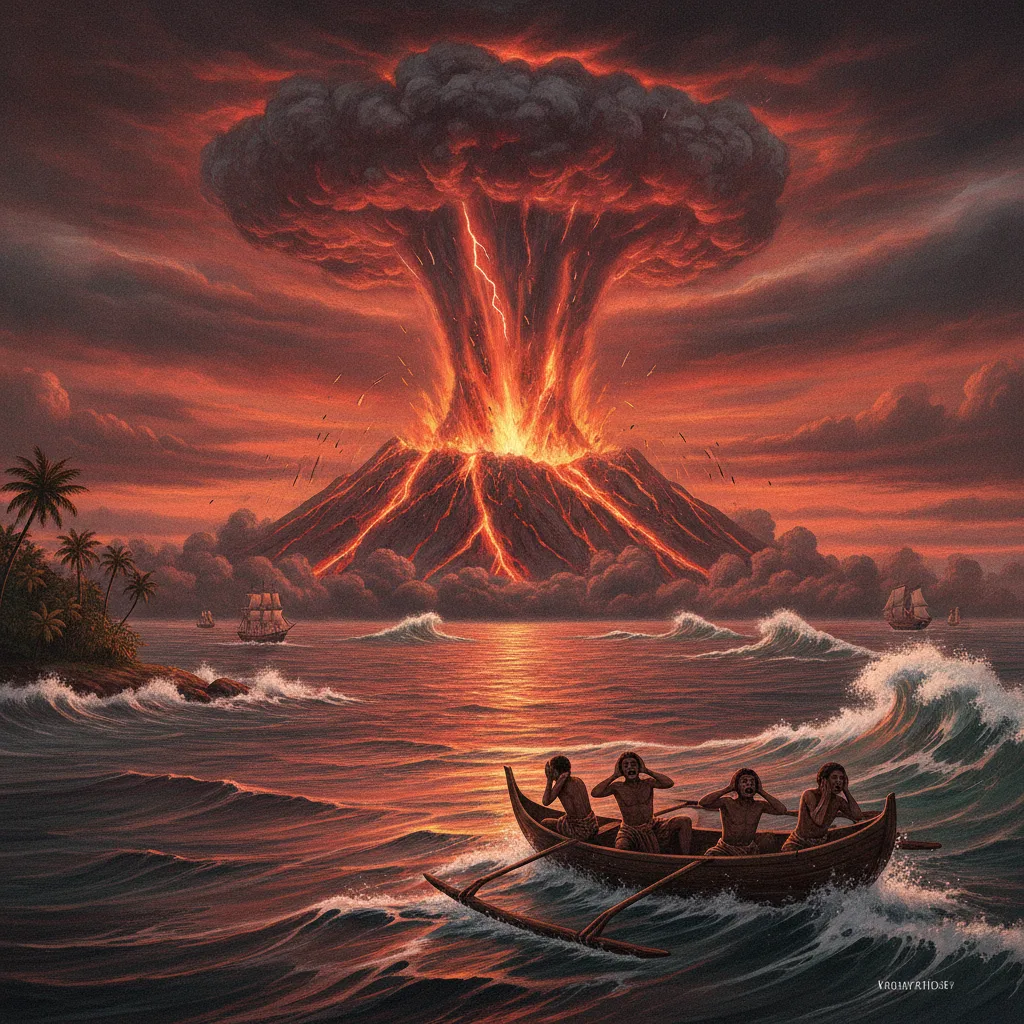
When we look at a modern volcanic eruption, the hottest basaltic magma erupts at around 1,200 °C. However, during the Archean eon, between 2,500 and 3,500 million years ago, Earth hosted volcanism so colossally hot that it is physically impossible to reproduce today: komatiites.
Discovered in 1969 along the Komati River in South Africa, these ultramafic igneous rocks baffled geologists due to their extremely high magnesium content. For a rock with that chemical composition to melt and flow at the surface as liquid lava, it required monstrous temperatures of at least 1,600 °C. During that planetary infancy, residual heat from accretion and radioactive decay made Earth's mantle between 200 and 400 °C hotter than it is today.
That extreme temperature gave komatiites astonishing properties:
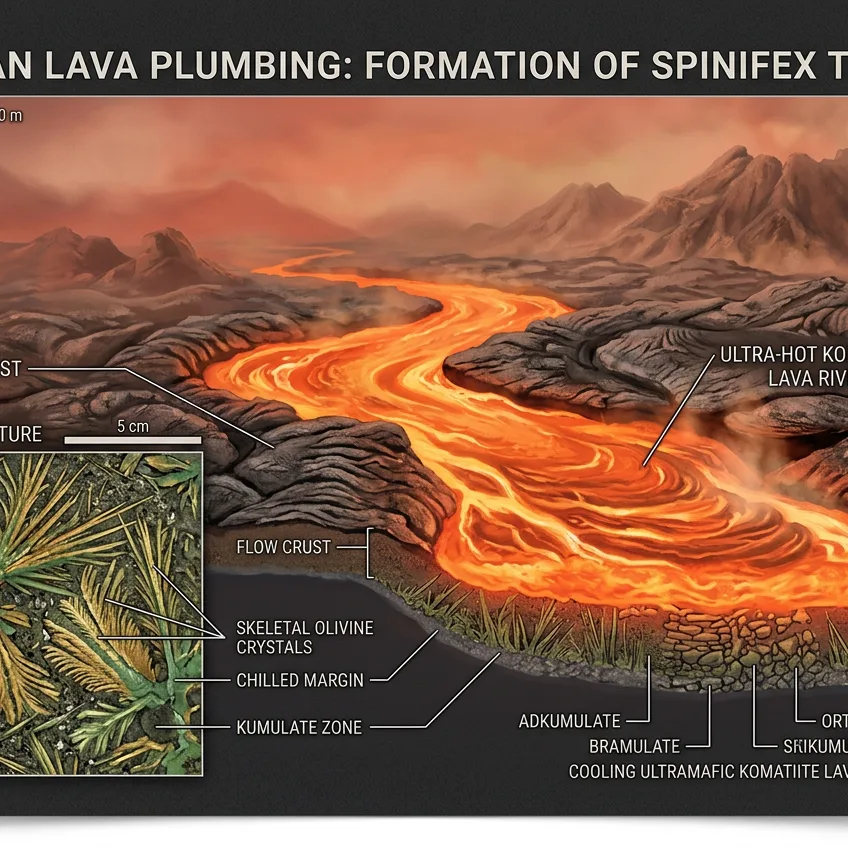
- Viscosity similar to water: These lavas were so fluid that they did not form volcanic cones; instead, they flowed at breakneck speeds, flooding entire basins in thin sheets.
- Voracious thermal erosion: Rather than just covering the ground, the torrent melted and assimilated the rocks over which it traveled.
- Spinifex texture: Upon contacting Archean seawater, the surface cooled so rapidly that olivine and pyroxene lacked time to crystallize slowly. Instead, they grew into interlocking skeletal needles and blades up to one meter long, resembling the Australian spiky grass Spinifex.
As Earth's interior cooled irreversibly, the geological factory of komatiites shut down forever, leaving these stones as time capsules of the planet's primeval inferno.
Source: Arndt, N., Lesher, C. M., & Barnes, S. J. (2008). Komatiite. Cambridge University Press.