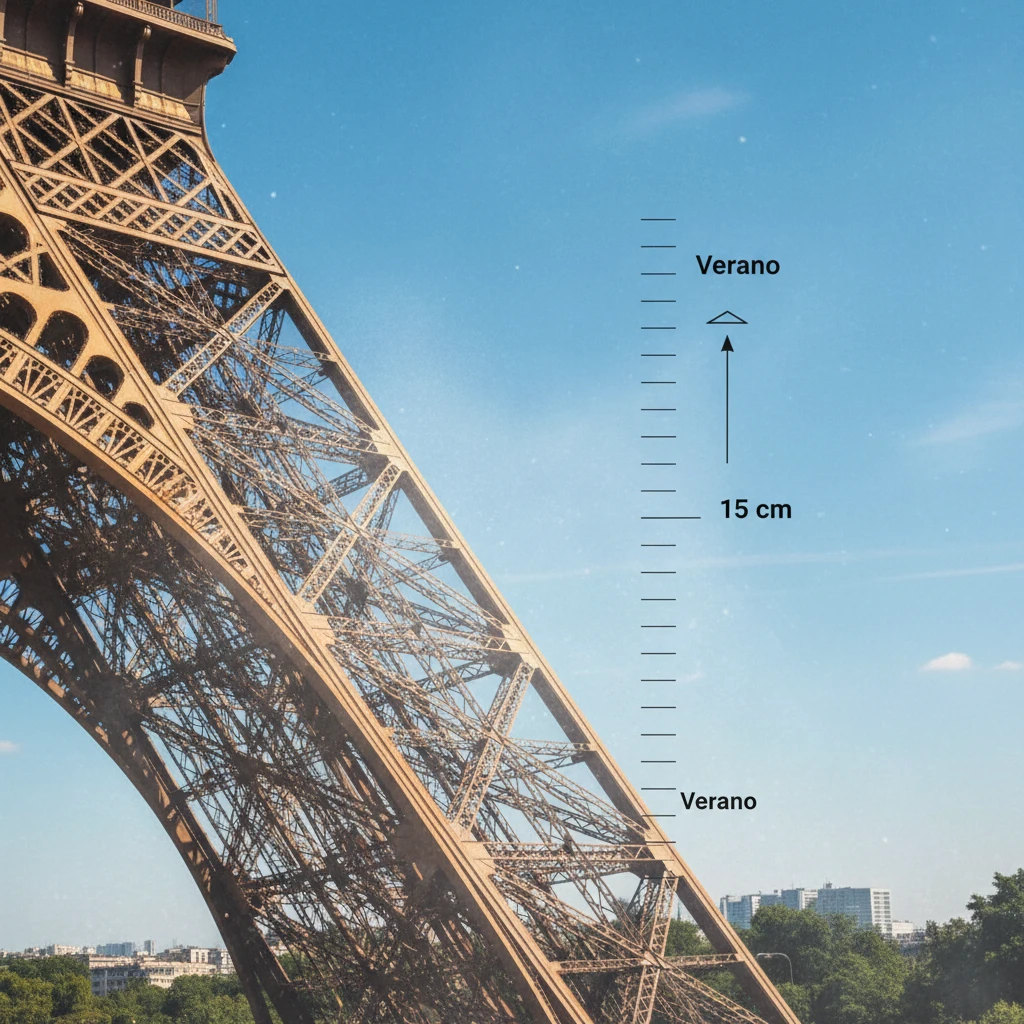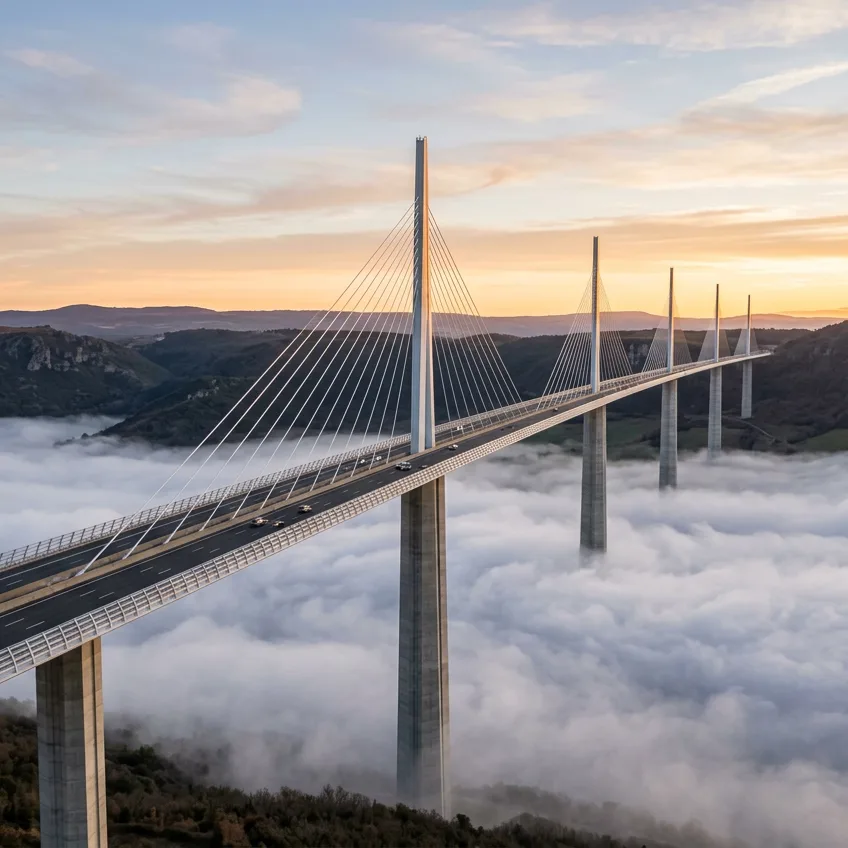
Inaugurated in December 2004 over the Tarn River valley in southern France, the Millau Viaduct holds the record for the tallest vehicular structure on the planet. Designed by structural engineer Michel Virlogeux and famed architect Norman Foster, its most colossal central pier (P2) reaches 245 meters of concrete which, added to its upper steel mast, nears 343 meters in height, surpassing the iconic Eiffel Tower by several meters.
The greatest challenge lay not only in its massive scale of 2,460 meters in length, but in how to build a roadway suspended 270 meters above the valley floor without collapsing under the ferocious Pyrenean winds. The solution was an audacious mechanical maneuver of surgical precision:
- Incremental launching: Instead of lifting the deck with giant cranes from the ground, the 36,000-ton metallic platform was fabricated on dry land on both sides of the valley.
- Hydraulic jacks in tandem: A complex computerized system pushed the deck section by section over the seven permanent piers and several temporary towers at a speed of barely 60 centimeters every four minutes.
- Meeting in the air: The two halves of the bridge advanced over the void until meeting over the Tarn River with a margin of error of less than one centimeter.
Thanks to its aerodynamic profile shaped like an inverted wing and its high-strength stay cables, the viaduct can withstand extreme wind gusts of more than 250 km/h without suffering destructive oscillations, allowing thousands of vehicles to cross daily, literally above the fog.
Source: Foster + Partners / Eiffage Construction archives