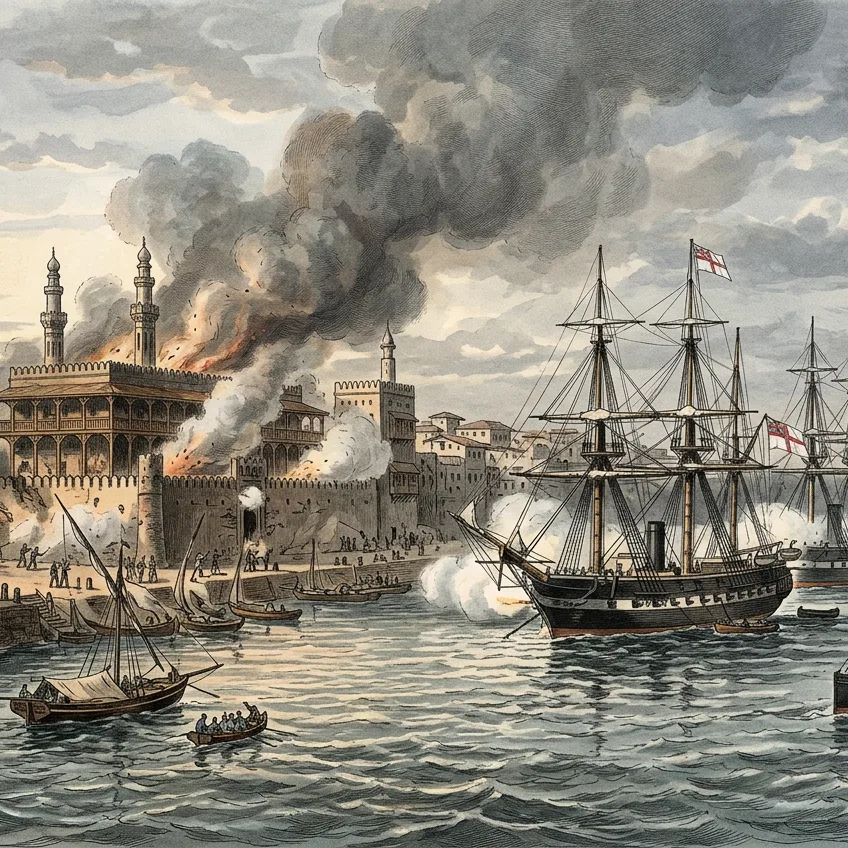
On the morning of August 27, 1896, the briefest armed conflict recorded in human history took place: the Anglo-Zanzibar War, a conflict that officially began at 9:02 and concluded around 9:40, lasting a mere thirty-eight minutes.
The crisis was triggered following the sudden death of Sultan Hamad bin Thuwaini, who favored British interests. His cousin, Khalid bin Barghash, proclaimed himself the new ruler without the approval of the imperial consulate, barricading himself inside the Stone Town royal palace alongside nearly three thousand defenders and a small artillery battery. The British Empire immediately issued an ultimatum demanding his surrender before nine o'clock.
Convinced that the foreigners would not dare to fire, Khalid refused to capitulate. The British response was immediate:
- Five Royal Navy warships stationed in the harbor opened crossfire with high-explosive shells at 9:02.
- The sultan's antiquated armed yacht, the HHS Glasgow, was sunk in a matter of minutes after a brief exchange.
- The wooden palace was engulfed in flames, and the mast bearing the royal flag was shot down by cannon fire at 9:40, at which point hostilities ceased.
The toll was devastatingly asymmetric: around 500 Zanzibari fighters and servants were killed or wounded, while British forces sustained a single non-fatal casualty. Khalid fled to the German consulate, and that very afternoon the British Crown installed a compliant sultan, bringing the fastest war of all time to an end.
Source: Hernon, Ian (2003). 'Britain's Forgotten Wars: Colonial Campaigns of the 19th Century'. Sutton Publishing.