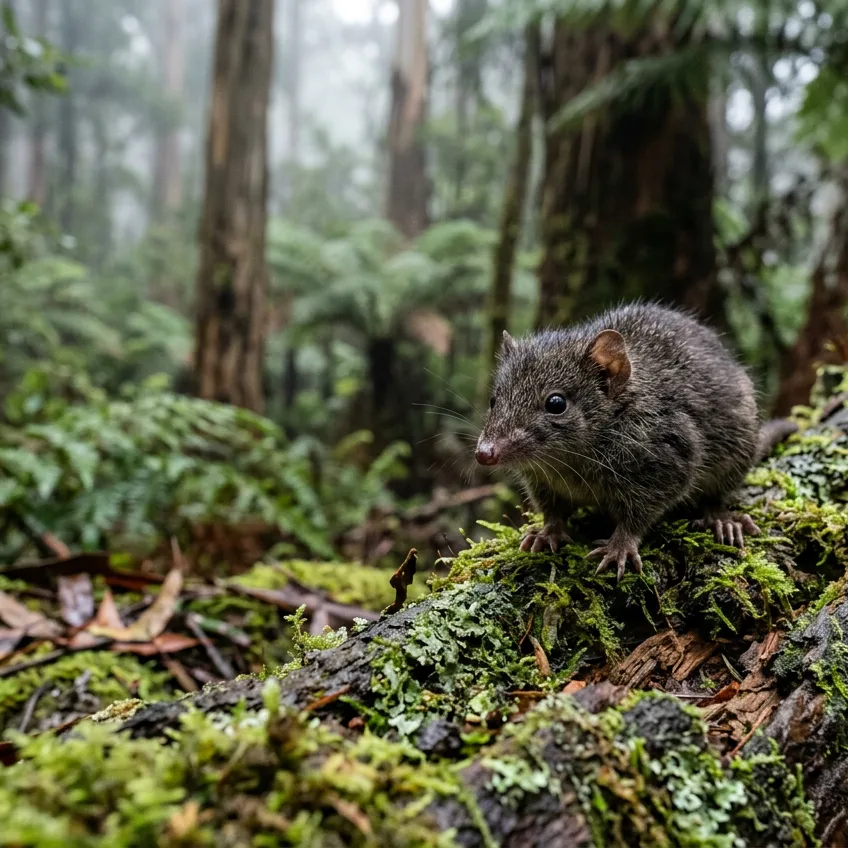
In the mammalian kingdom, semelparity—dying immediately after a single reproductive cycle—is an extreme rarity almost exclusive to a small carnivorous marsupial from Australia: the antechinus. Every austral winter, upon reaching eleven months of age, all males in the population synchronously enter a copulatory frenzy lasting between two and three weeks, culminating in the sudden death of one hundred percent of them.
Far from simple physical fatigue, this collapse is a true programmed biochemical demolition. Males compete in uninterrupted mating sessions that can last up to fourteen consecutive hours with multiple females. To sustain such a metabolic pace without needing to stop to eat or sleep, their bodies deactivate the proteins responsible for regulating stress hormones.
As a direct result, their levels of free testosterone and cortisol skyrocket to toxic concentrations. This hormonal overload devastates their immune system within days: their fur falls out in clumps, they suffer massive internal bleeding, gangrenous ulcers, and blindness. Despite being physically moribund and consumed by infections, they continue wandering in search of more females until their organs collapse irreversibly.
This dramatic evolutionary sacrifice is driven by fierce sperm competition: by transferring every ounce of their vital energy to maximize paternity before dying, males eliminate competition for scarce winter resources, leaving all available food for pregnant females and their offspring.
Source: University of Queensland (Studies by Dr. Diana Fisher on semelparity in dasyurids)