On December 1, 1990, British and French workers shook hands forty meters beneath the bed of the English Channel after drilling through the final wall of rock. However, that civil engineering milestone posed a major logistical dilemma: what to do with the gigantic tunnel boring machines that met face to face?
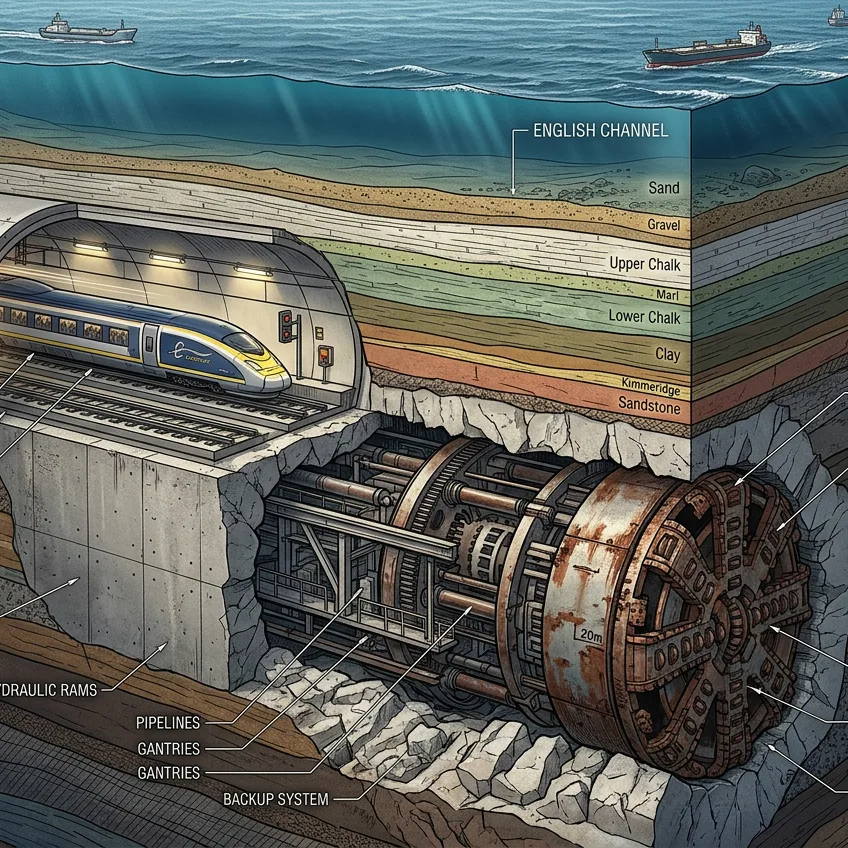
Each of these tunnel boring machines (TBM) was an electromechanical titan weighing more than 1,000 tons and measuring nearly two hundred meters in length. As the crews advanced from opposite shores to meet at the geographic center, usable space completely ran out. Reversing and towing such massive bulks along more than twenty kilometers of newly excavated tunnel was not only an astronomically expensive process, but an unacceptable structural risk to the newly placed concrete rings.
The British solution was as pragmatic as it was unusual: order the machines to dig their own grave. United Kingdom engineers diverted the cutter heads along a steep downward path into the chalk marl bed, moving them away from the path of the future railway tracks.
Once the tunnel boring machines were wedged into their blind pit, workers removed the valuable motors and electronic systems, filled the cavity with concrete, and sealed the floor. Today, as thousands of travelers cross at 160 km/h by train between London and Paris, they ride unknowingly right above the steel skeletons of the colossi that carved the route.
Source: Institution of Civil Engineers (ICE) / Eurotunnel Historical Archives