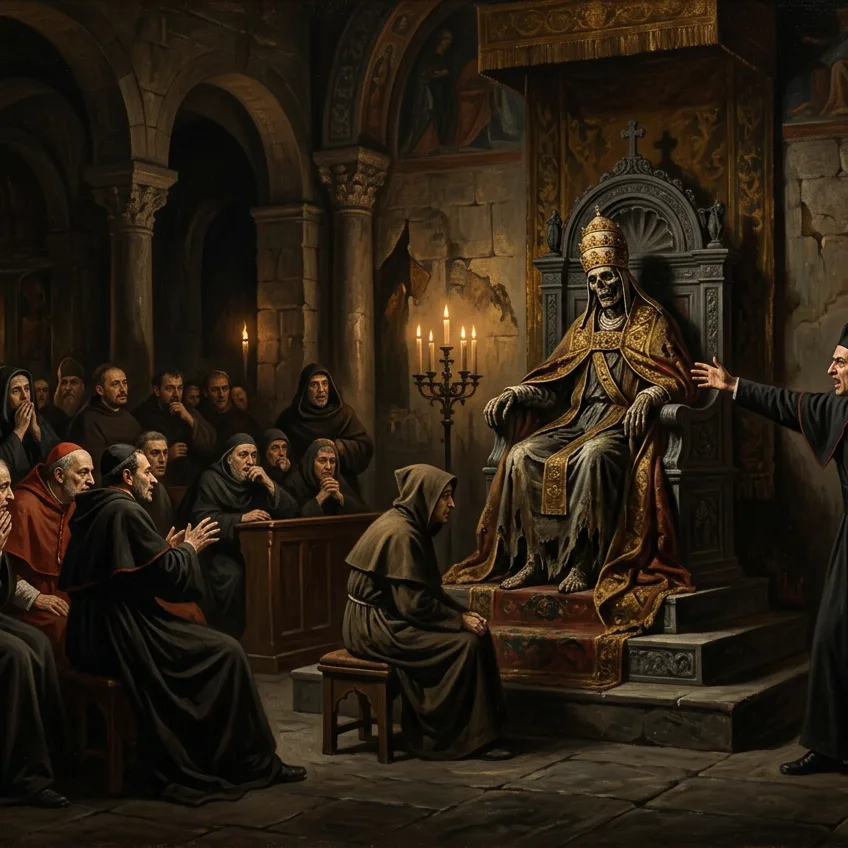
In January of the year 897, the Basilica of St. John Lateran in Rome hosted one of the most unusual and grim episodes in medieval history: the Cadaver Synod or Synodus Horrenda. By order of Pope Stephen VI, the decomposing body of his predecessor, Pope Formosus—who had died nine months earlier—was removed from its tomb to stand a formal canonical trial.
Far from being a clandestine ceremony, the court gathered cardinals, bishops, and members of the Roman nobility. The putrefied corpse of Formosus was dressed in rich pontifical vestments and placed upright on an episcopal throne. To comply with the formalities of the proceedings, a terrified deacon was assigned as his defense counsel, standing beside the remains and answering with a trembling voice to the shouting accusations made by Stephen VI.
The charges included perjury, unlawful ambition, and the violation of canon law for having occupied the See of Rome after serving as bishop of another diocese, all set against the bloody dynastic struggles for control of the Italian peninsula. The verdict culminated in a swift punishment:
- Canonical annulment: All acts, appointments, and ordinations carried out by Formosus were immediately declared invalid.
- Symbolic mutilation: The three fingers of his right hand used to bestow papal blessings were severed.
- Desecration of the body: The corpse was stripped of its vestments, dragged through the streets of Rome, and thrown into the waters of the Tiber River.
The violent spectacle outraged the Roman population; a few months later, an uprising overthrew Stephen VI, who was eventually imprisoned and strangled in his own cell.
Source: Monumenta Germaniae Historica / Encyclopædia Britannica