During the Triassic period, about 232 million years ago, Earth was dominated by the supercontinent Pangaea, characterized by vast deserts and a hyperarid climate. However, in the late 1980s, British geologists Mike Simms and Alastair Ruffell found a puzzling anomaly etched in stone: embedded between monotonous layers of dry red sandstone, a global band of wet alluvial sediments, dark silts, and coal lasting nearly two million years appeared. That unusual interval was named the Carnian Pluvial Event.
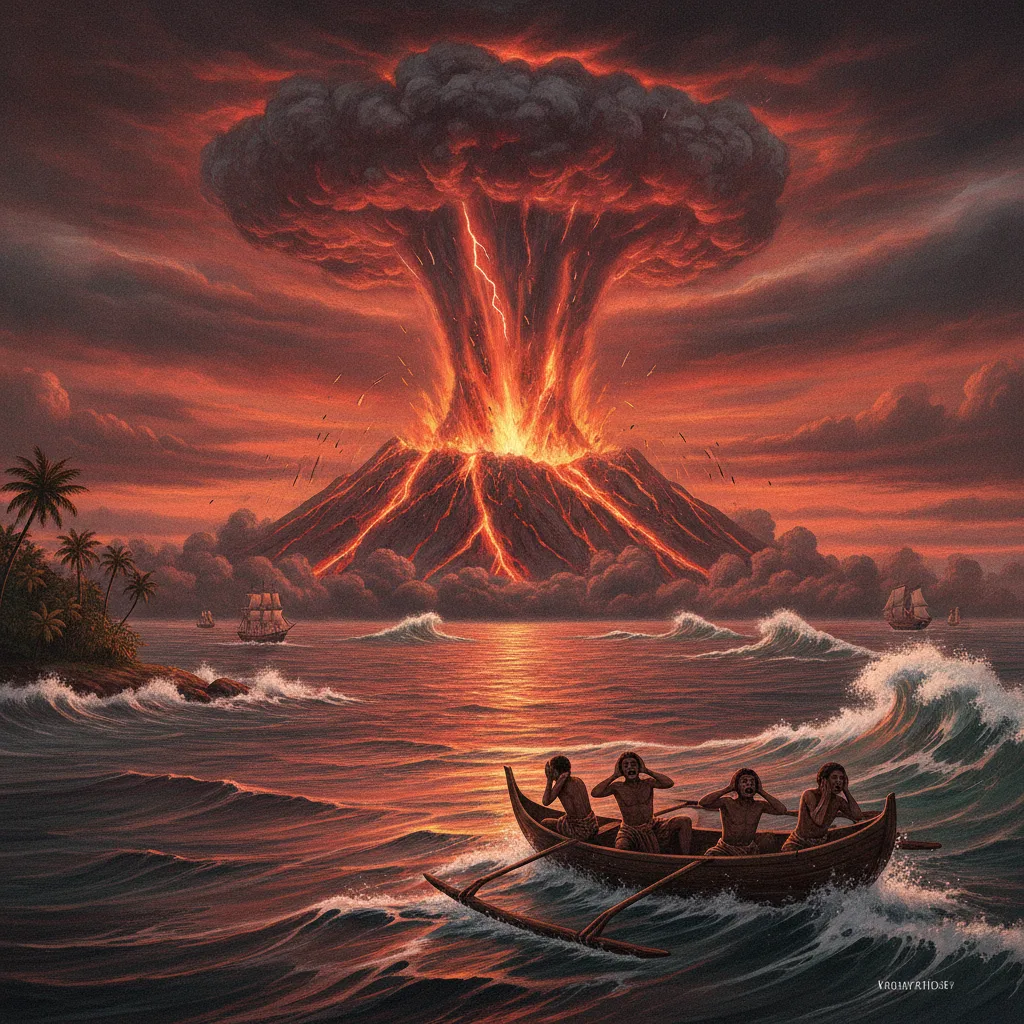
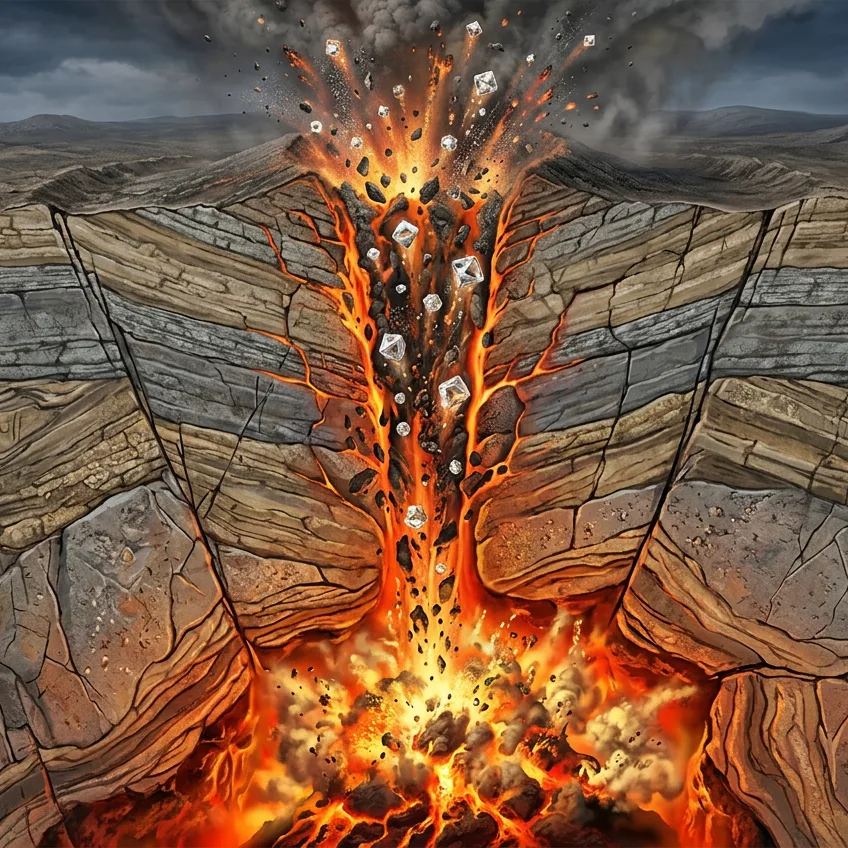
Geochemical evidence from carbon and oxygen isotopes proved that it was not a local phenomenon. The cause was massive volcanic activity from the Wrangellia large igneous province (in what is now Alaska and British Columbia), which spewed trillions of tons of carbon dioxide into the atmosphere. The resulting intense greenhouse effect superheated the ocean surface and unleashed colossal megamonsoons that kept Earth under continuous torrential rain on a geological scale.
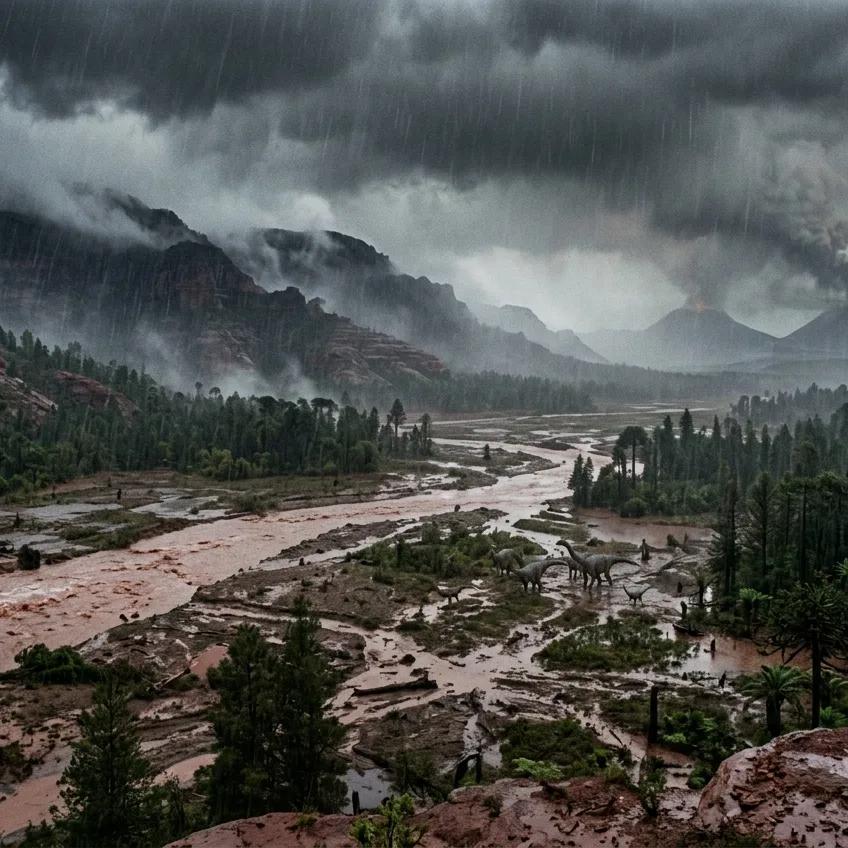
This two-million-year deluge radically transformed the biosphere. Water acidity and extreme weathering destroyed primitive reefs and caused the extinction of numerous dominant desert-adapted herbivores. Amid the mud and conifer vegetation that thrived with the moisture, a marginal group of small, agile animals found their definitive evolutionary advantage: dinosaurs. The event acted as the geological catalyst that launched their evolutionary radiation, beginning their reign of over 150 million years over the planet.
Source: Science Advances (Dal Corso et al., 2020: 'Extinction and dawn of the modern world in the Carnian')