At the end of World War I, nighttime bombings by German Gotha biplanes and zeppelins threatened to devastate Paris. Lacking modern radar to track aircraft in the dark, French authorities turned to a colossal stratagem: building a fake replica of Paris about 25 kilometers from the real capital to serve as a decoy target.
The project was entrusted to Italian electrical engineer Fernand Jacopozzi, a pioneer of architectural lighting. The plan spanned three strategic zones designed to mimic the layout of the Seine River and the metropolis's most densely populated and industrial districts:
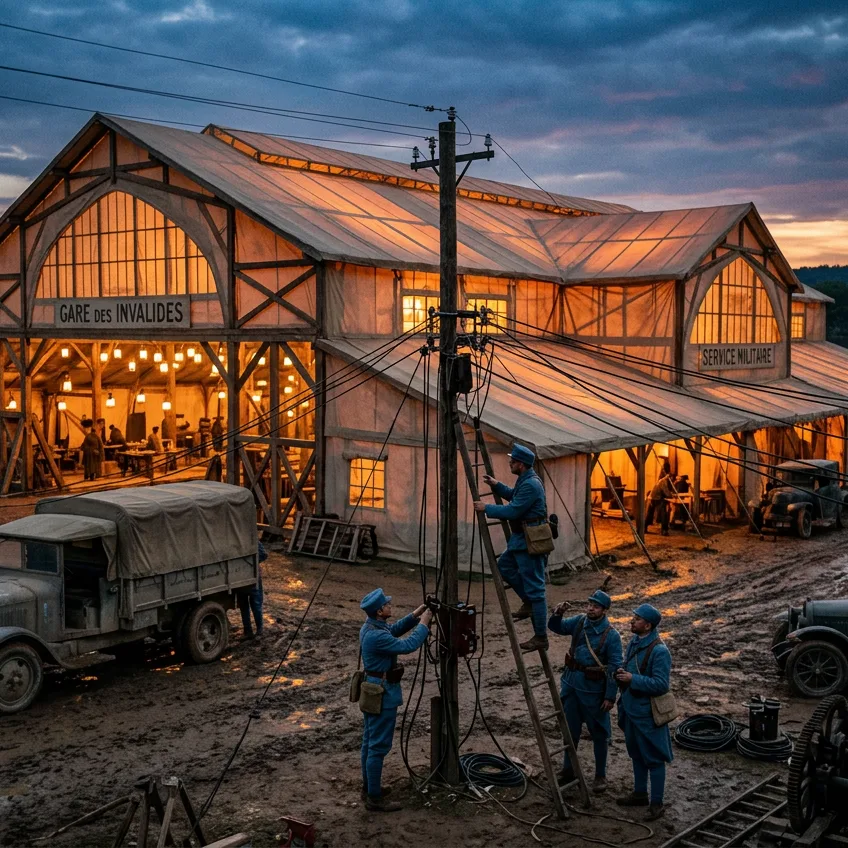
- Fabric railway stations: Exact replicas of the Gare de l'Est and Gare du Nord were constructed using wooden sheds, painted canvas, and illuminated translucent roofs.
- Theatrical lighting: A complex network of lamps in various hues (yellow, white, and red) was deployed to simulate moving trains, running workshops, and partially dimmed streetlights.
- Fictitious factories: In the Villepinte area, lightweight structures mimicked the industrial complexes of Saint-Denis using fake furnaces with timed smoke.
The optical illusion was meticulously calculated to convince enemy aviators flying at more than 2,000 meters altitude in the dead of night. The main replica in Maison-Laffitte was just nearing completion when the armistice of November 11, 1918 was signed, so the fake Paris was hastily dismantled, and its existence remained a military secret for decades.
Source: Le Figaro / Archives Nationales de France