Connecting Europe and Asia by rail beneath the Bosphorus Strait was a dream cherished since Ottoman Empire times in 1860, but the technology to achieve it took a century and a half to materialize. Inaugurated in 2013, the Marmaray tunnel holds the record for being the deepest immersed tube tunnel on the planet, resting about 60 meters below sea level.
The technique used did not require traditional tunnel boring machines for its marine section, but rather a colossal precision maneuver on the surface and seabed:
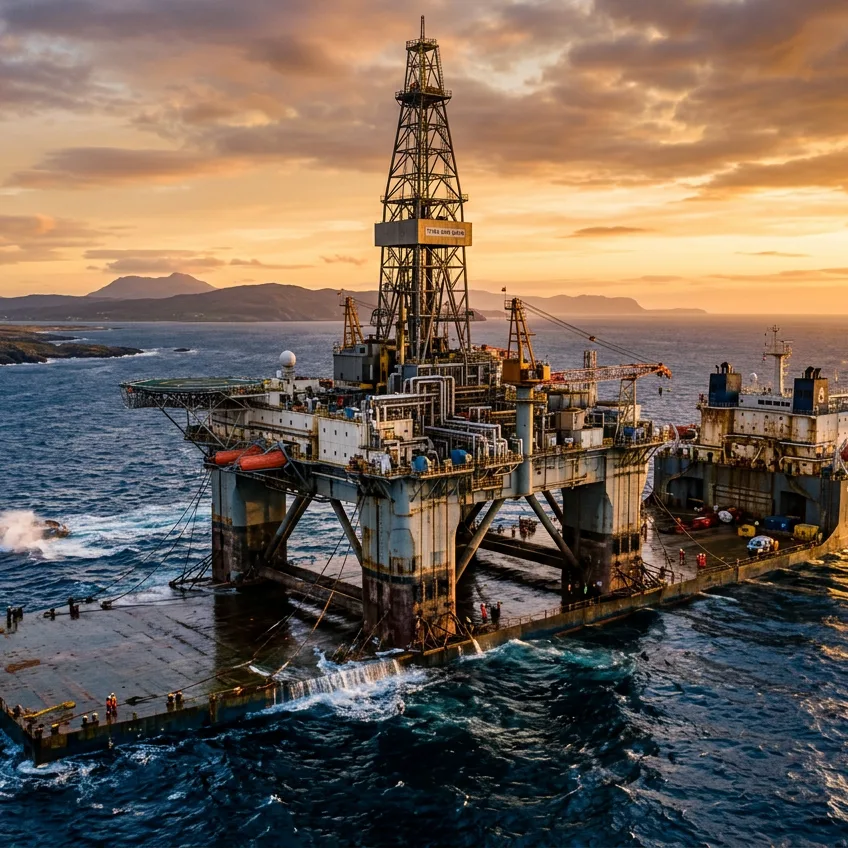
- Colossal prefabricated modules: Eleven huge reinforced concrete and steel caissons were built in dry docks, each up to 135 meters long and weighing close to 18,000 tons.
- Millimetric submersion: The modules were towed into the strait, where they faced two violent and opposing marine currents. To sink them into a dredged trench on the seabed, thousands of liters of water were pumped into their internal ballast tanks, guided by GPS positioning and multibeam sonar.
- Sealing and earthquake-resistant joints: Divers and robots joined the sections underwater using special rubber hydraulic compression joints (GINA gaskets).
The most critical challenge was the proximity of the North Anatolian Fault, located just 16 kilometers away. To withstand an earthquake of magnitude greater than 7.5 without fracturing or flooding, engineers equipped the tunnel with flexible rubber joints capable of absorbing torsion and three-dimensional displacements, making it one of the safest tunnels in history.
Source: International Tunnelling and Underground Space Association (ITA-AITES)