In the calm waters of Lake Nemi, a volcanic crater south of Rome known in antiquity as the 'Mirror of Diana', Emperor Caligula ordered the construction in the 1st century AD of two of the most disproportionate works of naval engineering in the classical world. Far from being simple ceremonial barges, they were authentic floating palaces measuring more than 70 meters in length and 20 meters in beam, dimensions comparable to the great 18th-century warships.
The vessels featured luxuries unthinkable for a marine structure of their era:
- Mosaic and marble floors supported on sturdy oak and pine beams.
- Underfloor heating systems (hypocaust) to warm the imperial chambers.
- Networks of lead pipes supplying hot and cold running water to baths and ornamental fountains.
- Pioneering mechanical innovations, such as piston bilge pumps and bronze ball bearings to rotate platforms.
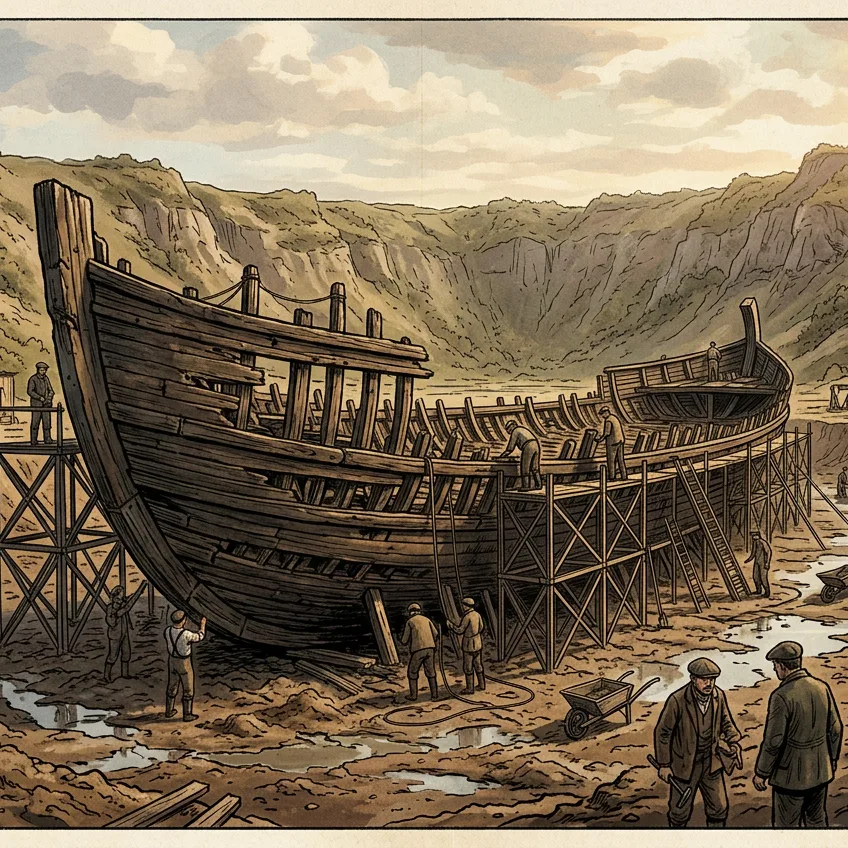
After Caligula's assassination in 41 AD, the ships were intentionally sunk to erase his memory. For nearly two millennia they rested in the muddy bed, becoming a local legend, until an unprecedented archaeological feat was carried out between 1928 and 1932: engineers drained 40 million cubic meters of water by reactivating an ancient Roman underground emissary to expose the hulls on dry land.
Although the original vessels perished in a fire during World War II fighting in 1944, their meticulous survey drawings and recovered bronze pieces proved that Roman technology possessed naval techniques that historiography believed were invented centuries later.
Source: Museo delle Navi Romane di Nemi / Soprintendenza Archeologia del Lazio