At 50 meters beneath the streets of Kasukabe, on the outskirts of Tokyo, lies one of civil engineering's most awe-inspiring underground wonders: the G-CANS (Shutoken Gaikaku Hōsuiro), officially the largest flood drainage facility on the planet. Built over fourteen years and fully inaugurated in 2006 at a cost exceeding 2,000 million dollars, this colossus was conceived to solve a historical threat: Tokyo's low-lying basin, surrounded by rivers prone to overflowing during typhoon and monsoon seasons.
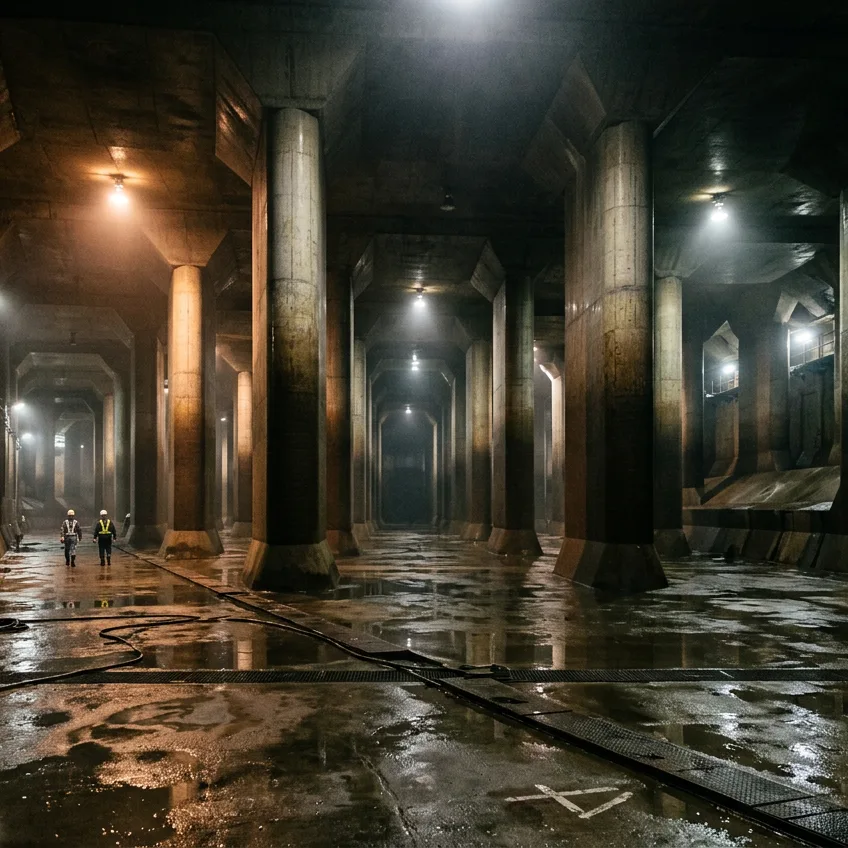
The system consists of five vertical containment silos so vast that a Statue of Liberty could fit inside each (65 meters deep by 32 in diameter). These reservoirs are connected by 6.3 kilometers of underground tunnels excavated through rock and soft mud using millimeter-precision shield tunneling machines. Surplus storm runoff flows into a monumental surge tank known as 'the underground cathedral', supported by 59 solid concrete pillars weighing 500 tons each, designed specifically to counter the brutal upward pressure of groundwater.
The facility's propulsion core is a battery of gas turbines modified directly from Boeing aircraft engines, capable of generating a combined output of 14,000 horsepower. This machinery can pump up to 200 cubic meters of water per second into the Edo River, the equivalent of draining a standard Olympic pool every twelve seconds. Since its launch, this invisible shield has reduced flood damage in Tokyo by more than 80%.
Source: Ministry of Land, Infrastructure, Transport and Tourism of Japan (MLIT)