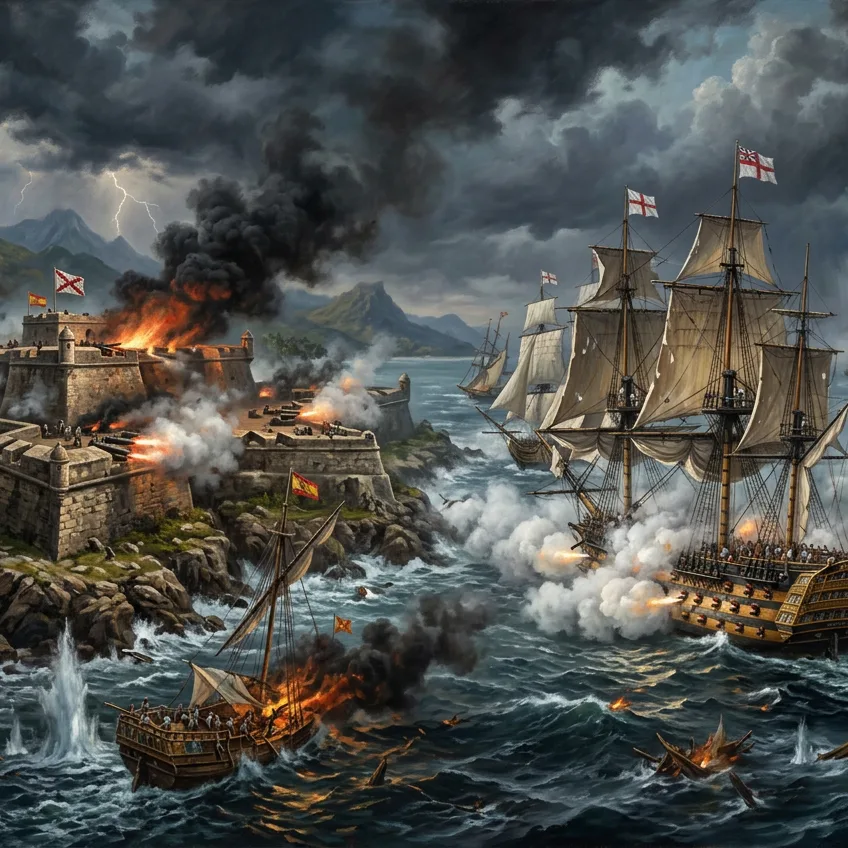
In the spring of 1741, the coasts of modern-day Colombia witnessed one of the largest amphibious operations in military history, surpassed in scale only two centuries later by the Normandy landings. The British Crown sent Admiral Edward Vernon with an overwhelming force: 186 warships and nearly 27,000 armed men, with the mission of breaking Spanish control in the Americas.
Facing this colossal fleet was Blas de Lezo, a veteran strategist nicknamed 'Half-man' for having lost an eye, an arm, and a leg in previous battles. In command of just six ships of the line and about 3,000 defenders (including regular soldiers, militiamen, and indigenous archers), Lezo orchestrated a masterclass in defense based on attrition, topography, and the sabotage of navigable channels.
Confidence in London was so absolute that, before the siege concluded, King George II ordered the minting of thousands of commemorative medals proclaiming victory and depicting Blas de Lezo kneeling and surrendering his sword to Vernon. However, reality was devastating: fierce resistance, combined with yellow fever and a disastrous assault on the castle of San Felipe de Barajas, decimated the British, forcing a humiliating retreat after losing more than 50 ships and nearly 10,000 men. The premature medals had to be withdrawn from circulation and their mention was strictly censored in English chronicles of the era.
Source: Quintero Saravia, G. (2016). 'Don Blas de Lezo: Biografía de un marino español'. Editorial Edaf.