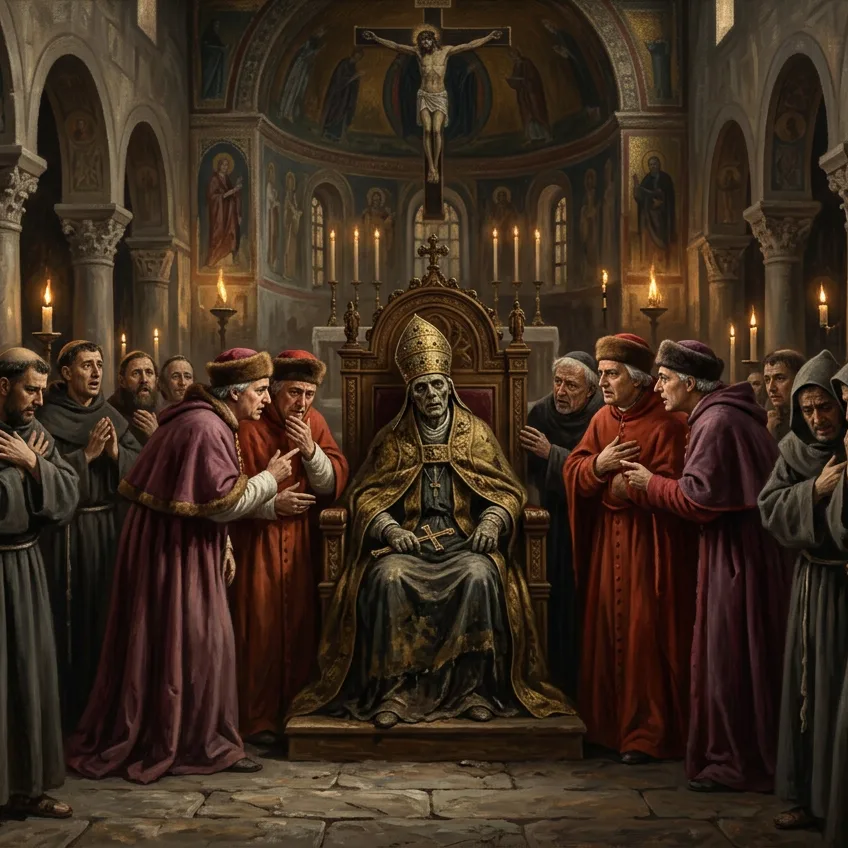
In the frigid January of the year 897, the Archbasilica of Saint John Lateran in Rome hosted what is known as the Cadaver Synod or Synodus Horrenda. Pope Stephen VI, immersed in violent power struggles plaguing the Italian nobility, ordered the exhumation of the body of his predecessor, Pope Formosus, who had died nine months prior.
Dressed in sumptuous liturgical vestments and placed rigidly on an episcopal throne before an ecclesiastical court, the decaying corpse of Formosus was subjected to a formal trial. A young deacon was assigned as defense counsel, who, paralyzed by fear, attempted to answer the furious shouts and accusations of illegitimate usurpation hurled by Stephen VI himself.
The verdict sealed one of the greatest institutional revenges of the Middle Ages:
- Unanimous conviction: Formosus was found guilty of violating canon law and fraudulently securing the papal seat.
- Annulment of acts: Every bull, ordination, and appointment issued during his pontificate was formally declared invalid.
- Symbolic mutilation: They severed the three fingers of his right hand that he used to bestow solemn blessings.
After stripping the corpse of its papal vestments, it was dragged through the streets of Rome and thrown into the murky waters of the Tiber River. The public scandal was so colossal that it sparked a civic uprising just months later: Stephen VI was overthrown, imprisoned, and ultimately strangled in his prison cell.
Source: The Bad Popes (E.R. Chamberlin) / Enciclopedia Católica