During World War II, Colditz Castle (Oflag IV-C) held the Third Reich's most elusive and rebellious Allied prisoners. Considered an inescapable prison by the German army, the fortress became the stage for the war's most unusual escape plan: building a two-seater glider in secret to take off from the roof and cross the Mulde River.
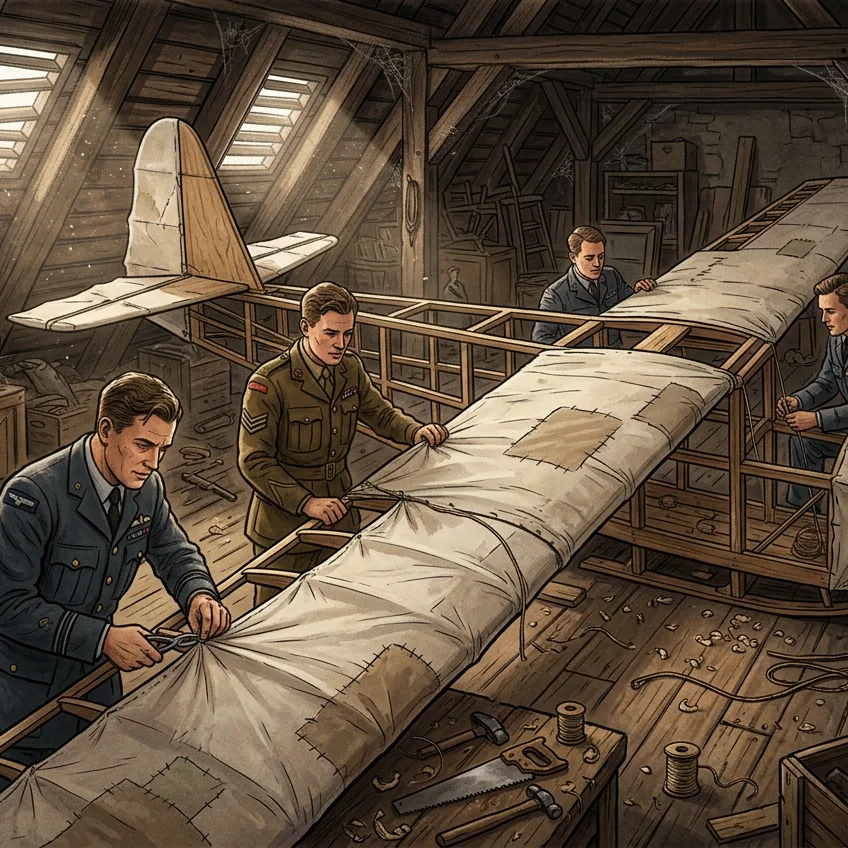
The daring project was conceived in 1944 by British lieutenants Jack Best and Bill Goldfinch. For months, a clandestine team worked in an attic hidden behind a wood-and-plaster wall that the guards never detected. The materials used defied any prison survival logic:
- Structure: Wooden slats salvaged from bed frames and floorboards, joined with handmade nails and electrical wiring.
- Covering: Around thirty Red Cross cotton bedsheets, hand-sewn and treated with boiled millet porridge to seal the fabric and tighten the fuselage.
- Launch system: A catapult powered by a metal bathtub filled with tons of rubble, designed to drop down an 18-meter vertical shaft and launch the craft into the air.
The glider, known as the Colditz Cock, had a wingspan of 9.7 meters. Although the fortress was liberated by US troops in April 1945 before it could launch, modern full-scale replicas and aerodynamic tests proved in 2000 that the aircraft was fully functional and would have escaped successfully.
Source: Imperial War Museums (IWM) / Colditz Castle Historical Archives